01
Grind size
Hold dose and yield. Move grind only. Finer for sour-fast; coarser for bitter-slow.

CoffeeBrewsHub · Home espresso
Grind, dose, yield, and time — one starting point you can run today.
Learning how to dial in home espresso grind size starts with a fixed 1:2 recipe and a single grind move from taste. CoffeeBrewsHub pairs that technique path with machine notes built from manufacturer specifications, aggregated owner reports, and published measurements.
Pick a taste signal. The matching card lights up. Dose and yield stay locked while grind does the work.
If your basket marks a different dose range, keep 1:2 and shift dose inside that range. Freshness, roast, water, and heat-up all move the window.
How does the cup read?
Next move
Sour, thin, or harsh-bright cups often run fast under the time window.
Keep dose + yield fixed. One small step. Clear the burrs.
Next move
Bitter, drying, or hollow-roast cups often crawl past the window or stall.
Keep dose + yield fixed. One small step. Taste again.
Prep first
Spurts, early blonding in one spot, or one-sided flow are prep signals.
Distribute, level tamp, then revisit grind.
Time tells you flow. Taste tells you the move. Burr marks are not interchangeable across grinders — treat every click as local to your burr set and beans.
Cards you can act on — not another long tutorial.
01
Hold dose and yield. Move grind only. Finer for sour-fast; coarser for bitter-slow.
02
Espresso-range steps, a scale on dose and cup, and honest basket behavior beat another unmetered shot.
03
Match dose to the basket’s intended range. Pressurized baskets mask grind errors; non-pressurized teach taste.
04
Weigh → dry basket → distribute → level tamp → clean flange → start pump and timer together → stop on yield.
05
Three disciplined shots. Same dose, same yield, only grind moves. Tag sour / balanced / bitter and stop when the cup is worth drinking.
Owner reports and published measurements — not retailer copy recycled as advice.
Pump, boiler or thermoblock, tank, dimensions, grinder range, and warranty pulled from manufacturer documentation.
Recurring failure and ownership patterns across large volumes of verified customer reviews over time.
Independent lab and publication data where it exists — temperature stability, grind distribution, noise, energy draw.
Free to read. When a question needs the machine in hand, we say so rather than guess. Coverage spans espresso, super-automatics, drip, and pod setups across buying guides, head-to-head comparisons, ownership reviews, and brewing walkthroughs.
Medium-fine espresso territory, then the 18 g in / 36 g out recipe. Judge by time and taste — not a universal click number.
If dose, yield, and grind move together, you cannot tell which change fixed the cup. 1:2 holds ratio steady so grind is the extraction lever.
Too fine often slows or stalls and pushes bitterness. Too coarse often finishes early and tastes sour or thin. Confirm with a scale.
Not on day one. Stabilize puck prep and grind against a fixed 1:2 recipe before advanced temperature or pressure tweaks.
When shots are enjoyable and repeatable, or the grinder cannot step finely enough to enter the time window. That is when pairing research on CoffeeBrewsHub matters more than another grind chase.
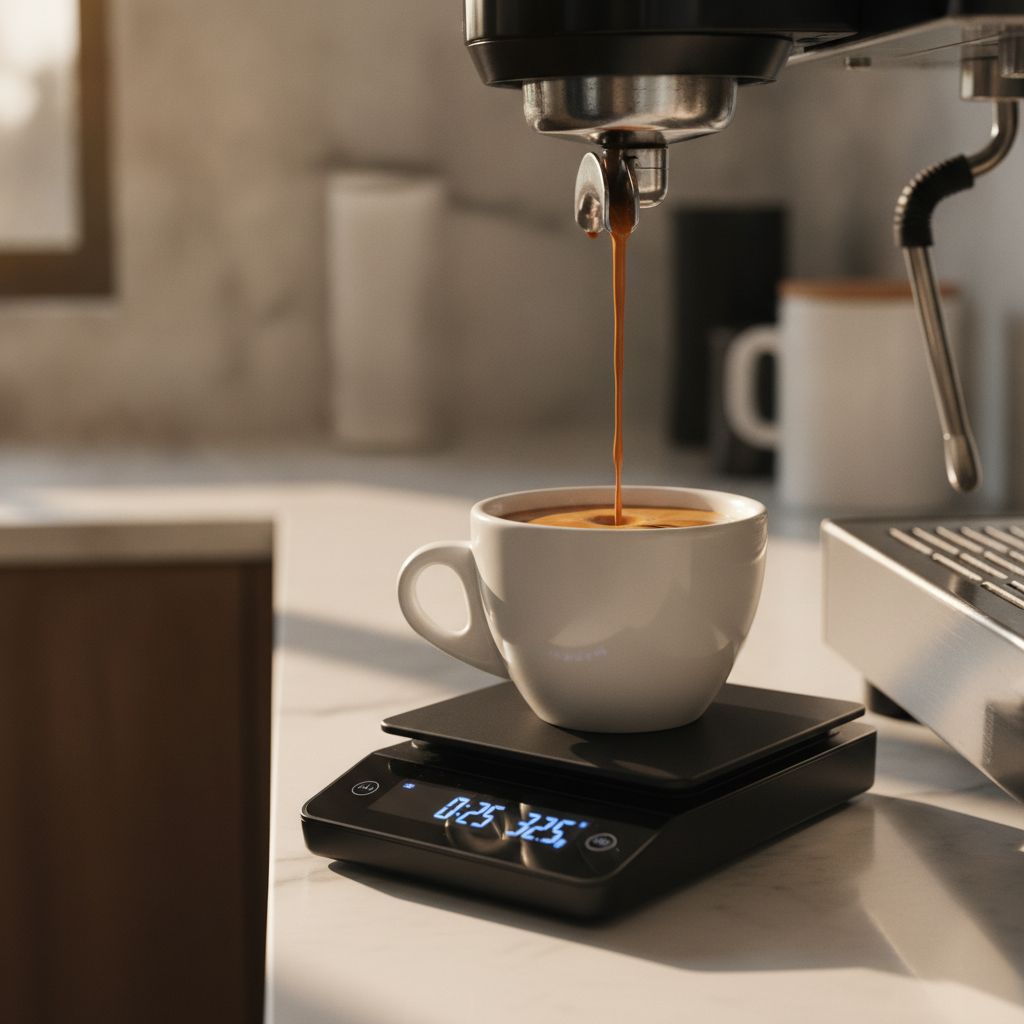
Log dose, yield, time, and the last grind step that worked. Then open CoffeeBrewsHub guides and comparisons when technique is no longer the bottleneck — buying guides, head-to-heads, ownership reviews, and brewing walkthroughs with sources attached.
As an Amazon Associate, CoffeeBrewsHub earns from qualifying purchases. Commissions do not change the price you pay.