Italian Espresso Machine Gaggia: Build Quality, Model Differences and Who Each One Suits
Gaggia sells both manual and automatic espresso machines for the home. This guide explains what separates the two types, what to check on build quality, and which kind fits a first-time buyer or someone upgrading from a basic machine.
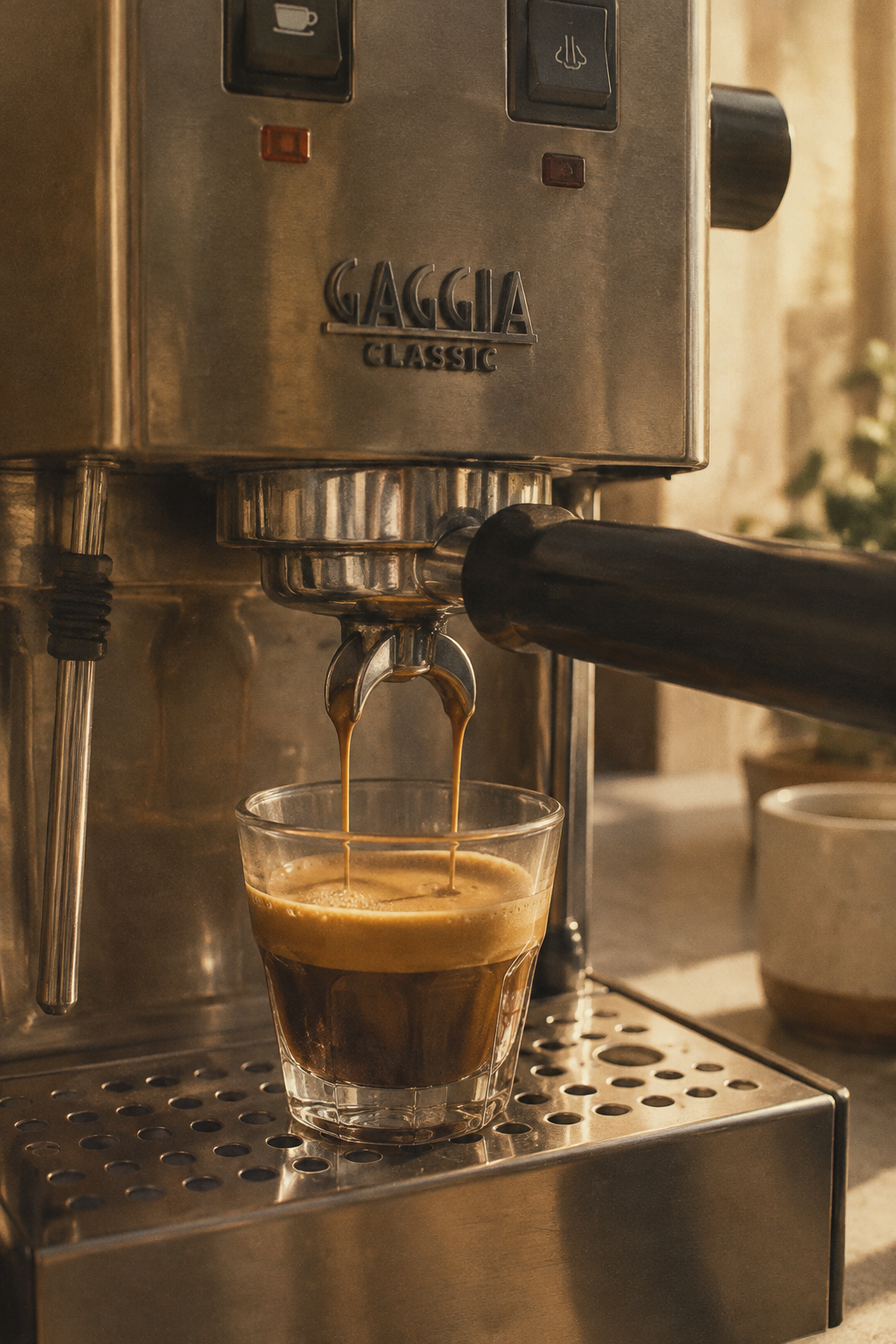
Quick Answer: Choosing Your Path
- — Choose a manual Gaggia if you want to control dose, grind, and shot timing yourself, and you are willing to learn the process.
- — Choose an automatic Gaggia if you want the machine to handle more of each drink and you value less hands-on work.
- — Confirm current models, dimensions, and prices on the official Gaggia site before you buy, because specifications change by model and region.
Gaggia's home lineup splits into two families
Gaggia's official site groups its home espresso machines into manual machines and automatic machines. The two families ask for different amounts of skill and attention.
Manual machines
For the hands-on enthusiast
You build each shot by hand: grind, dose, tamp, and start the pull.
Automatic machines
For convenience and speed
The machine handles more steps of each drink, from grinding to milk frothing.
What to check on build quality before you buy
Gaggia's build quality varies by model line, so judge the specific machine rather than the brand name. Check these points on the product page or in the owner's manual:
Portafilter
Check the material, weight, and whether it uses a standard basket size you can replace.
Group head and brew path
How the shot is delivered, and whether you can clean the parts you can reach.
Steam wand
Whether it is a manual or automatic wand, and how it is cleaned after use.
Water tank and drip tray
Size and how easily they come out for refilling and cleaning.
Service access
Whether the manufacturer publishes a service manual or parts list for the model.
Ask the seller or the manufacturer for these details before you commit to a model, and keep the manual for the model you buy.
Which Gaggia suits a first-time home barista
A first machine should teach you the basic shot without punishing small mistakes. Start with a manual model only if you are ready to practise grind size, dose, and tamp. Each change to grind size or dose changes the shot, so expect a learning period of several weeks before shots become consistent.
- •Choose a manual model if you want the full process and can accept a steeper learning curve.
- •Choose an automatic model if you want fewer decisions on each drink and a more forgiving first month.
- •Buy a consistent grinder alongside the machine, because even a good espresso machine cannot fix inconsistent grounds.
Which Gaggia suits someone upgrading
An upgrade makes sense when you already know how to pull a shot and want more control over each variable. A manual model gives you direct control of dose, tamp, and extraction time. Automatic models suit people who want to keep the drink quality while reducing hands-on steps.
Manual upgrade
You gain control over grind, dose, and tamp, but you must supply the grinder and accept more manual steps.
Automatic upgrade
You gain speed and repeatability of standard drinks, but you give up some control over each shot.
Decide which variables you want to control before you choose the family.
What to accept before you buy a Gaggia home machine
Every home espresso machine has limits, and these are the ones most buyers feel after the first weeks:
Warm-up
Expect a warm-up period before the first shot. Check the warm-up time in the manual for your model.
Temperature control
Home machines usually give you limited direct temperature control. Plan to adjust grind, dose, and timing instead.
Maintenance
Descale on the schedule in the manual, and clean the group head and portafilter after each session.
Accessories
Confirm which baskets, filters, and cleaning tools are sold for your exact model before you buy.
Read the manual before you order, so you know the warm-up, descaling, and cleaning routine for the model you choose.
Manual or automatic: how to choose
| Question | Manual machine | Automatic machine |
|---|---|---|
| Who controls each shot? | You control grind, dose, tamp, and timing | The machine handles more of each drink |
| Learning curve | Steeper; expect practice | Gentler for everyday drinks |
| Best fit | Buyers who want the full process | Buyers who want less hands-on work |
| What to confirm | Model specifics on the official site | Model specifics on the official site |
*Note: Model specifications and prices change. Confirm current details on the official Gaggia website before buying.
Where to go next
If you are still choosing a machine type, the espresso machine guide covers home machine choices.
Common questions about Gaggia home espresso machines
Are Gaggia home espresso machines manual or automatic?
Gaggia sells both. Its official site groups home models into manual machines, where you control each step of the shot, and automatic machines, where the machine handles more steps of each drink.
Is a Gaggia good for a first espresso machine?
A manual model suits buyers who want to learn the full process and accept a steeper learning curve. An automatic model suits buyers who want fewer decisions each day. Either way, pair the machine with a consistent grinder.
How do I check build quality before buying?
Check the portafilter, group head, steam wand, water tank, and service access. Ask the manufacturer or seller for these details and read the manual for the model you are considering.
Where can I confirm current Gaggia prices?
Prices and model availability change by region. Check the official Gaggia website at https://www.gaggia.com for current models and prices before you buy.
Ready to dive deeper into the world of home espresso?
Learn the fundamentals of extraction and machine selection with our comprehensive guide.
Read the espresso machine guideTrusted advice from Home Coffee Notes.