The Breville Bambino Plus suits someone who wants to prepare espresso by hand and automate milk steaming. The Rancilio Silvia Pro X suits repeated milk drinks and manual control. The Philips 5500 suits a household that wants drinks from a menu without preparing a portafilter.
These are three different kinds of purchase. Start with the work you want to do each morning, then compare the complete cost.
Three models, three uses
Machine | Documented features | When it fits | What to budget for |
|---|---|---|---|
Breville Bambino Plus BES500 | 54 mm portafilter, automatic steam wand, ThermoJet heating | You want to grind and tamp yourself but prefer assisted milk steaming | A separate espresso grinder, cleaning supplies and counter space |
Rancilio Silvia Pro X | Separate coffee and steam boilers, PID control | You regularly prepare consecutive milk drinks and want manual steaming | A separate grinder, space and maintenance access |
Philips 5500 EP5544/90 | Built-in grinding, 20 hot and iced recipes, LatteGo milk system | Several people want drinks without learning puck preparation | Milk-system cleaning, filters and servicing |
Sources: Breville BES500, Rancilio Silvia Pro X and Philips EP5544/90.
Choose by the routine you will keep
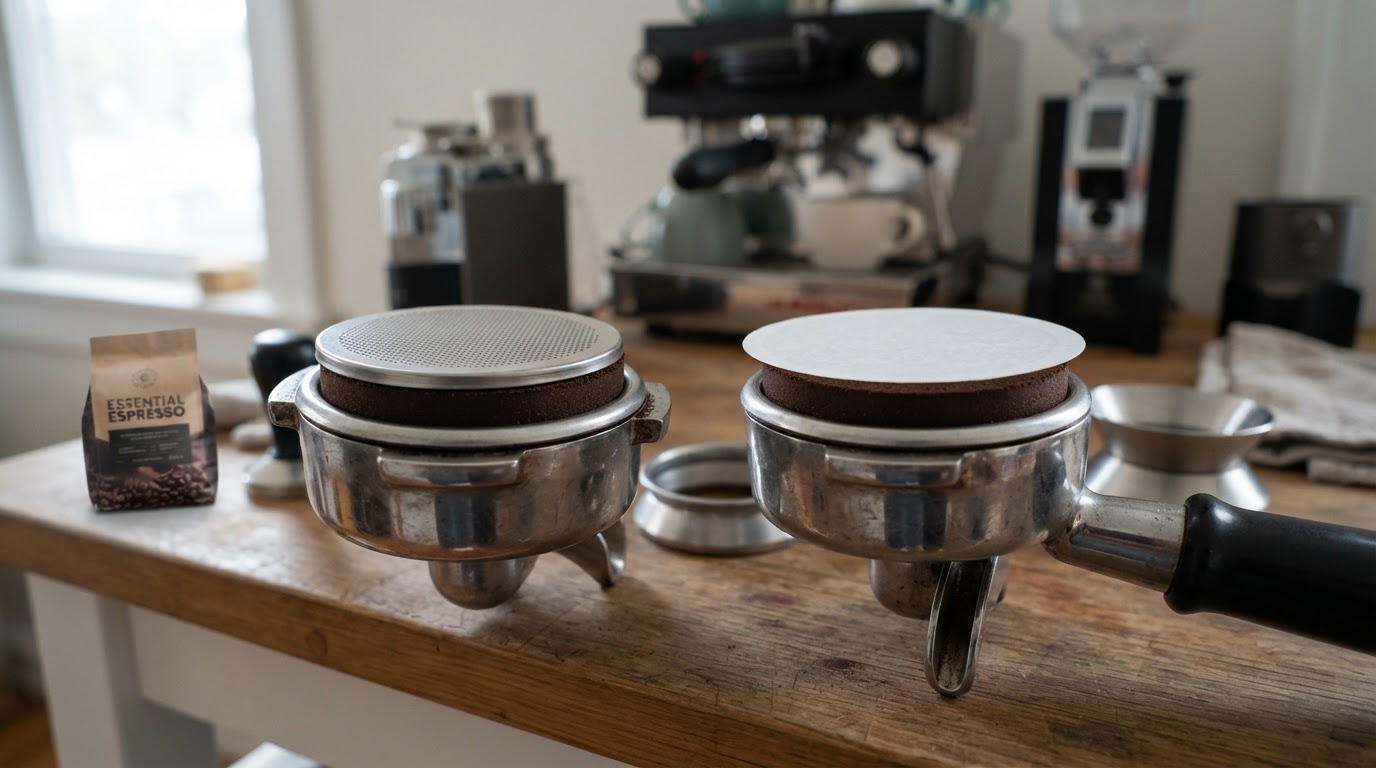
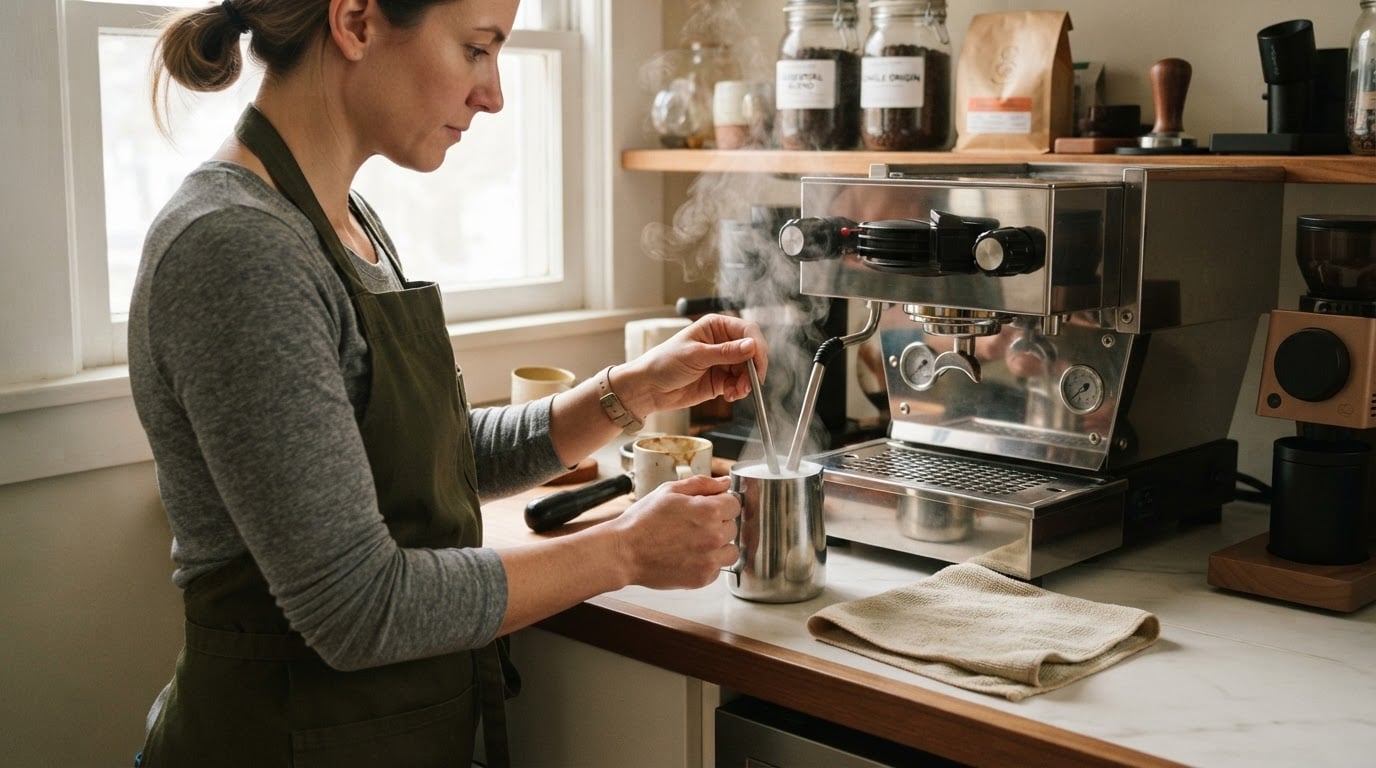
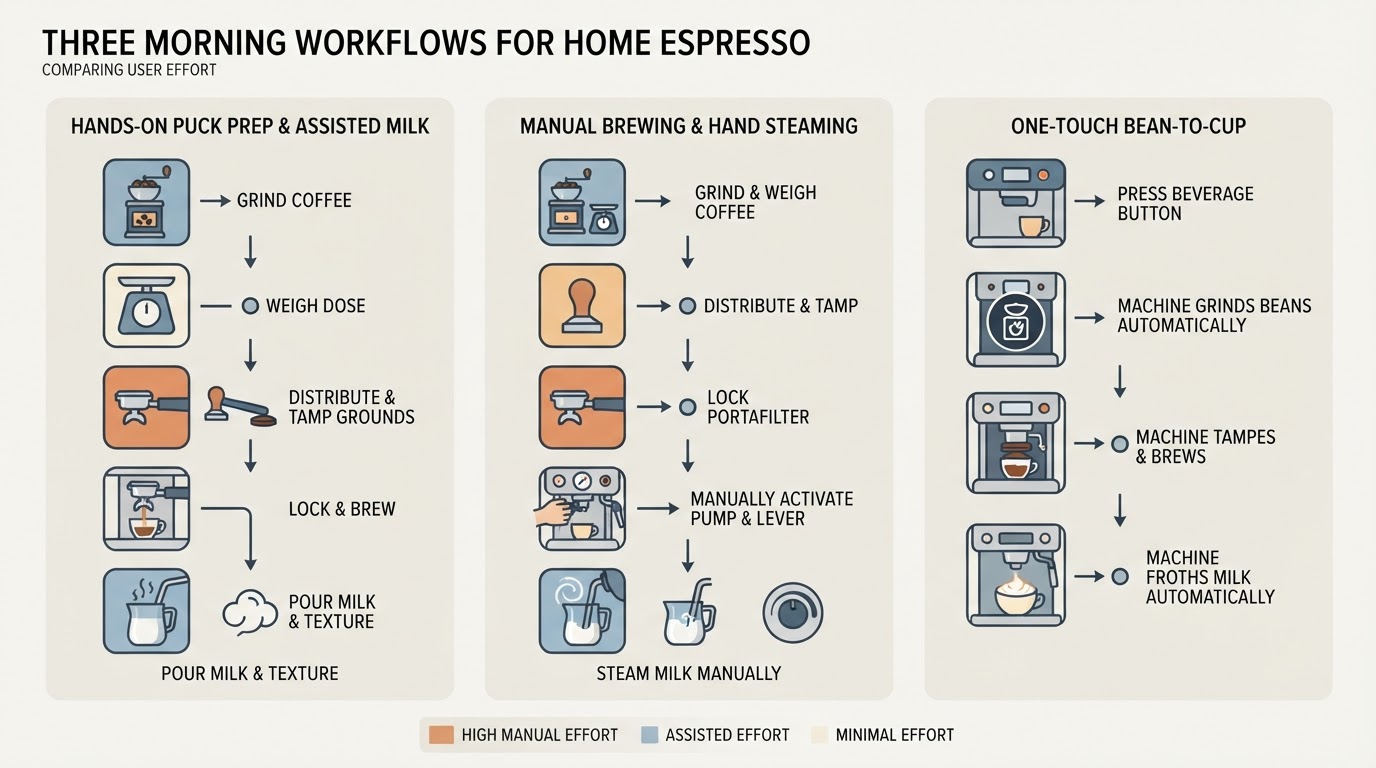
For the Bambino Plus or Silvia Pro X, expect to grind, dose, tamp, lock in a portafilter and dispose of the puck. Assisted steaming on the Bambino Plus changes the milk step; it does not automate those coffee steps. The Silvia Pro X separates coffee and steam heating, which is useful when several milk drinks arrive together. It still asks you to steam manually.
On the Philips, the machine handles preparation inside the cabinet. You choose a recipe and adjust available settings instead of handling the puck. That convenience still leaves refilling beans and water, emptying grounds, cleaning the milk system and following maintenance prompts.
A shared kitchen is a useful deciding case. Ask every regular user whether they will prepare a portafilter and clean up afterward. If the answer is no, a manual machine's extra controls will not help those users.
Compare the complete setup cost
Get current prices for the exact regional models, then add the items each quote leaves out. For both manual machines, include an espresso-capable grinder. For all three, include the manufacturer's required cleaners, any appropriate filters and the local service arrangement. Confirm dimensions with room to open and refill the machine, rather than comparing cabinet width alone.
For illustration only, a $600 machine plus a $250 grinder, $80 of first-year cleaning and filters, and a $50 service reserve totals $980 before beans. Those figures are arithmetic assumptions, not prices for these models. Replace them with your actual quotes.
What would change the choice?
- If milk drinks are rare, automatic steaming may not justify its extra cost to you.
- If several milk drinks are usual, ask to see that exact sequence demonstrated before paying for additional boiler capacity.
- If nobody will clean a milk system, reconsider whether milk automation suits the household.
- If a machine uses the entire budget, include the missing grinder or accessories before deciding it is affordable.
This comparison uses manufacturers’ published specifications, checked on 23 October 2026. It does not report hands-on testing, measured taste differences or long-term reliability.
For a closer look at two one-touch machines, see Philips 5500 versus JURA E8.