The direct answer
There is no single best super automatic espresso machine, because the machine that suits a solo espresso drinker, a two-latte household, and a small office is built differently on purpose. The useful question is narrower: which machine matches your drink menu, how much milk handling you want automated, and how much cleaning you will genuinely keep up with. Decide those three, then compare models inside one price tier. That order prevents the classic mistake of buying for the drinks you imagine making instead of the ones you actually make.
How a super automatic espresso machine works
A super automatic is a full espresso bar compressed into one cabinet. You fill the bean hopper and the water tank, and the machine grinds the beans, doses the grounds into a brew chamber, tamps them, and pushes hot water through the puck under pressure. It then knocks the used puck into an internal grounds container. An automatic milk system adds a frothing step that draws milk from a carafe and dispenses it into the cup, and most machines run a rinse cycle to flush the brew path.
Each step in that chain can be more or less capable. A wider grind range and finer dose control help when a new bag of beans pulls too fast or too slow. An integrated milk carafe delivers a cappuccino at one touch, and adds a milk line that needs regular rinsing. A removable brew unit is easy to rinse by hand, while a sealed brewing path leans harder on programmed cleaning cycles. Comparing two machines is really comparing which parts of that chain are automated, and which parts become your job.
Super automatic vs semi automatic vs pod machines
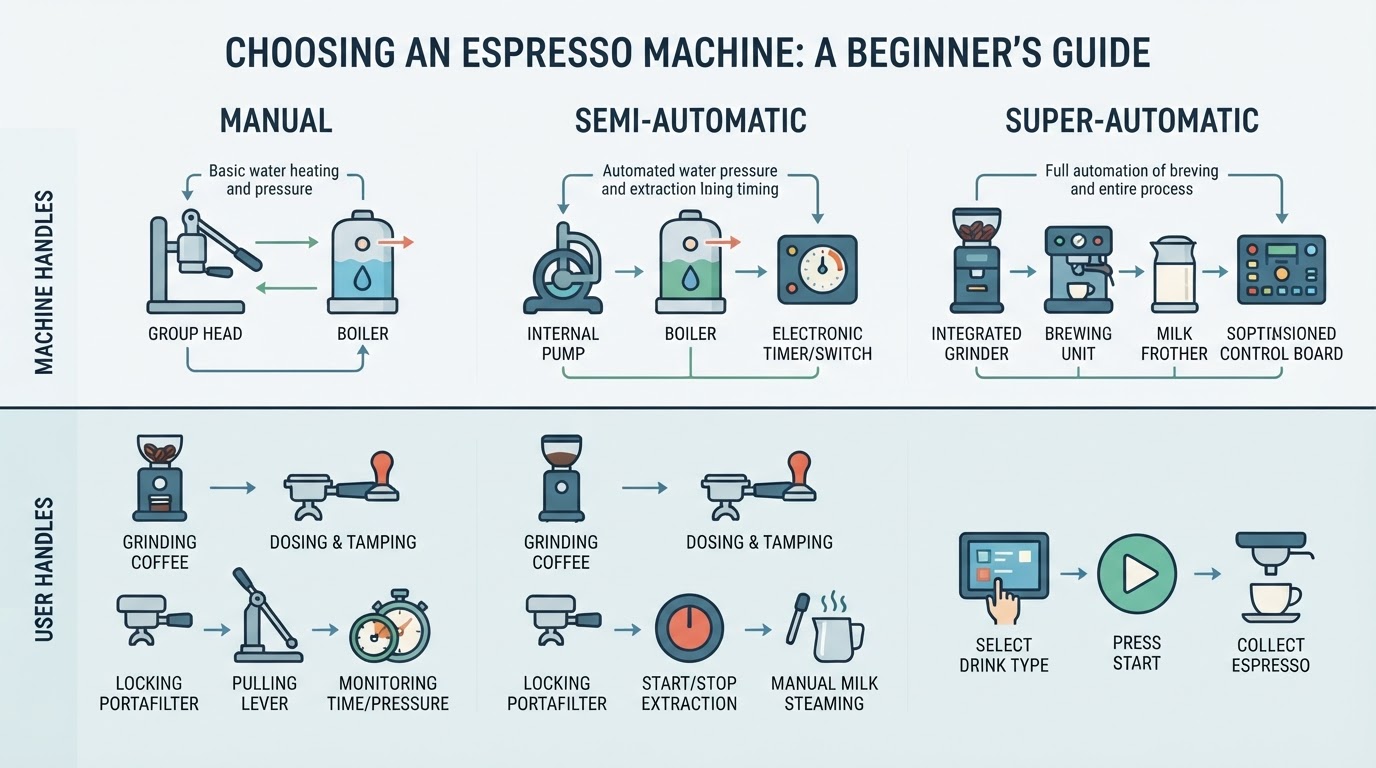
The three categories split the work differently, and the trade-off is mostly about who does it.
Super automatic machines handle grinding, dosing, tamping, brewing, and often milk frothing. You press a button and get a repeatable drink. You pay for that automation up front and in maintenance: rinsing, descaling, emptying grounds, and keeping the milk path clean. They fit households with several drinkers, mixed orders, and no appetite for technique.
Semi automatic machines leave grinding, dosing, and tamping to you. The learning curve is real, but you control extraction directly and pay less for the same espresso potential. They fit one or two people who enjoy the routine and will dial in a grinder. If you want the best cup for the money and do not mind the work, weigh this category against super automatics.
Pod machines remove the work and the control at the same time. The grind is fixed and the drink menu is whatever the pods offer. They are the easiest and usually cheapest way to start, but the cost per cup tends to run higher, and there is little to adjust when a cup tastes wrong. They fit low-volume drinkers and anyone who wants a machine that only asks for water and a pod.
A simple test: if you want a latte without thinking about it, choose super automatic. If you want to understand why this week's shot tastes better, choose semi automatic. If you want decent coffee with almost no effort and accept the limited menu, stay with pods.
The criteria that separate super automatic machines
Drink menu and milk system
Milk handling creates the biggest daily difference. Some machines have no milk system, so you steam with a wand or add cold milk. Others give you a steam wand to operate with a pitcher. The most automated design uses a carafe that froths and dispenses into the cup, which is what makes one-touch milk drinks possible. Count the milk drinks in a normal week. If they are most of your orders, an automatic milk system earns its place, along with its rinsing routine.
Grind and strength settings
Check how finely you can adjust the grind and how many steps the machine offers, since fine adjustment helps when a bean runs fast or slow. Strength and dose settings control how much coffee goes into the shot, a separate lever from grind. Two details matter: a bypass chute for pre-ground coffee, so you can brew decaf without emptying the hopper, and whether there is one hopper or two, since a second lets two drinkers keep their own beans loaded.
Cleaning programs
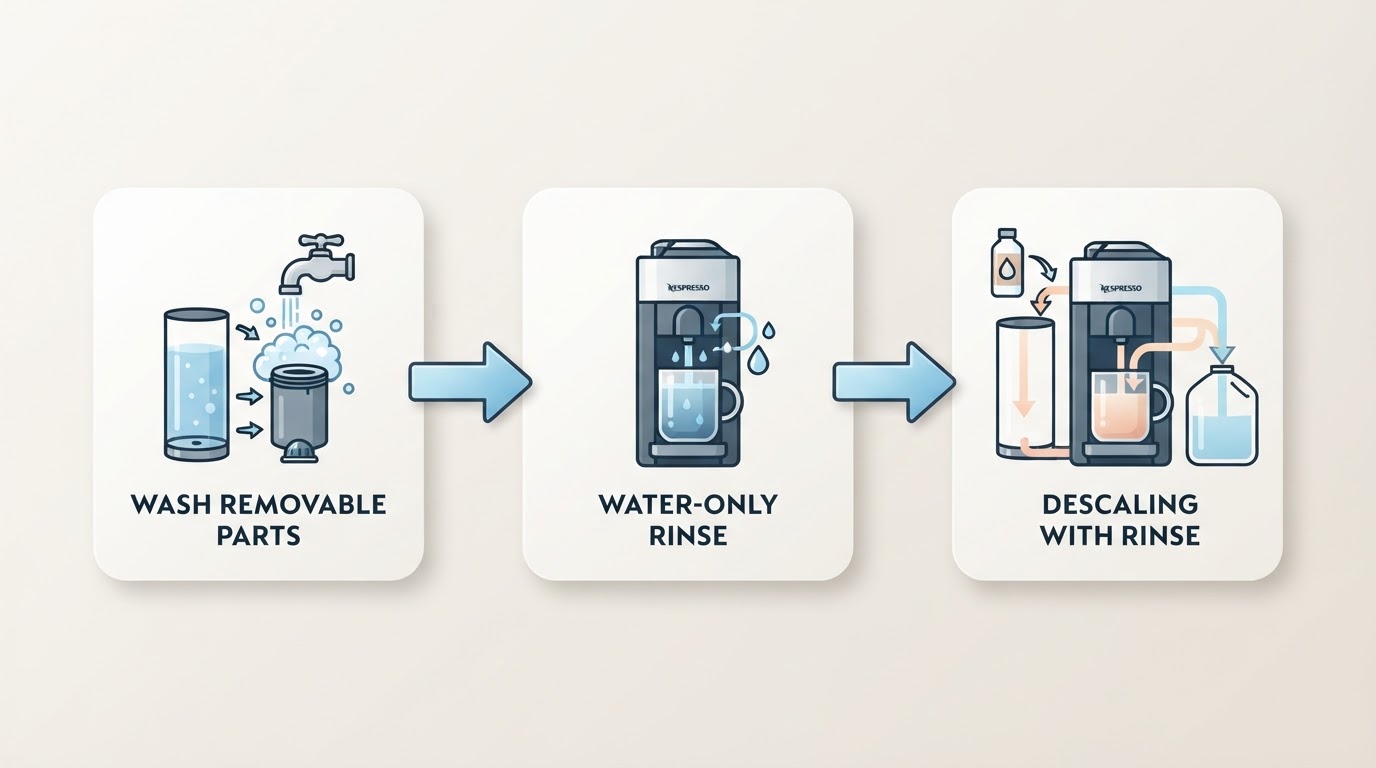
Every super automatic needs routine cleaning, and the design decides how much of it is manual. Automatic rinse cycles at startup and shutdown keep the brew path fresh, and a dedicated milk-rinse program matters if you use the frother daily. Descaling reminders and guided descale programs make the biggest scheduled job less error-prone. Check whether the brew unit lifts out for rinsing, how easily the drip tray and grounds container come free, and whether the tank can be removed and filled at the sink.
Water handling
Water is most of what ends up in the cup, and it is also what scales the machine. A larger tank means fewer refills, and a machine that can be plumbed to a water line suits a busy kitchen. A filter and a hardness setting reduce how often you descale, which matters if your tap water runs hard. If the machine takes a proprietary filter, treat replacements as an ongoing cost and check how clearly it signals a change.
Footprint and clearances
Measure before you shop. Height and depth usually matter more than width, because the machine must sit under the upper cabinets and still let you lift the tank or open the door. Leave clearance above, working room in front, and space to swing the steam wand or pull the milk carafe. Check which side the grounds container and drip tray come out. A machine that fits the counter but blocks a cabinet door will irritate you every morning.
Maintenance demands
Add up what the machine asks of you, then decide who will do it. Daily work is short: rinse the milk parts, empty the grounds, refill the tank. Weekly work may add a deeper rinse of the brew unit and drip tray. Scheduled work covers descaling, filters, and eventually wear items such as seals. Shorter warm-up times and quieter operation make a machine easier to live with, while an awkwardly placed tank tends to get neglected.
What the price tiers actually buy
Street prices move with promotions and regional pricing, so compare tiers by capability rather than by a fixed number. Look up the current price and the full specification on the manufacturer's page before you commit.
Tier | What it adds | Best fit | Verify before buying |
|---|---|---|---|
Entry | Core bean-to-cup brewing, a smaller drink menu, simpler milk handling, basic rinse programs | A first machine, espresso and long coffee, one or two drinkers | Milk routine, grind adjustment range, tank size |
Mid | Automatic milk system, more drink presets, finer grind and dose control, larger tanks | Households making milk drinks daily with mixed preferences | Milk-line cleaning effort, brew-unit access, filter cost |
Premium | Two heating systems for coffee and milk in sequence, deeper customization, dual hoppers or higher capacity, stronger cleaning automation | High-volume homes, small offices, two serious drinkers | Footprint and plumbing, service options, consumable costs |
Match the machine to your use case
Two drinkers with different orders
If one person drinks espresso and the other wants a flat white, prioritize an automatic milk system and either a second hopper or a bypass chute. Two hoppers let each drinker keep their own beans; a bypass chute covers decaf and single-origin experiments without dedicating a hopper to them.
Small kitchens and apartments
Footprint decides this one. Prioritize a machine that fits under the cabinets with room to lift the tank, a tank you can refill in place, and a milk system that stores compactly. If counter depth is tight, confirm the drip tray and grounds container still pull out without hitting the wall.
Home offices and small teams
Volume changes the criteria. Look for a larger tank or a plumbing option, a grounds container that does not need emptying mid-day, and a milk system that rinses quickly between uses. Cleaning automation matters more here, because the person maintaining the machine is rarely the person enjoying it.
First machine or a gift
Start with the drink menu rather than the feature list. A machine that makes excellent espresso but ignores milk drinks will disappoint a cappuccino drinker. Prioritize simple controls, an obvious cleaning routine, and low-maintenance milk handling. If the recipient is not a coffee tinkerer, automatic is safer than adjustable.
Shortlist criteria before you buy
Work through this list in order, and stop when one machine clearly matches your answers.
- Measure the space. Record counter width, depth, cabinet clearance above, and the free space in front.
- Count your drinks. Note how many milk drinks and how many black coffees you make in a typical week.
- Decide the milk system. Choose manual, semi-automatic, or carafe-based frothing based on that count.
- Map the maintenance. List the daily, weekly, and scheduled tasks, and name who will do each one.
- Check the water plan. Choose tank or plumbing, decide on filtered water, and confirm the descaling schedule.
- Confirm the spec details. Verify grind adjustment, dose settings, bypass chute, hopper count, and removable brew unit on the manufacturer's page.
You have finished the shortlist when you can name the single best super automatic espresso machine for your kitchen and the one feature you would give up to stay within budget. If you cannot answer the second part, you are still comparing wants, not needs.
Frequently asked questions
Are super automatic machines worth it?
They earn their cost when convenience and consistency matter more than hands-on control, especially in a household where several people make different orders. If you enjoy dialing in a grinder and pulling shots yourself, a semi automatic gives you more control for less money.
Do super automatics make espresso as good as semi automatics?
They trade control for consistency. A super automatic removes variables such as tamping pressure, so it repeats the same result every time. A semi automatic lets a skilled user chase a better result and an unskilled user produce a worse one. Grinder quality and brew temperature matter in both categories, so verify those details rather than the marketing labels.
Can a super automatic use pre-ground coffee?
Some models include a bypass chute and some do not. If you want to brew decaf or use a specific pre-ground blend, make the bypass chute a hard requirement and confirm it in the specification before buying.
How often does a super automatic need descaling?
The schedule depends on water hardness and usage. Most machines estimate it from how much you brew and prompt you, and filtered water typically stretches the interval. Follow the machine's prompt rather than a fixed calendar, and do not postpone a descale once it appears.
Can super automatics froth plant-based milk?
Results vary by milk type and frother design. Oat, soy, and barista-style plant milks behave differently from dairy, and some machines handle them better than others. If you cannot test before buying, treat plant-milk frothing as a feature to verify rather than assume.