The Short Verdict
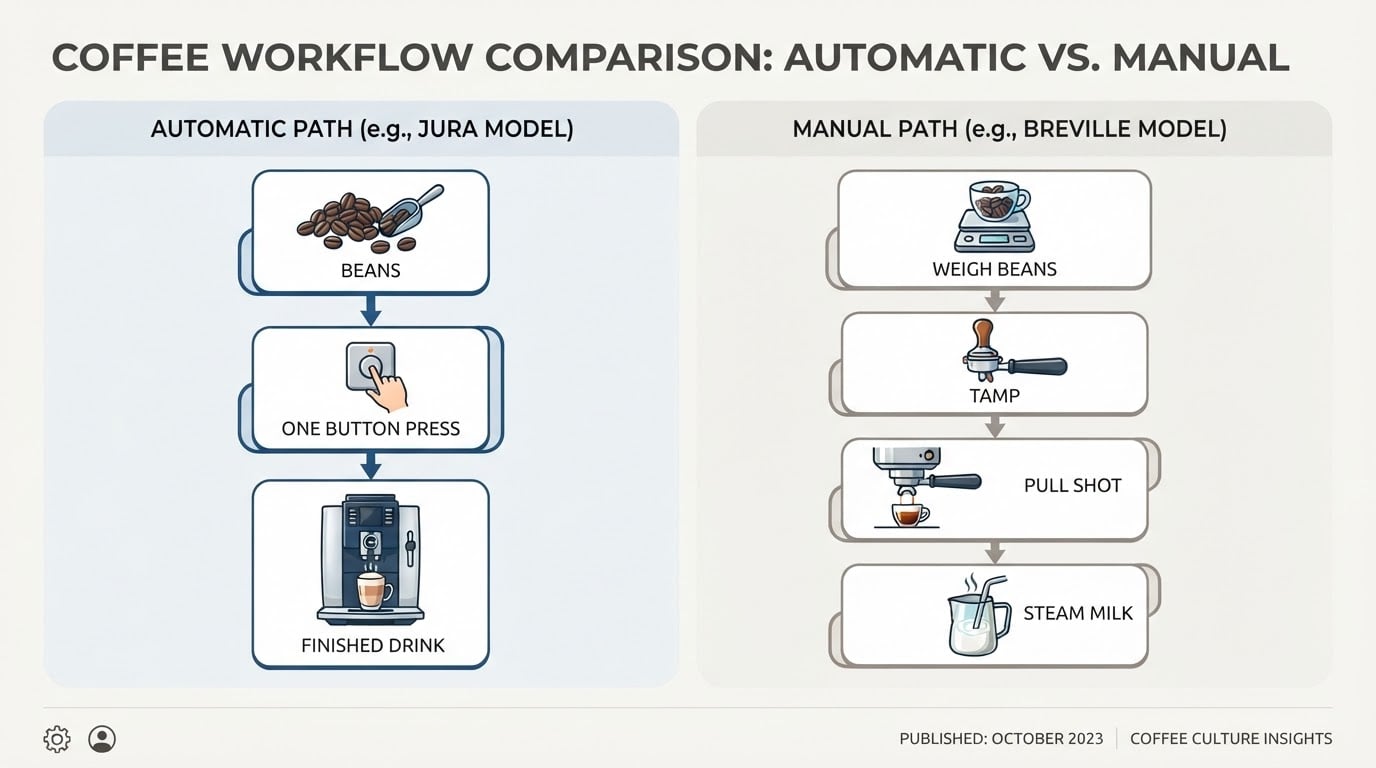
The Breville Barista Express is a semi-automatic espresso machine with an integrated grinder. It puts a complete espresso workflow on one home countertop: you choose the grind, fill and level the basket, tamp the puck, and decide when to stop the shot, while the machine handles heating, water delivery, pressure, and steaming.
That division of labor is the whole story of this machine. It is a good fit for anyone who wants to understand espresso and is willing to build a repeatable routine. It is a poor fit for anyone who wants the machine to make those decisions.
In practice, the Barista Express tends to suit three kinds of buyers: someone upgrading from pods or drip who wants to learn on real equipment; a household that mostly drinks straight espresso or one or two milk drinks a day; and a buyer who would rather own one integrated machine than shop for and house a separate grinder.
It suits those buyers less well if the goal is speed, if the household makes rounds of milk drinks in quick succession, or if cleaning a group, portafilter, and steam wand after every session sounds like too much work. Before buying, check how the specific model you are considering sequences brewing and steaming, because that is what you will notice on a busy morning.
What the Barista Express Is Designed to Do
The Barista Express is built around a simple intent: bring the core of a café espresso workflow home in a single machine. The integrated grinder means you buy whole beans instead of pre-ground coffee, and the semi-automatic group means you control the dose, the distribution of coffee in the basket, and the tamp before the machine delivers the shot.
That design serves fresh coffee and repeatability. Freshly ground beans give you more aroma and more control than pre-ground coffee, and because the grinder, brewer, and steam wand are one unit, there is less setup and less counter space than a separate grinder-and-machine pairing.
What it is not designed to do is make decisions for you. The results still depend on fresh beans, a consistent dose, and a level tamp, and no setting compensates automatically for an inconsistent puck. It is also a home machine rather than a café machine: it is built for a few drinks at a time, not for a queue. If you expect café throughput, look at commercial-class equipment or a super-automatic designed for it.
Two details are worth confirming in the manual or the current listing before you buy. First, the basket sizes and dose guidance for the exact version on sale, since those affect how forgiving the machine feels. Second, whether the machine is designed to brew and steam at the same time, which matters if you make several milk drinks in a row.
The Grind, Dose, Tamp, Brew Workflow
The daily routine is the part of ownership no spec sheet describes, so here it is in order.
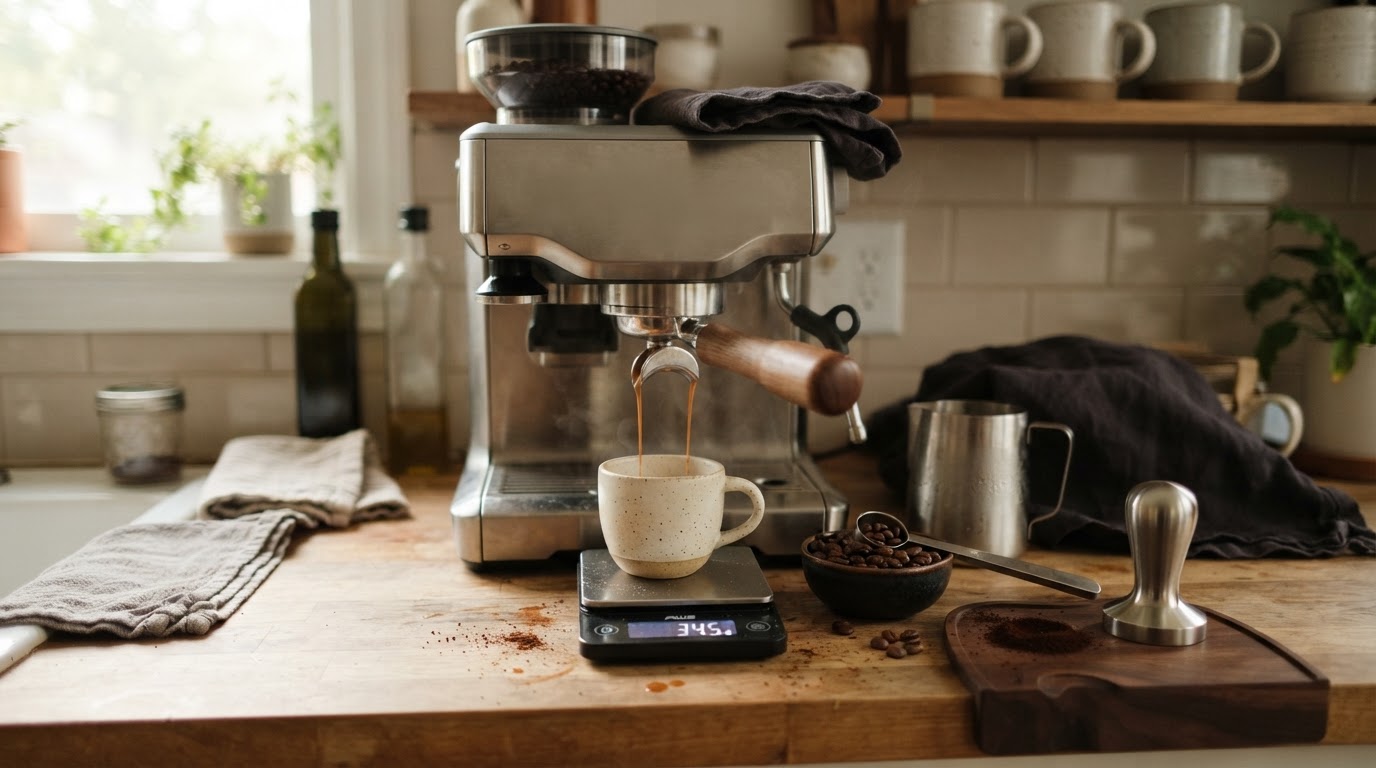
- Start with fresh beans and a warmed machine. Let the machine reach temperature and run a short flush to warm the group.
- Set the grind. Begin at the setting your manual suggests, then adjust by taste. Finer grinds slow the shot and increase extraction; coarser grinds speed it up and reduce it. Move one step at a time so you can tell what changed.
- Weigh the dose. A small scale is the most useful inexpensive upgrade to consistency. Fill the basket, then level the bed and distribute the coffee so it is even before tamping.
- Tamp level. The goal is a flat, evenly compressed puck, not maximum force. An uneven tamp is one of the most common causes of a gusher or a choked shot.
- Lock the portafilter and brew into a cup placed on the scale. Watch the first drops, the color of the stream, and the final weight.
- Taste, then adjust one variable. Sour and thin usually points to under-extraction: grind finer or lengthen the shot slightly. Bitter and harsh usually points to over-extraction: grind coarser or shorten it.
- Steam the milk after the shot, then purge and wipe the wand so milk does not bake onto it.
A common starting recipe in home espresso is a 1:2 ratio, for example 18 grams of coffee in and about 36 grams of espresso out, with the shot finishing somewhere near 25 to 30 seconds. Treat those figures as checkpoints rather than laws. They give you a stable place to begin testing, and your beans, basket, and taste decide where you finish.
The Learning Curve for a Beginner
Expect the first shots to be drinkable but not remarkable. The learning curve on a semi-automatic is real, but it is mostly about method rather than strength or reflexes.
A beginner's first job is to stop changing everything at once. Pick one coffee, keep the dose fixed, and adjust only the grind until the shot tastes balanced. Keep a simple log: dose, grind setting, shot time, yield, and a one-word taste note. Within a handful of sessions that log starts to explain itself, and you can reproduce a good shot instead of rediscovering it.
The equipment that shortens the curve is unglamorous: a scale that reads to a tenth of a gram, a level tamping technique, and fresh beans. The most common source of frustration is stale or inconsistently stored coffee, which forces a new dial-in every few days and makes the machine look less consistent than it is.
If you would rather skip the tamping and dialing variables entirely, an automatic or assisted model is the more honest purchase. The Barista Express is a learning machine, and that is either the appeal or the deal-breaker.
Consistency: What Changes Shot to Shot
Consistency is not a setting you find once. It is a set of variables you hold steady. The ones that move most often are bean freshness, grind setting drift, dose accuracy, and tamp evenness.
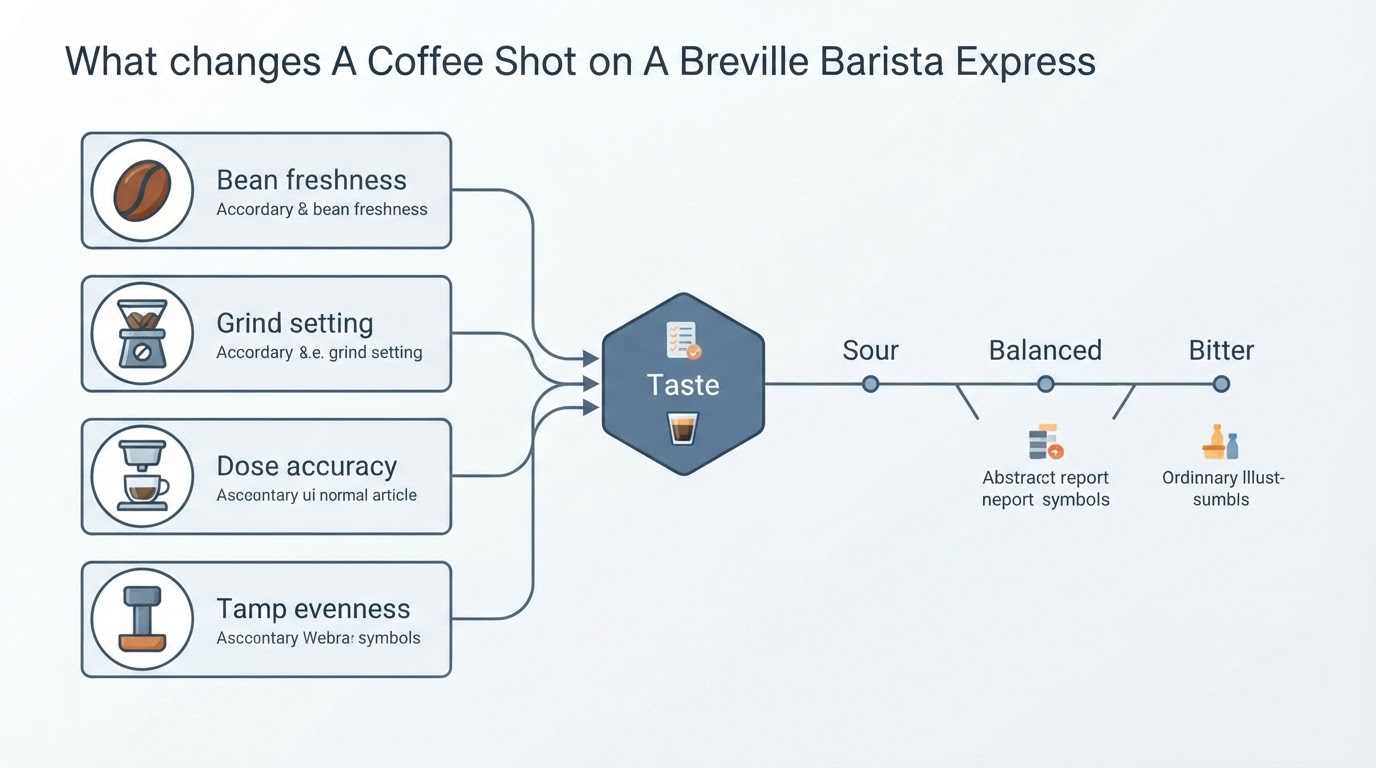
Beans are the largest variable. A bag roasted recently and stored sealed behaves predictably; the same beans a couple of weeks later, or a different roast, will need a new grind setting. Dose accuracy matters next: estimating by eye or by scoop introduces enough variation to change the shot. Tamp evenness comes third, because a tilted tamp channels water through one part of the puck.
A repeatable routine looks like this:
- Start each session with the same beans and the same dose.
- Flush, then pull the shot to the same yield, watching the scale rather than counting seconds alone.
- Taste before you change anything, and change only one variable when you do.
- Re-dial when the bag changes, not every time a shot tastes slightly different.
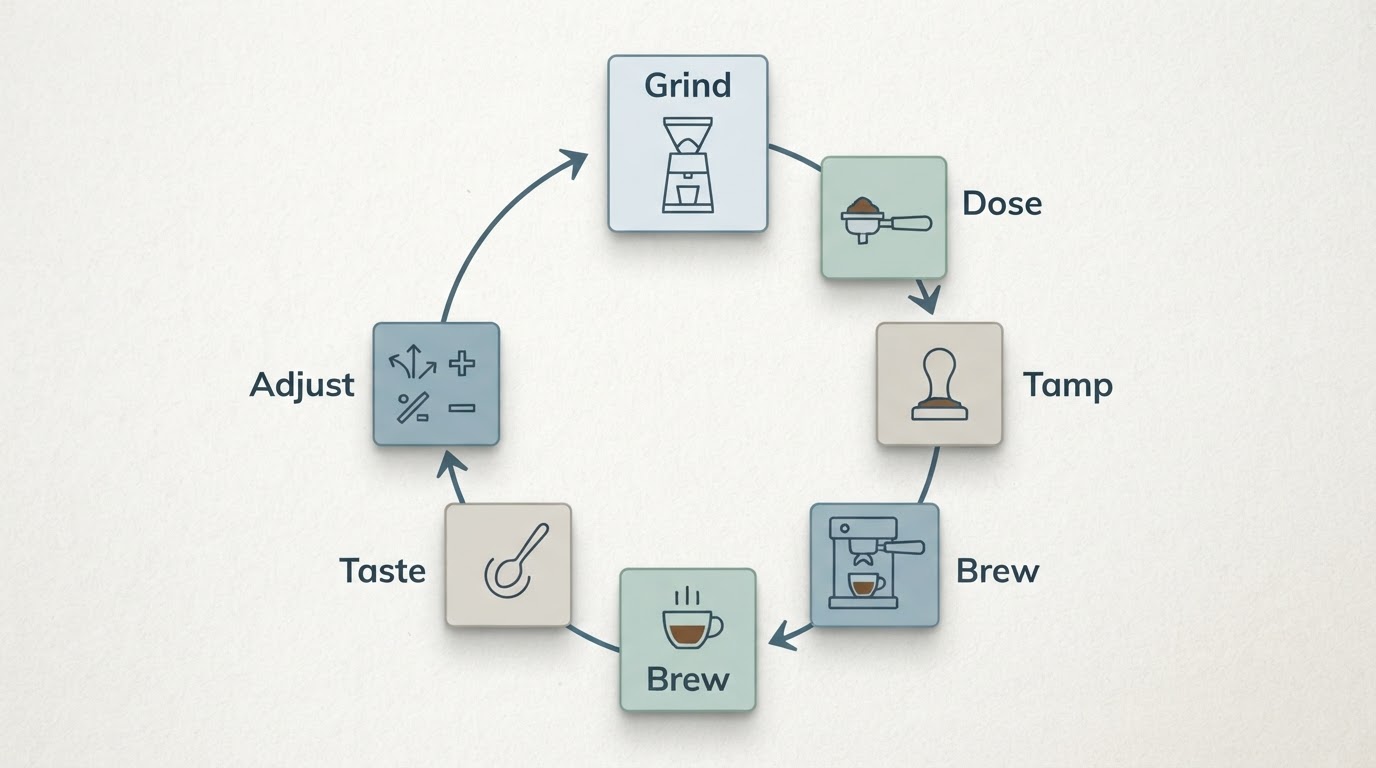
Treat dialing in as a loop rather than a one-time setup. Grind, dose, tamp, brew, taste, adjust, then do it all again tomorrow, because the coffee will not be identical to yesterday's.
Cleaning and Maintenance Routine
The Barista Express needs a short daily routine and a longer periodic one. Most of the daily work takes seconds and prevents the expensive problems.
After each session: knock out the puck, rinse the basket and portafilter, flush the group briefly, purge the steam wand, and wipe the wand and drip area. Milk residue left on a steam wand hardens quickly and affects the next pitcher.
Weekly: remove and rinse the shower screen area if the manual allows it, clean the portafilter basket more thoroughly, and wash the drip tray and water tank. If the machine includes a cleaning cycle with tablets or a cleaning disc, run it at the interval the manual specifies.
Periodically: descale on the manufacturer's schedule. Descaling frequency depends on your water hardness and how much you brew, so the manual, rather than a generic calendar, is the right source. If the machine uses a water filter, replace it on schedule, and use water you would be happy to drink. Hard water is the most common cause of scale, temperature problems, and eventual repair.
Before buying, confirm in the manual what the cleaning supplies cost and whether the machine needs proprietary tablets, filters, or descaler. It is a small line item, but it is part of the real cost of ownership.
Honest Pros and Cons
What works well | What to know |
|---|---|
One machine covers grinding, brewing, and steaming | You supply the technique: dose, distribution, tamp, and timing |
Manual control over grind, dose, and shot length | Dialing in takes practice and a scale |
Integrated grinder means fresh coffee without a second appliance | The grinder is part of the machine, so upgrading it means upgrading the machine |
A clear learning path into espresso | The early shots are a learning period, not a highlight reel |
Compact single-footprint workflow | Milk steaming is a skill of its own |
Straightforward maintenance routine | It still takes daily and periodic attention |
The honest summary is that the machine's strengths and weaknesses are the same trait seen from two sides: it gives you control, and control requires involvement. If involvement sounds like the point, this is a satisfying machine. If it sounds like a chore, the machine will feel like one.
Alternatives to Consider
The right alternative depends on which part of the workflow you want to keep.
If you like the integrated-grinder idea but want a different balance of automation and control, look at the wider Breville family. The Barista Pro, the Barista Express Impress, and the Barista Touch sit at different points on the control-versus-convenience line, so compare the current models directly rather than relying on model names.
If you prefer the traditional setup, a semi-automatic machine such as the Gaggia Classic Evo Pro or the Rancilio Silvia paired with a separate grinder gives you more freedom to upgrade each part independently, at the cost of a longer shopping list, more counter space, and a different routine.
If speed and simplicity matter most, a super-automatic such as a De'Longhi Magnifica Evo or a Philips 3200 or 4300 series machine is the better fit. These grind, dose, tamp, and brew internally and trade your involvement for convenience, usually with less control over the details that change flavor.
If milk drinks are the main event, prioritise machines with easier milk workflows and check how they handle several pitchers in a row. If you mostly drink straight espresso, spending the budget on grind quality and repeatability will pay off more than paying for automation.
FAQ
Is the Breville Barista Express good for beginners?
Yes, if you want to learn how espresso works. It is a machine you learn on: the workflow is visible and adjustable, so mistakes teach you something. If you would rather not build a routine around dialing in, a super-automatic will serve you better.
How long does it take to make one drink?
The shot itself is short, but the session around it is not. Grinding, dosing, tamping, brewing, steaming, and cleaning turn a single drink into a small routine, and two milk drinks take longer than twice the first. That time is the trade you make for control.
Do I need a separate grinder?
No. The integrated grinder is the main reason to consider this machine over a brewer-only setup, and it removes the cost and counter space of a second appliance. If you later want a different grinder, you would be looking at a machine paired with a separate grinder or a higher-tier model.
Can it make latte art?
The machine can produce the espresso and steamed milk that latte art needs; foam quality comes from your milk technique, your pitcher, and the milk itself. Expect to practise, and judge the machine on whether it lets you repeat good results rather than on the first attempt.
How often should I clean and descale it?
Clean the basket, portafilter, group, and steam wand after every session. Descale according to your manual, which ties the interval to water hardness and usage. If you are unsure, check the manual or the machine's indicator before choosing a schedule.
Should I choose this or the Barista Pro or Impress?
This is a workflow question rather than a taste question. The newer and higher models change how much the machine assists with dosing and tamping. Compare the current versions side by side, then choose based on how much manual control you actually want.
What should I verify before buying?
Check the current model's basket sizes and dose guidance, how it sequences brewing and steaming, what cleaning supplies it needs, and the return policy. Confirm whether the version on sale includes the accessories that make dialing in easier, such as a scale and tamping tools.
The Bottom Line
The Breville Barista Express is an excellent first serious espresso machine for a buyer who wants an integrated grinder, a visible workflow, and the satisfaction of controlling the result. It is a poor fit for a buyer who wants the machine to make the decisions. Know which of those buyers you are, verify the current model details against the manufacturer's documentation, and buy the machine that matches your morning rather than the one with the longest feature list.