What the needle is actually telling you
On a Breville machine with an analog gauge, the needle tracks extraction pressure against the coffee in the basket, not the pump's health. Breville's BES870 instruction book calls it an espresso extraction pressure gauge and marks the reading as a range: under, within or over the espresso range. Every shot starts with low-pressure pre-infusion, so the needle climbs in stages; a low first-second reading is normal.
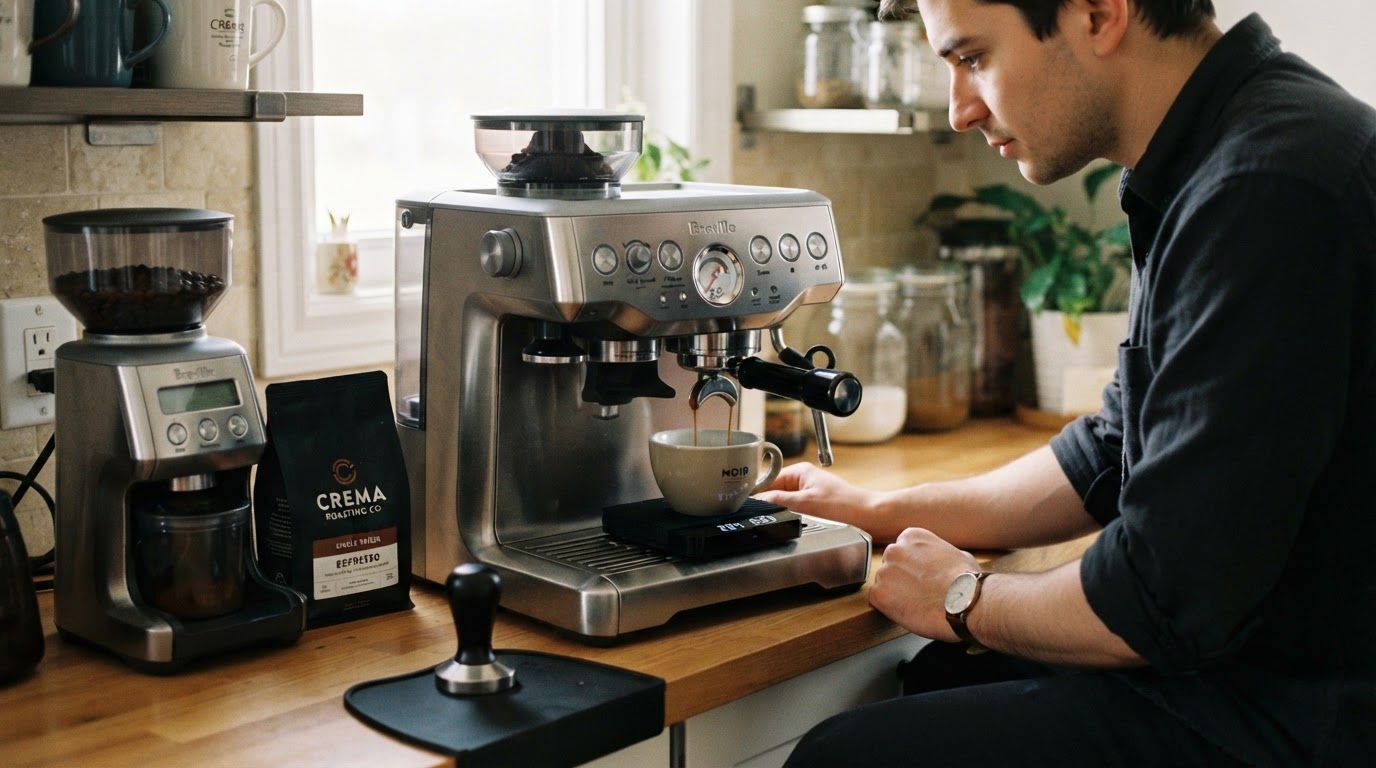
The pump is rated at 15 bar, which the manual mentions as normal pump operation, but that rating is not a gauge target. It describes what the hardware can deliver; the gauge shows pressure against your puck. The espresso range is the reference, and flow and taste decide whether to change anything.
The basket changes what "high" means. The Barista Express product page lists the 54 mm portafilter, an 18 g starting dose and two basket families: Single Wall for fresh beans, Dual Wall for pre-ground coffee. Breville's manual treats the Dual Wall basket as self-regulating, because it "regulates the pressure and helps optimize the extraction regardless of grind, dose, tamp pressure or freshness." Single Wall baskets put your grind and dose directly on show, and gauge faces differ across Breville families, so check your own manual. This is the opposite of a machine that loses pressure after cleaning.
A decision table for a high reading
Barista Express pressure problems usually fit these patterns. Read the needle with the flow and change one thing before retesting.
What you see | What it usually means | First move |
|---|---|---|
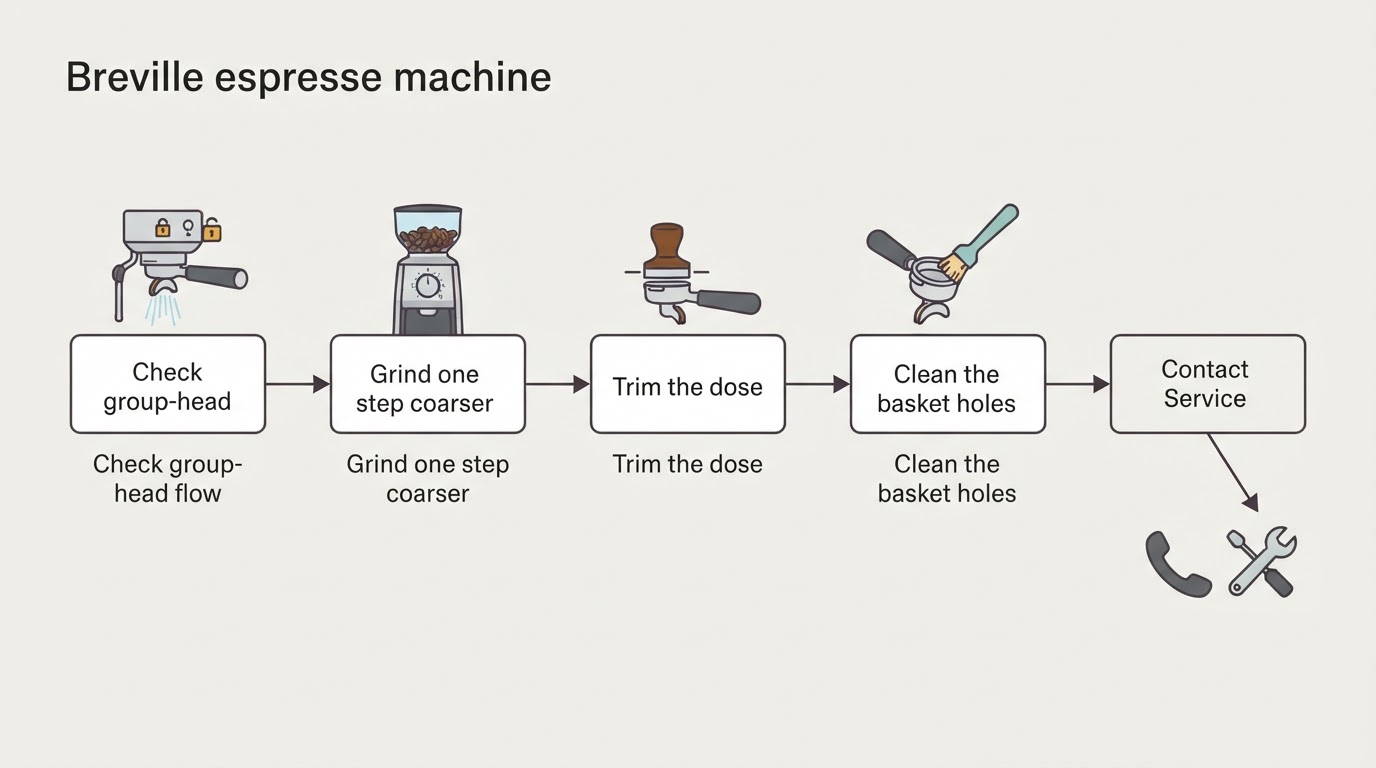
Needle above the espresso range, slow drips or no flow | Too much puck resistance | Grind one step coarser, purge, pull another shot |
Both basket types choke the flow | Excessive dose, too-fine grind or blocked holes | Trim the dose, coarsen, then unblock and rinse the basket |
The Dual Wall basket moves the needle but the Single Wall does not | The machine can create pressure; grind or dose needs work | Check grind, dose and puck preparation, not the hardware |
Needle in the espresso range but the cup tastes off | Puck preparation or beans, not pressure | Fix distribution, tamp and freshness first |
Needle stays at zero while the shot flows and tastes normal | The gauge or its pressure path is suspect | Stop grinding finer and arrange service |
Read needle position, flow and taste together. A gauge that disagrees with otherwise normal water delivery and extraction is a service question, not a reason to keep changing the grind.
Steps to bring the reading down
These are the practical ways to reduce pressure readings on a Barista Express without opening the machine.
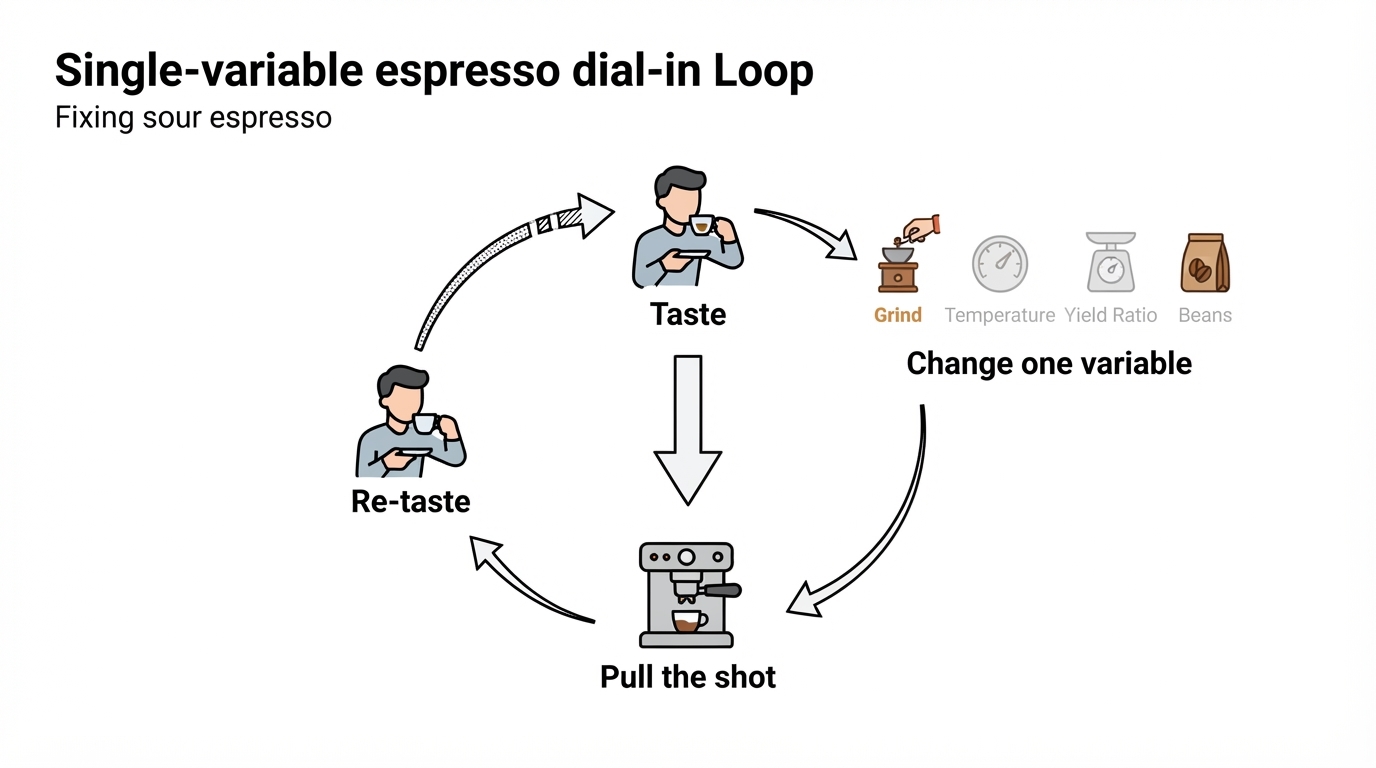
- Change the grind first, one step at a time. The manual links a too-fine grind to over-extraction: water cannot flow through the coffee even under pressure, and the shot turns dark and bitter. Go one number coarser, purge a few grams and retest.
- Check the dose against the basket. Breville lists roughly 8-11 g for the 1 CUP basket and 16-19 g for the 2 CUP basket. After tamping, the tamper cap should sit level with the rim; the Razor tool trims the puck. Too much coffee plus a fine grind commonly chokes the machine.
- Check the basket type and its holes. Use Single Wall baskets with fresh beans and Dual Wall with pre-ground coffee. Switch off and unplug first, use the pin on the cleaning tool to unblock the holes, and rinse so residue does not build up.
- Tamp level and consistently. Breville specifies 22-33 lb (10-15 kg), and consistency matters more than force. Wipe the basket dry before dosing, because moisture encourages channeling.
- Use pre-infusion deliberately. With manual shot control, holding a shot button keeps the machine in low-pressure pre-infusion; full pressure starts when you release. If the needle stays low while you hold, release before deciding anything is faulty.
Completion check. The change worked when flow is no longer choked, the gauge behaves as the manual describes for your exact model and basket, and the cup tastes balanced. Shot timing and yield are useful records, not a universal pass/fail number; see this site's espresso extraction time chart for that separate variable. If two or three single-step adjustments move nothing, stop and reassess.
What not to change on your own
- Do not adjust the over-pressure valve. An OPV adjustment means opening the machine, and internal pressure control belongs with an authorized service provider.
- Do not open a powered machine or remove the gauge. The machine is under pressure; Breville's safety instructions call for switching off and unplugging before cleaning or disassembly.
- Do not improvise a sealed pressure test with the cleaning disc. Breville documents that disc for the automatic cleaning cycle, not as a calibrated pump test.
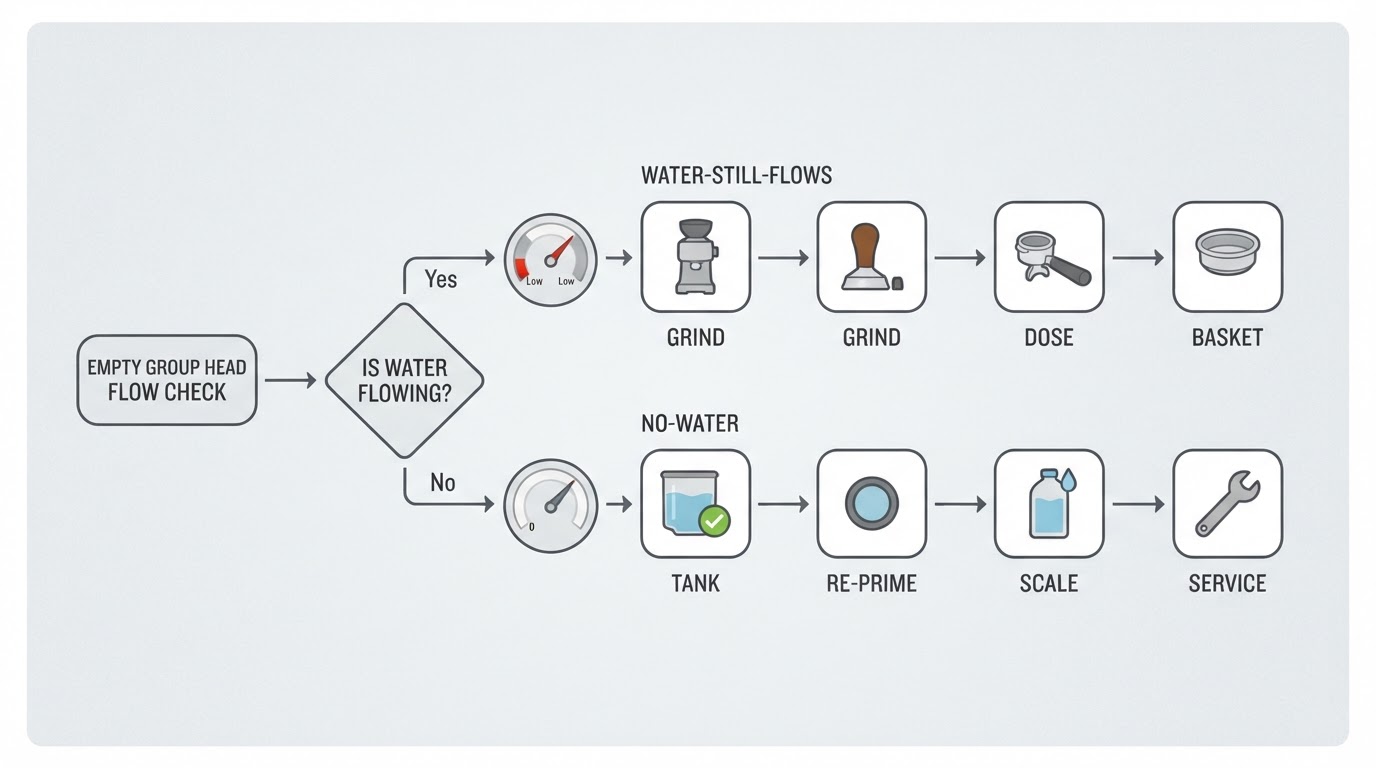
- Do not ignore weak water flow at the group head. Run one short purge without the portafilter. Little or no water means a water-delivery issue, not a grind problem.
- Do not treat the espresso range as an exact bar target. There is no user-facing pressure setting on the Barista Express: Breville lists grind size, grind amount, filter size and shot volume. The dial you can turn is the puck, not the pump.
This covers Breville machines with an analog brew gauge, using the Barista Express BES870/870XL as the example. Other models differ, so confirm details in your own manual.
FAQs
Why is my Breville gauge high when the espresso tastes fine?
Then the needle is not the thing to fix. The gauge reports pressure against a given puck; if flow, timing and taste are balanced, leave the grind alone. Adjust one factor at a time and judge the cup.
Is 15 bar supposed to show on the gauge?
No. Fifteen bar is the pump rating, which the manual mentions as normal operation, not a target extraction pressure. The gauge shows pressure against the coffee; the espresso range is the reference.
When does a high reading mean the machine needs service?
When the needle disagrees with everything else: it stays at zero during a properly prepared shot that flows and tastes normal, the group head gives little or no water with the portafilter removed, or basket, dose and grind changes produce no sensible change. Stop adjusting and contact Breville or an authorized service provider.