A wet puck is a cleanup signal first
When a wet espresso puck comes out soupy, separate two observations: a messy basket and an unsatisfactory drink. They can occur together, but they are not the same problem. The Breville Infuser BES840 manual describes a dry-puck feature for easier disposal. That feature belongs to this model; do not assume every Breville drains the same way.
So treat a Breville wet puck as a clue, not a diagnosis. A balanced shot that ran in a sensible time can still leave a wet puck. Bitter or harsh espresso usually points to over-extraction; thin, sour espresso usually points to under-extraction. Those taste and flow signals are what you act on.
Identify the machine and basket before you change anything
Find your exact model number and identify the basket you actually used, including whether it is original or an aftermarket replacement. Use its manufacturer's dose guidance rather than a number copied from a different machine. A basket's nominal diameter alone does not tell you its capacity.
The BES840 manual distinguishes single-wall baskets for freshly ground beans from dual-wall baskets for pre-ground coffee. Check the corresponding guidance for your own model. Record basket type alongside your dose: otherwise two shots that appear to use the same settings may not be comparable.
Do not overfill the basket to force a dry puck. The BES840 manual lists too much coffee in the basket among the causes of shots that drip instead of flow, and coffee left on the basket rim can break the seal in the group head.
Symptom, check, next step
What you see | What to check | Next step |
|---|---|---|
Soupy puck, but the shot tasted balanced | Cleanup only | Rinse the basket, empty the drip tray, carry on |
Wet puck plus a fast, thin shot | Grind too coarse or dose too low | Make one change: grind finer, or dose a little higher |
Wet puck plus a slow, bitter shot | Grind too fine or dose too high | Grind coarser, or dose lower and trim the puck |
Water still dripping after the shot stops | Pressure-release and purge behavior | Check your exact model manual; contact Breville support if it persists |
Puck stuck to the basket or puck overflowing | Basket overfilled, rim not cleaned | Dose to the basket's range, trim the puck, wipe the rim |
A repeatable routine, one variable at a time
Use the model's dose-level check or supplied trimming tool if its manual calls for one. Do not force extra grounds into the basket just to make the discarded puck look better. The following is a comparison routine, not a universal espresso recipe.
A short working checklist:
- Confirm the model and the basket: 1-cup or 2-cup, single-wall or dual-wall.
- Dose to that basket's range, distribute the grounds, tamp level, then trim with the dose tool.
- Wipe the basket rim so the portafilter seals cleanly.
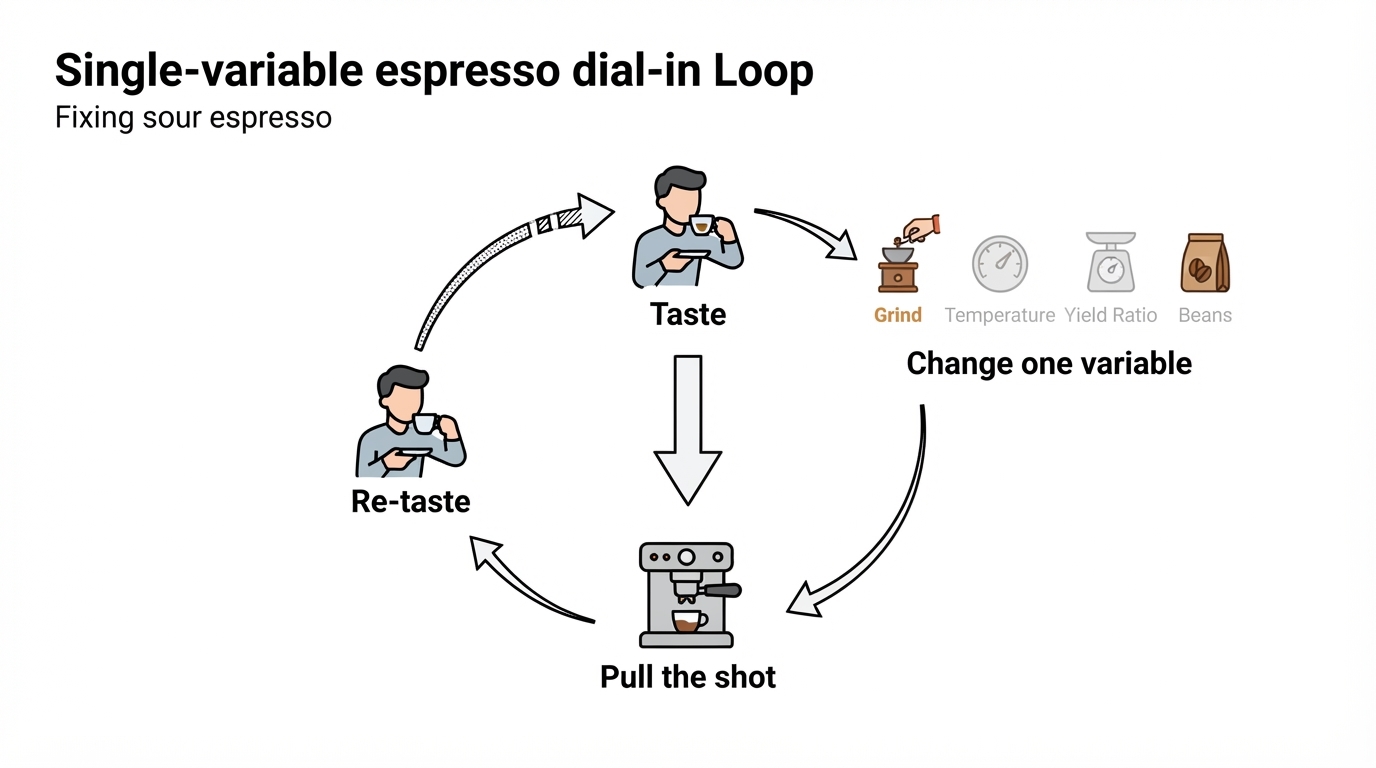
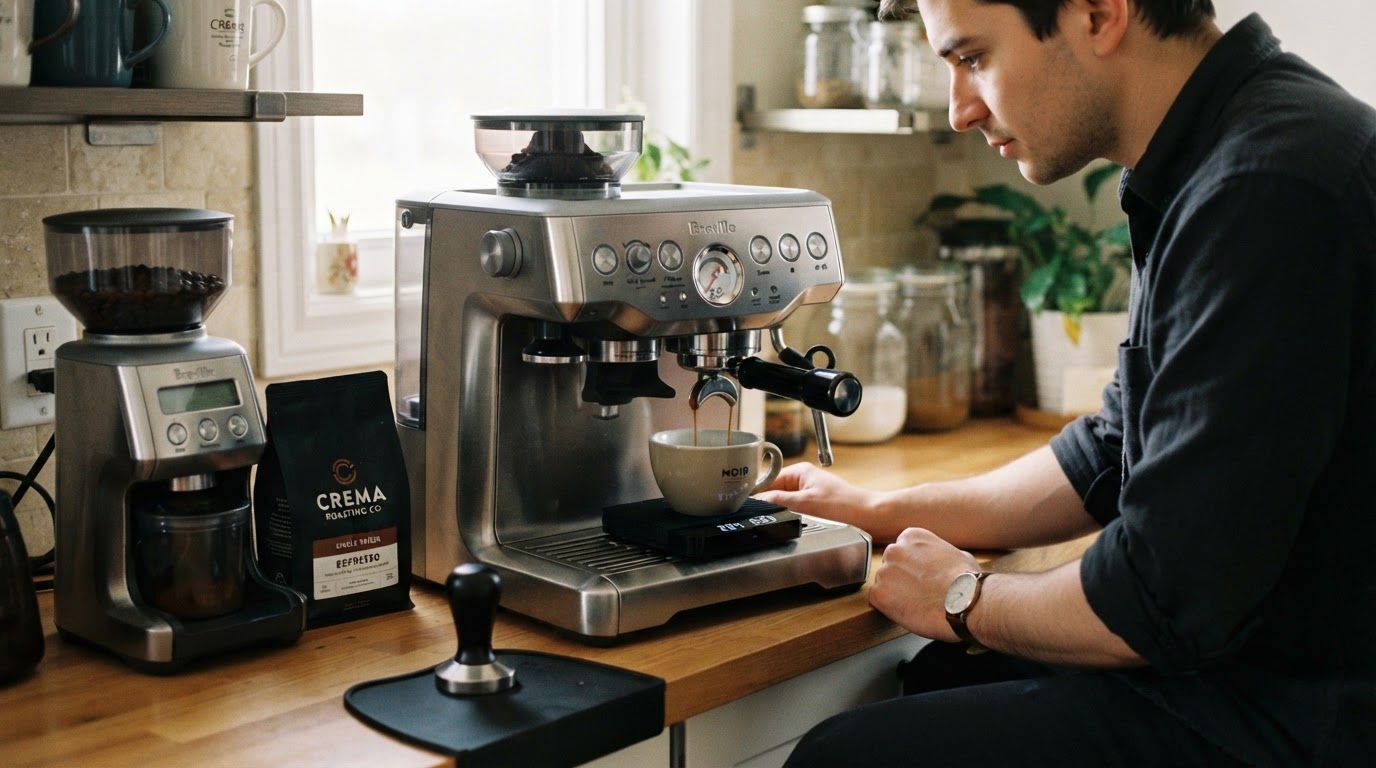
- Pull the shot and write down dose, beverage yield, total time and taste. Note whether your timer includes pre-infusion, so later comparisons use the same starting point.
- Change only one variable next time — grind or dose, never both — and repeat until flow and taste are consistent. That consistency is the completion check; a perfectly dry puck is not.
The manufacturer reference is the Breville Infuser BES840 instruction book; its model-specific details are not specifications for every Breville. The sequence above is a troubleshooting suggestion. Our espresso extraction time chart explains how to read timing alongside yield and taste, not as a pass/fail number by itself.
Cleaning, pressure release and when to stop
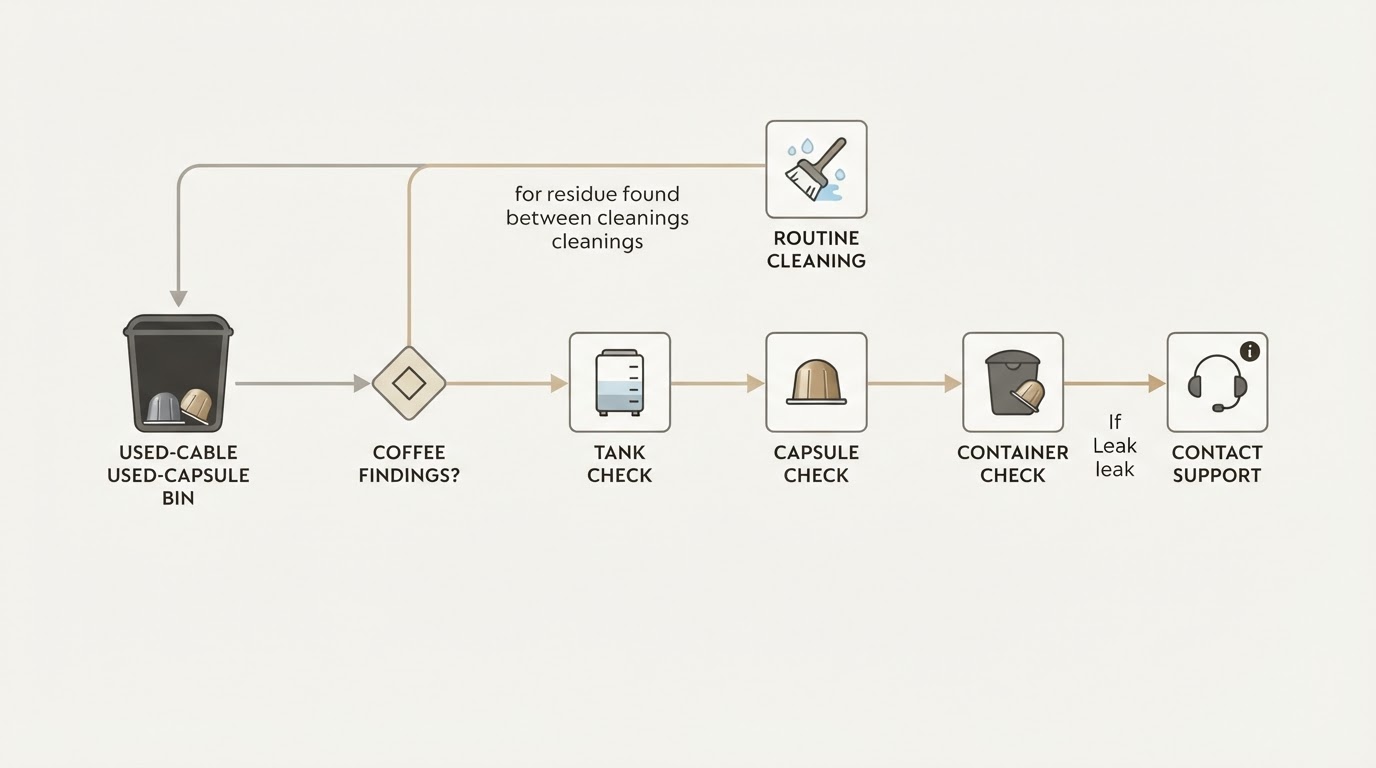
Machines differ in how they release pressure and drain water. Follow your exact model's cleaning and pressure-release instructions. Do not improvise a blind-basket backflush on a machine whose manual does not support it, and do not open the case. A cleaning cycle, descaling and routine rinsing are different procedures; use the one the manual specifies for the problem.
Two safety points from the manual are worth repeating: never remove the portafilter while the machine is brewing, because it is under pressure, and route a blocked basket or a soiled shower screen to rinsing and a warm soak rather than dismantling anything. For persistent leaking or other abnormal behavior after you have checked dose, basket and cleaning, contact Breville consumer support instead of continuing at home.
FAQ
Does a wet puck mean my espresso is bad?
Not by itself. Judge the shot by flow and taste as well as the puck. If the problem is a puck adhering above the basket, see espresso puck stuck to the grouphead. For disposal after normal brewing, see what to do with used espresso pucks.
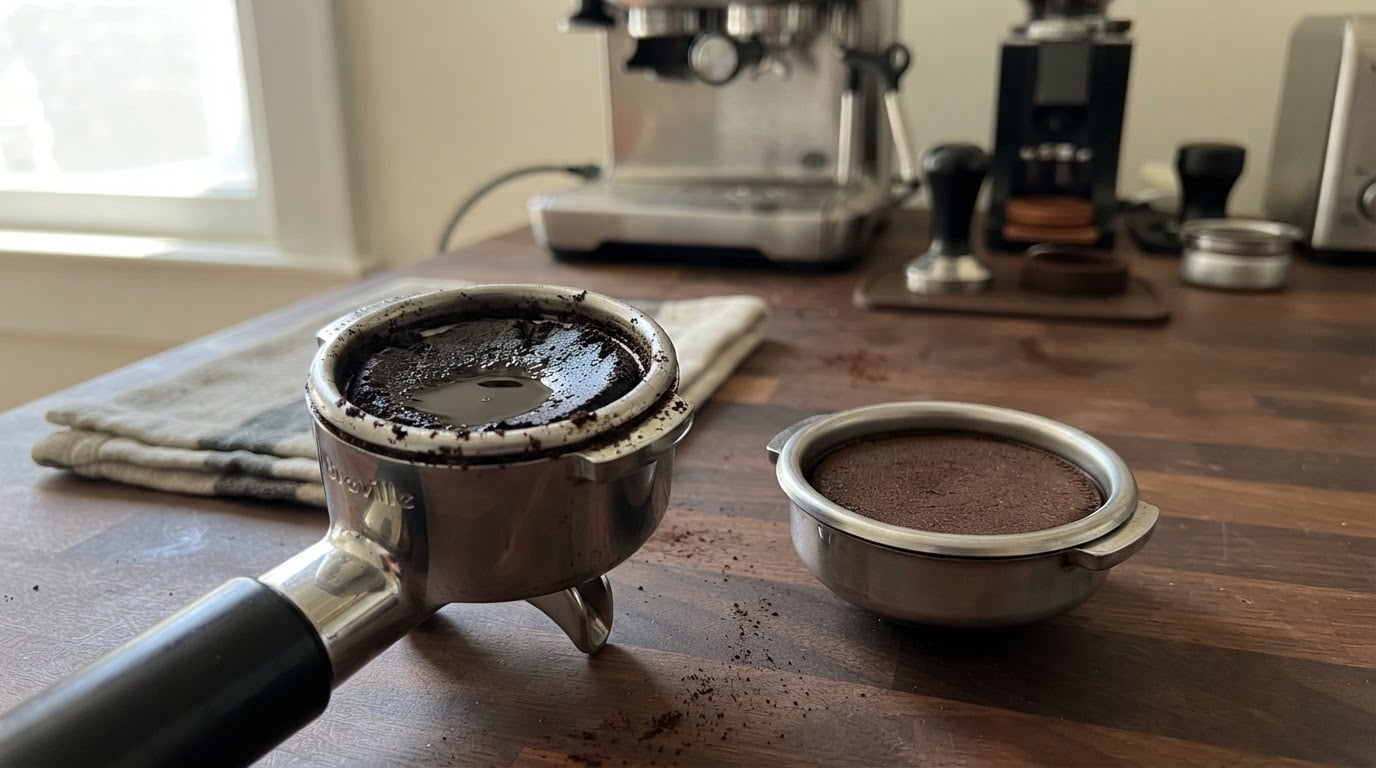
Illustration only, not a measured before-and-after test; a drier puck does not establish better espresso.
Should I add more coffee to make the puck dry?
Only correct an actual under-dose within your basket's recommended range; do not increase dose solely to chase a dry puck. Overfilling can interfere with flow or sealing. Change one variable and judge the next drink.
Why is water sitting in the basket after I stop the shot?
Machines differ in how they release pressure and drain water, so some retained water is normal on many designs. The BES840 manual documents both a dry-puck feature and an automatic purge. Check your exact model manual, and contact Breville support if leaking continues.