Start with the checks that separate a pump fault from a puck problem
Real pump failure shows up everywhere water leaves the machine, not only in the portafilter. If the pump runs, the gauge sits low, and shots gush, the puck needs attention.
Two quick checks tell you which side you are on:
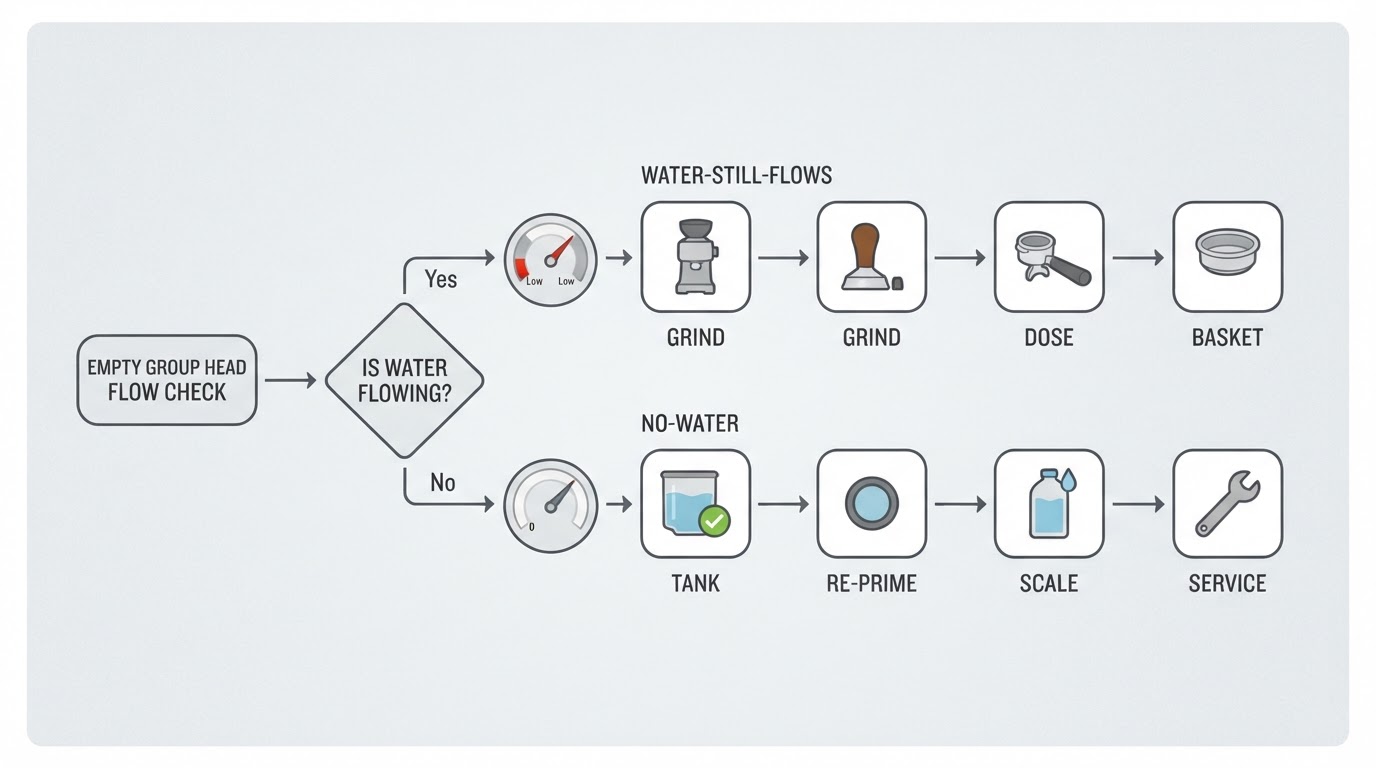
- Empty group head flow. Leave the portafilter out, put a cup under the group head, and start a shot. Water should reach the shower screen in a steady stream. Work with a full tank, and never remove the portafilter mid-extraction.
- Hot water from the steam wand. With the machine heated, draw hot water as your manual describes. If hot water flows while the empty group head is weak, the pump is fine and the restriction is downstream — the screen or basket.
If neither outlet produces water, or the pump is silent, strained, or clicking, stop: running a pump without water can burn it out.
What cleaning actually changes
Cleaning and descaling interrupt the normal water path on purpose. The cleaning cycle uses the supplied grey disc and a tablet in the portafilter to block flow while the group is flushed; afterward, both come out and the basket goes back in (Breville).
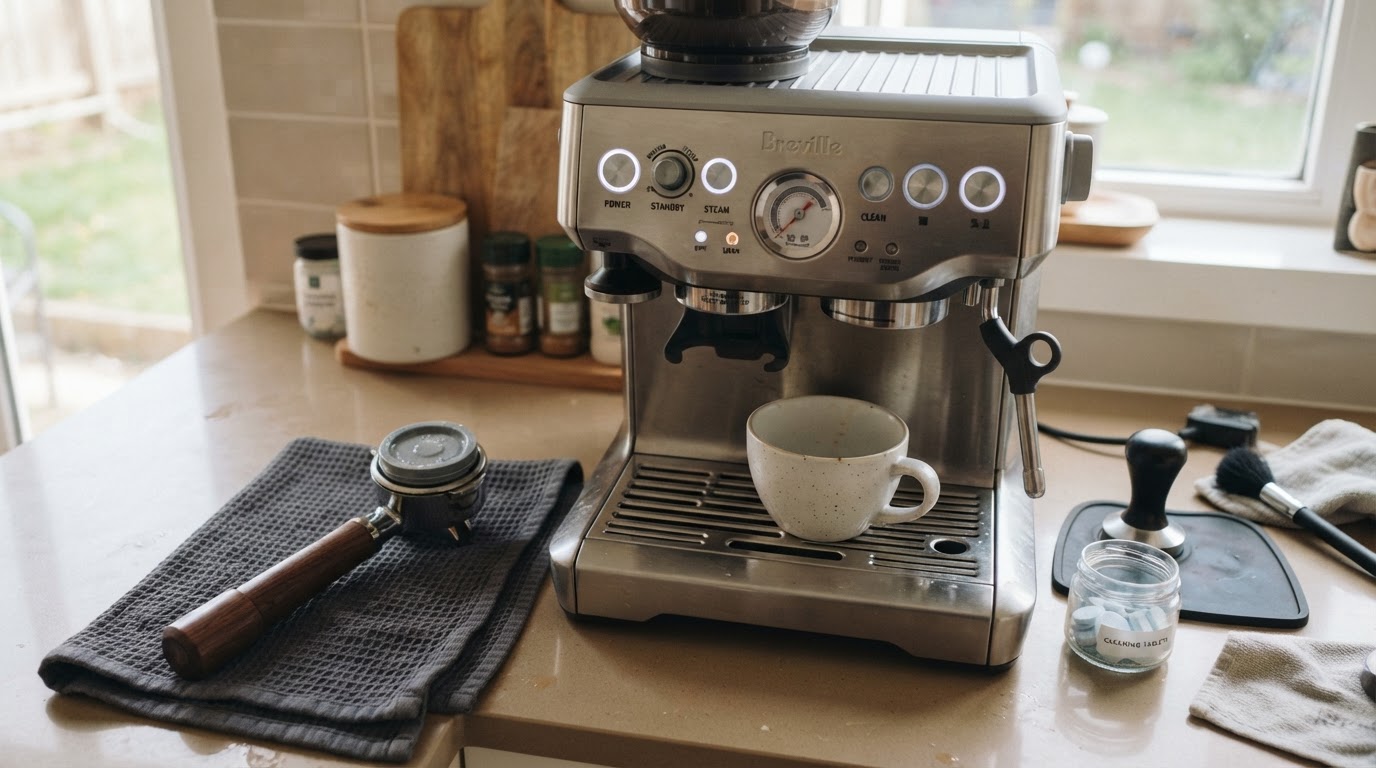
Two post-cleaning states mimic low pressure:
- A refit problem. A basket that is not seated or a portafilter not locked in can change the shot. A cleaning disc left behind can obstruct flow; it does not by itself explain a low-pressure, fast-running shot, so remove it before testing normal extraction.
- A repriming problem. Emptying the tank or reseating it roughly can let air into the line, so the pump moves air instead of water. Re-prime by drawing hot water until the stream runs steadily, following your model's instruction book.
The model code is on the rating plate; the US Barista Express belongs to the BES870 series. Breville's support page collects the official tutorials and troubleshooting for it (Breville support), so match your code before removing parts.
Is the pressure really gone? Read the gauge and the shot together
The gauge is extraction feedback: it shows how hard the pump is pushing water through the puck during a shot. A low reading with water flowing is a puck message, not a pump verdict.
- No pump pressure. No water from the group head or hot water outlet, plus an unusual pump sound — silent, straining, or rapid clicking. Stop; this is a supply, air, or service issue.
- Low gauge during a shot. The needle stays low, the shot runs fast and blondes early: water is flowing too easily through the puck.
- High gauge or drips. The needle sits past the espresso range and the shot barely drips: the puck is too dense.
- Low flow with normal pressure. Slow water with a healthy gauge is a restriction — scale or a blocked screen or basket — not a pressure loss.
A safe check order for the next shot
- Identify the machine and the manual. Confirm the model code on the rating plate, then open that model's instruction book.
- Rebuild the machine state. Tank full and pushed down until it locks, normal basket back in, cleaning disc and tablet out, portafilter clean and dry.
- Re-prime the line if the tank ran empty or you descaled. Draw hot water until the stream is steady.
- Test the empty group head. Confirm water reaches the shower screen with no puck in the way.
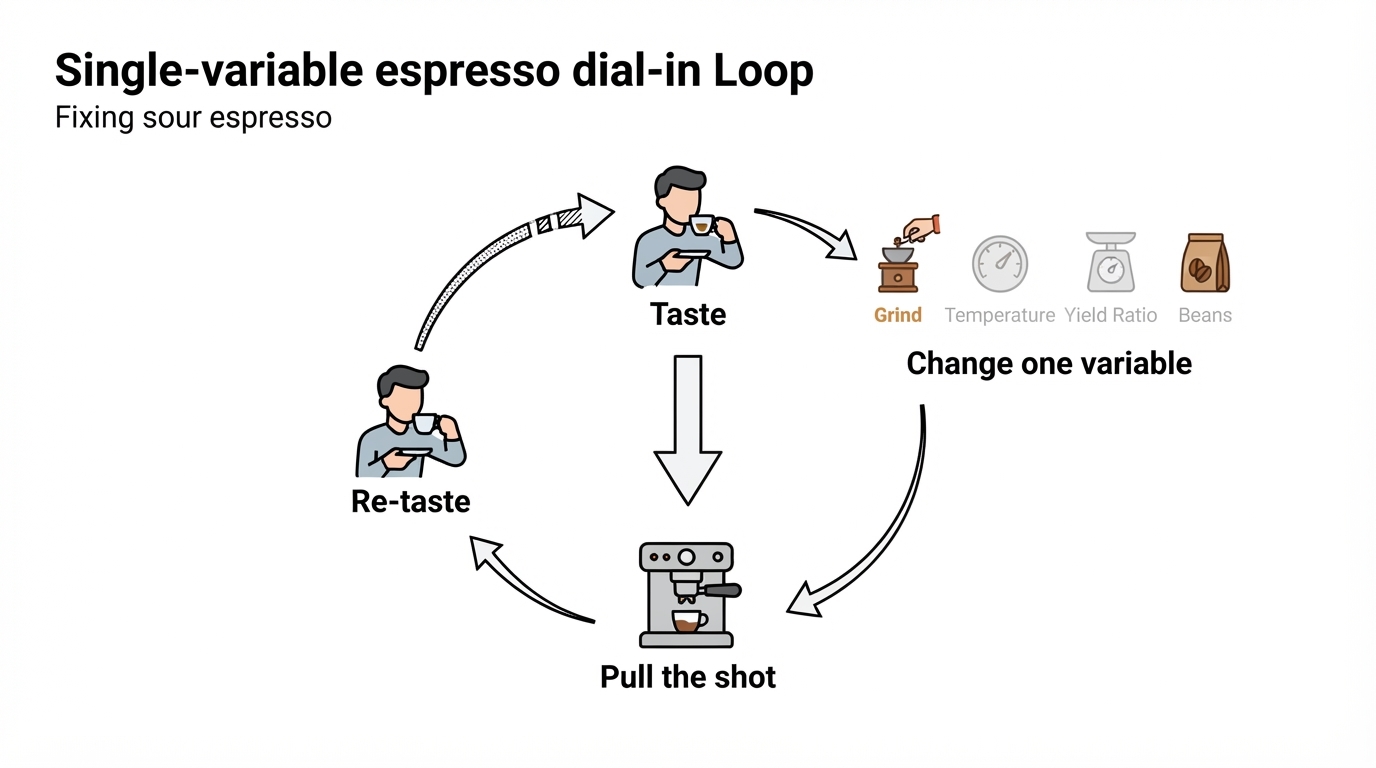
- Change one puck variable at a time. With fresh beans, move the grind one step finer, keep the dose level with the Razor trimmer, then re-time the shot. If it improves, keep stepping; if it worsens, step back.
- Stop at the machine boundary. If the pump noise changes, water leaks around the portafilter, or flow does not return, contact Breville support.
Symptom, likely cause, next check
Symptom | What it usually means | Next check |
|---|---|---|
Gauge stays low, shot gushes fast, empty group head flows well | Too little puck resistance — grind, dose, or stale beans | Grind one step finer, then re-time the shot |
Gauge low, empty group head barely flows, hot water outlet is normal | Restriction downstream of the pump — screen or basket | Clean the shower screen and basket as the manual describes |
No water from either outlet, pump strains or whines | Air in the line, tank not seated, or scale | Refill and reseat the tank, re-prime; descale if the light is on |
No pump sound when a shot button is pressed | Electrical or control fault | Switch off, unplug, and contact support |
Gauge past the espresso range, shot drips or stalls | Puck too dense — grind too fine, dose too high, or channelling | Coarsen one step, level the bed, and re-check |
Water around the portafilter, not the spouts | Seal or basket seating issue, or an overfilled basket | Check the basket is seated and the portafilter locks fully |
The separate Barista Express review covers the machine's everyday features; this checklist only handles a pressure change noticed after cleaning.
Limitations worth keeping honest
The gauge is an indicator, not a measuring instrument, and cleaning sequences, doses, and basket guidance vary by model and manual revision. That is why this checklist points to the official instruction book instead of a blanket grinder setting: a grind number from another kitchen rarely transfers.
Some failures are service items: the pump, over-pressure valve, seals, and thermocoil should not be opened by the owner. Hard-water scale is the slow version of the same low-flow story, so descale when the machine asks and keep the filter fitted.
FAQs
Why is my Barista Express low on pressure only after cleaning?
The cleaning cycle uses a disc and tablet that should not remain in place for a normal shot. Remove them, reseat the basket and tank, then compare empty-head water flow with a measured shot. A blocked cleaning disc may stop flow rather than cause a low gauge reading; a fast shot with normal water flow points instead toward puck resistance. Follow your model manual for priming and cleaning.
Should I switch to the pressurized basket to fix the pressure?
No. The dual-wall basket makes crema forgivingly, but it hides what the puck is doing and makes diagnosis harder. Use your normal basket and fix the resistance where it lives: grind, dose, and distribution.
How do I tell whether the pump has failed?
A failed or starved pump cannot move water anywhere. If hot water flows while the empty group head does not, the pump is working and the problem is downstream. If no water moves at all and the pump sounds strained or silent, stop testing and have the machine serviced.