Start with taste, then pick a single variable
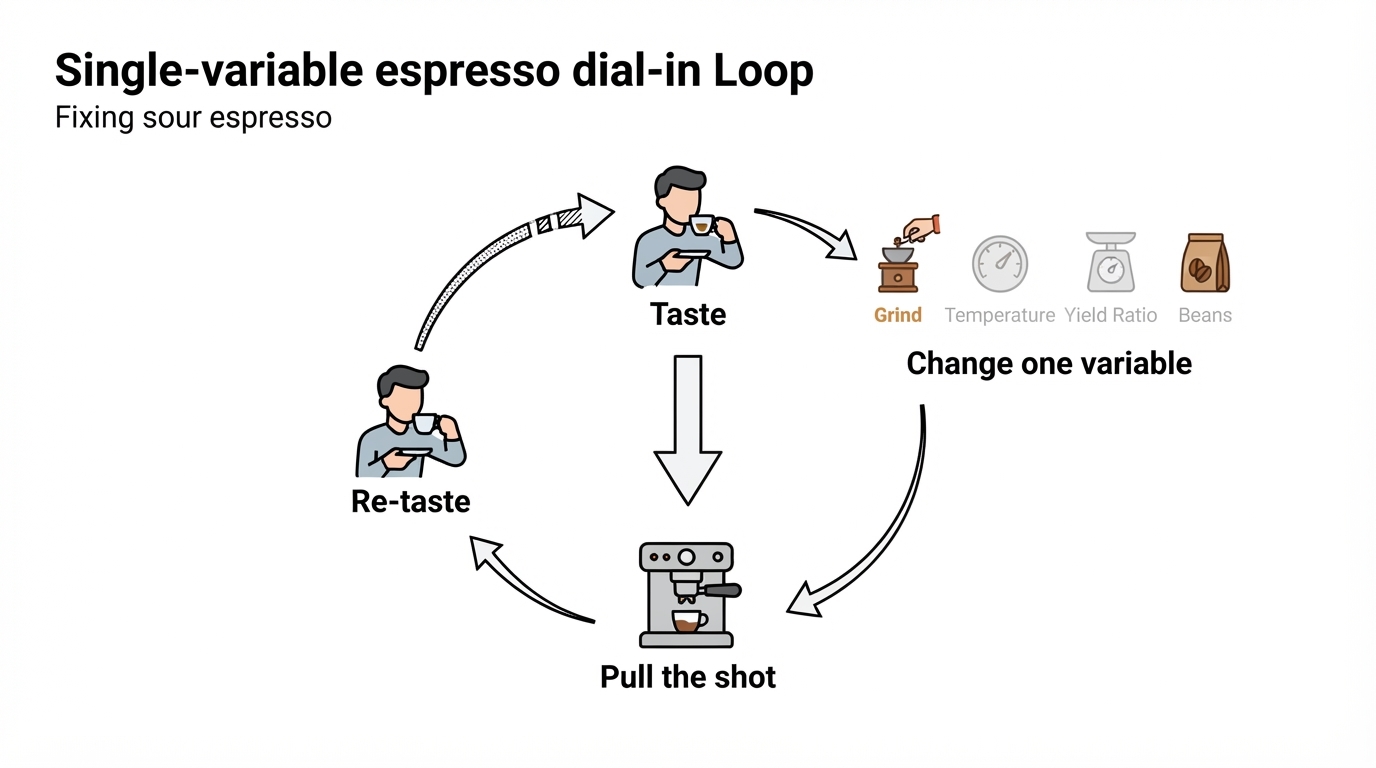
A Breville espresso that tastes sharply sour and thin is often under-extracted, but naturally bright beans can also taste acidic. Bitter, drying flavors can indicate over-extraction or a different bean/recipe problem. The next step is not automatically a new machine; it is one controlled change per shot, followed by tasting again.
Keep the puck out of the verdict. A wet or dry puck is a hint at most, because the Barista Express and Barista Pro include a dry-puck feature that removes excess water from the basket after extraction, and puck appearance also shifts with dose, grind and basket choice. Taste, flow timing and weighed dose are the evidence that should decide your next move.
If your Breville espresso tastes sour, the table below tells you which single variable to change next.
Decision table: match the symptom to one change
What you taste | What the flow does | Likely cause | Change this one thing |
|---|---|---|---|
Sharp, thin, acidic | Starts in 1–7 seconds; runs fast like water; crema pale | Under-extracted: grind too coarse or dose too low | Keep the dose inside the basket's range, then grind one step finer |
Bitter, dry, astringent | Starts after 13 seconds; drips or stalls; crema dark and spotty | Over-extracted: grind too fine or dose too high | Grind one step coarser; re-check the dose with the Razor trimmer |
Sour and bitter together | Flow is uneven and blondes early | Channeling: water bypasses part of the puck | Dry the basket, improve distribution, tamp level at 22–33 lb |
Sour, but the flow looks normal | Starts in 8–12 seconds and finishes in 25–30 seconds | Recipe or temperature, not grind | Work through the yield-ratio and temperature steps below |
Those flow windows come from Breville's own extraction guide: in the Barista Express instruction book, a balanced shot starts flowing after 8–12 seconds and finishes in 25–30 seconds. Under 20 seconds points to under-extraction and sourness; more than 35 seconds points to over-extraction and bitterness. The Barista Pro instruction book uses the same logic with flow-start thresholds: less than 7 seconds is under-extracted, and no flow by 13 seconds is over-extracted.
Fix it in one-variable order
1. Yield ratio: lock the dose and weigh the yield
A ratio is the dose of dry coffee compared with the liquid in the cup, and both are worth weighing. On a Breville, the 2 CUP basket is designed for roughly 16–19 g and the 1 CUP basket for 8–11 g, so start inside that range instead of forcing a number from a generic recipe.
The preset buttons are volume-based — about 30 ml for 1 CUP and 60 ml for 2 CUP — and Breville notes that the amount in the cup varies with your grind and dose settings. That is why weighing the output beats trusting the preset when you are fixing sourness: a longer yield extracts more sweetness and body, while a shorter yield keeps more acidity. Change only the yield in this shot; leave grind and temperature alone.
Expected result: a longer yield should soften a sharp edge. Still sour at a sensible yield? Move to temperature.
2. Temperature: one step, then taste
Breville machines let you nudge brew temperature. The Barista Express adjusts about plus or minus 4°F in 2°F steps in its advanced temperature mode, and the Barista Pro has a shot-temperature setting with hotter and cooler options on its LCD. Breville's manual notes that different beans need different water temperatures to extract their best flavor, so temperature is a legitimate lever — just not several at once.
Two habits matter here: pre-heat the portafilter and cup, because a cold portafilter pulls extraction temperature down enough to affect the shot, and wipe the basket dry before dosing, since moisture encourages channeling. If a warmer step turns sourness flat and bitter, step back.
3. Grind: small steps, same recipe
Grind is the variable that changes the flow. A coarser grind lets water through too quickly, which is under-extraction, and a finer grind slows it down, which risks over-extraction. Breville's manual puts it plainly: fine, but not too fine and powdery.
Change one numbered step at a time, purge retained grounds as your grinder manual advises, then pull the shot. Grind scales and internal burr settings differ across Breville models and revisions, so use your own baseline rather than a universal number. If a finer grind chokes the shot and it still tastes sour, consider channeling or the beans before grinding any further; check distribution and tamping against your model's instructions.
4. Beans: check the roast date before blaming the machine
Breville recommends paying attention to a "Roasted On" date. Coffee changes with age, and lighter roasts can taste naturally bright even when extraction is sound. If the shot is bright but sweet with some body, the bean may be doing exactly what you want; if it is aggressively sharp and thin, keep working the workflow rather than assigning one universal freshness window.
Where this workflow stops
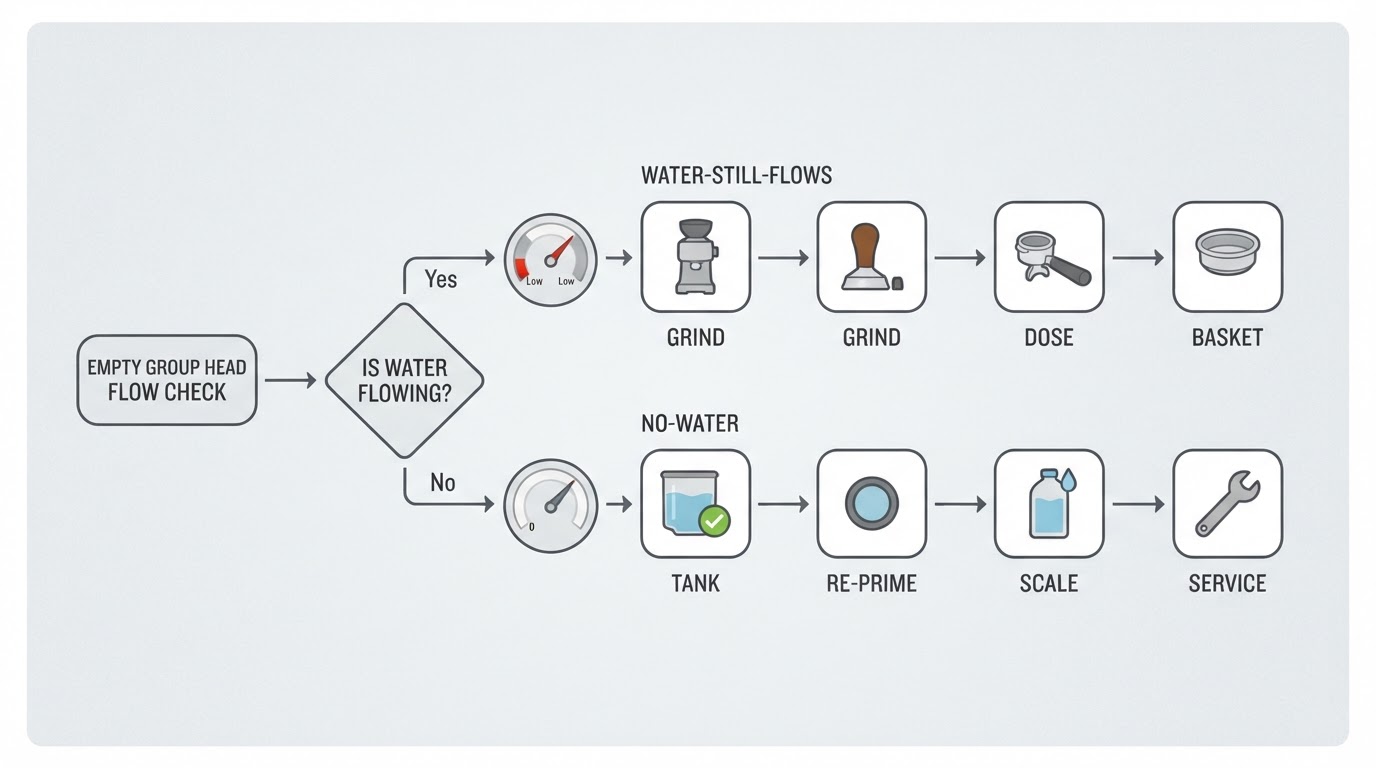
A single-variable workflow fixes taste, not hardware. Stop and check something else if the pressure gauge sits below the ideal zone, if flow is erratic whatever you do to the grind, or if flavor changed right after cleaning or descaling. Old coffee oils in the group head and a machine that needs descaling both push flavor around, and Breville recommends routine cleaning and descaling in the manual. Dual Wall baskets with pre-ground coffee regulate pressure for you, so grind advice does not apply in the same way.
Know when to stop tuning, too. When the shot tastes balanced — sweet, with acidity that feels rounded rather than sharp — you are done. Chasing a number past that point usually ends in over-correction.
FAQ
How do I tell whether my Breville shot is sour or bitter? Taste it before you change anything. Sour reads sharp, thin and sometimes salty; bitter reads dry, harsh and astringent. Breville's extraction guide maps the two to flow: fast, pale shots are sour and under-extracted, while slow, dark, spotty shots are bitter and over-extracted.
Should I change grind or dose first? Keep the dose inside the basket's published range, and change only one thing per shot. If the flow is fast and sour, the grind is usually the quickest fix; if the recipe itself is off, set dose and yield first so the grind change has a stable baseline.
Can I judge extraction from the puck? Not by itself. A wet puck can reflect the dry-puck feature, the dose, the grind or the basket rather than extraction alone, so treat it as a hint and let taste, flow timing and weighed dose make the call.
For puck cleanup rather than flavor diagnosis, see this site's separate wet Breville puck guide.