The Short Answer
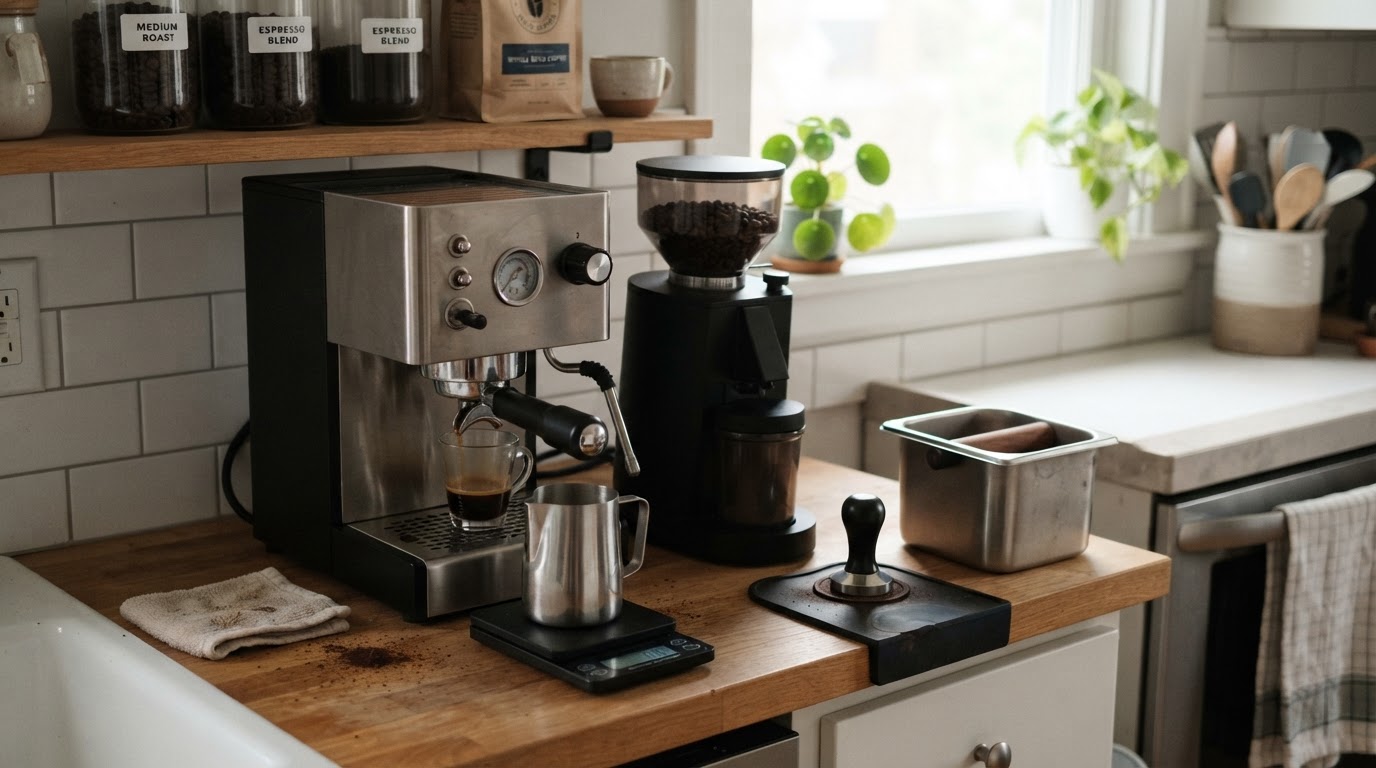
For a first machine, buy for forgiveness, not features. If you want one-touch consistency and your mornings are rushed, a super-automatic is the sensible choice. If you want real espresso with a reasonable learning curve, a semi-automatic is the usual sweet spot. If the ritual itself is the appeal and you can give it a few minutes of attention each morning, a manual machine teaches you more per dollar than anything else.
Three questions narrow the field faster than any spec sheet. How many drinks will you make back-to-back? Do you want to grind fresh from day one? Who else in the house will press the buttons? Your answers decide how much automation you need and how much counter space to reserve. Everything else is detail.
The Criteria That Matter Most
A machine that looks impressive but slows you down every morning becomes kitchen furniture. Judge candidates on these six criteria before you compare anything else.
Ease of use and forgiveness
Forgiveness is the most valuable beginner feature. A forgiving setup tolerates small errors in grind, dose, and tamp without turning a drink into a failure. Look for a simple start-up, a clear path from power-on to first shot, and a basket that does not punish an imperfect tamp. Then verify at the counter: can you fill the water tank, empty the drip tray, and reach the steam control where the machine will actually sit?
The learning curve you are signing up for
Every machine trades effort for control. Semi-automatic and manual machines ask you to manage grind, dose, tamp, and shot timing. That is either the hobby or the obstacle, depending on your temperament. Expect basic drinks within days and repeatable results within weeks of steady practice. If that timeline sounds like a burden rather than a project, buy more automation and spend your attention elsewhere.
Built-in grinder or separate grinder
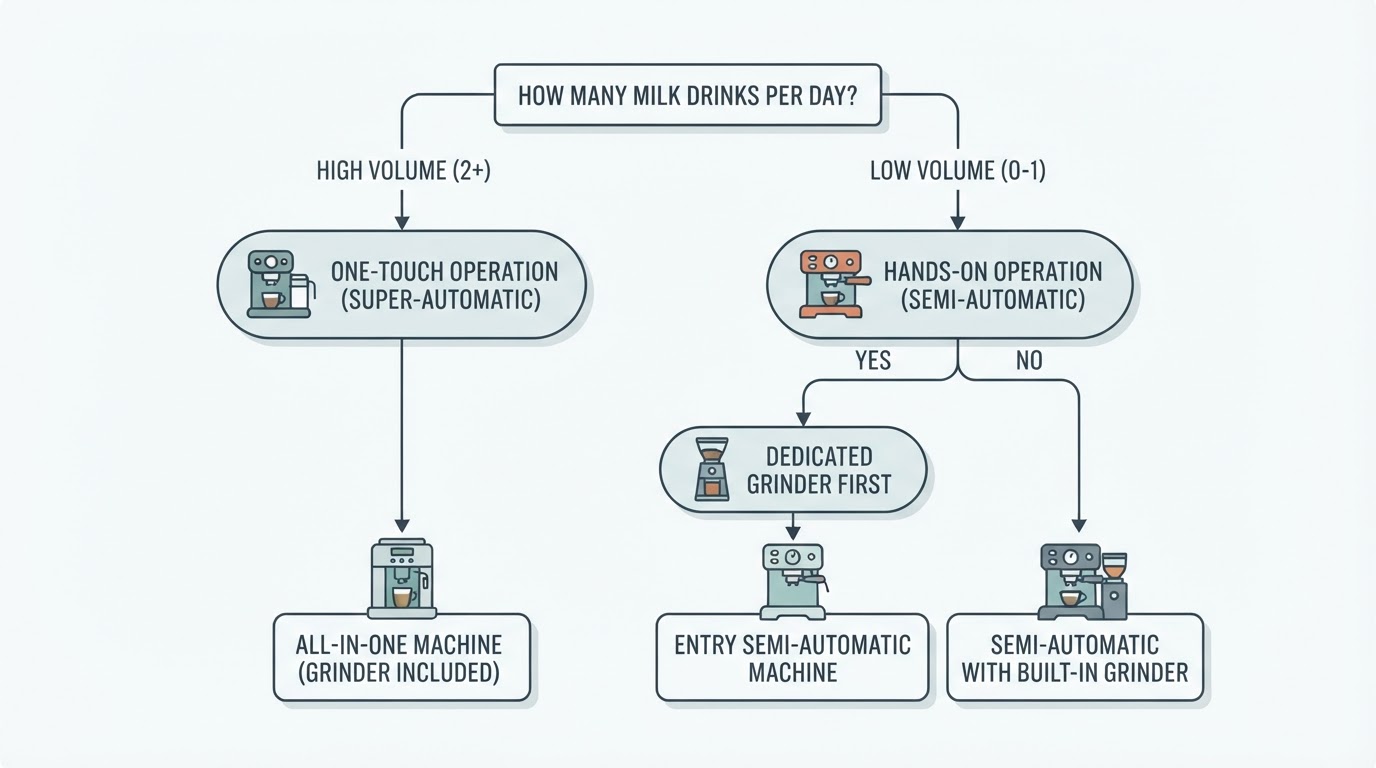
A built-in grinder saves counter space and keeps the workflow tidy, but it also becomes the ceiling on your results if it is the weak link. A separate grinder costs money and space, yet it generally delivers better grind quality per dollar and stays useful when you replace the machine. If you start with pre-ground coffee, accept that freshness and dial-in will limit what the machine can do until you add a grinder.
Milk frothing needs
This single question changes your budget. If you drink espresso and americanos, skip frothing capability and spend the difference on a better grind. If you make one or more milk drinks a day, prioritize steam power and how quickly the machine recovers between drinks. Automatic frothing systems are convenient and consistent; a manual wand takes practice but gives you control over texture. Verify which one you are buying, because the two are not interchangeable.
Cleaning and maintenance
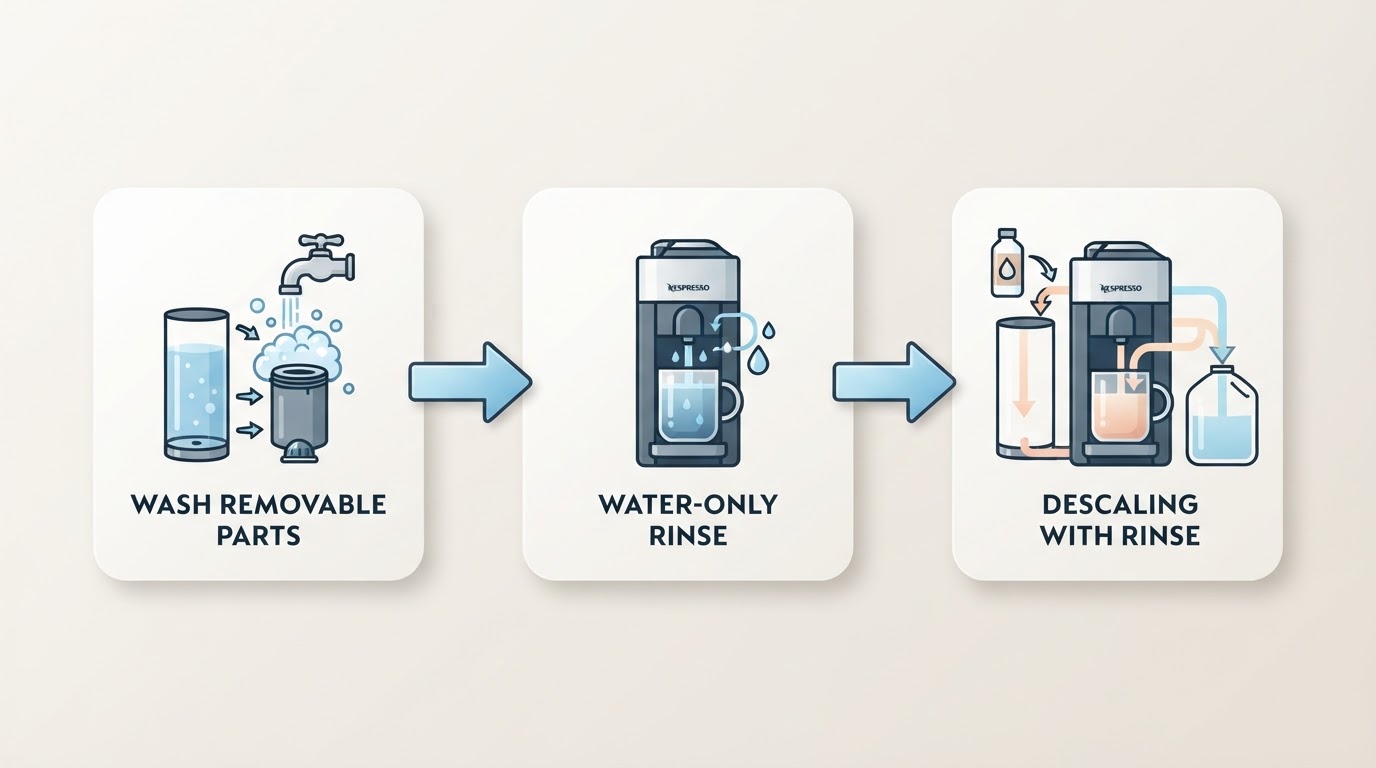
The purchase price is only part of the cost. Ask what the daily routine involves, what needs doing weekly, how often the machine needs descaling, and whether that requires consumables or a service visit. Check that the parts you will touch, from the drip tray to the water tank, group area, and steam wand, come off or open without a fight. Maintenance you can complete in a couple of minutes will get done; maintenance that feels like a project will not.
Counter space and placement
Measure before you fall in love with a machine. You need height for the hopper and clearance to fill the tank, depth for the portafilter and a mug, and width for a grinder if you go separate. Check that doors, hatches, and the water tank remain reachable in the spot you have in mind, not just on a showroom counter.
Manual, Semi-Automatic, or Super-Automatic
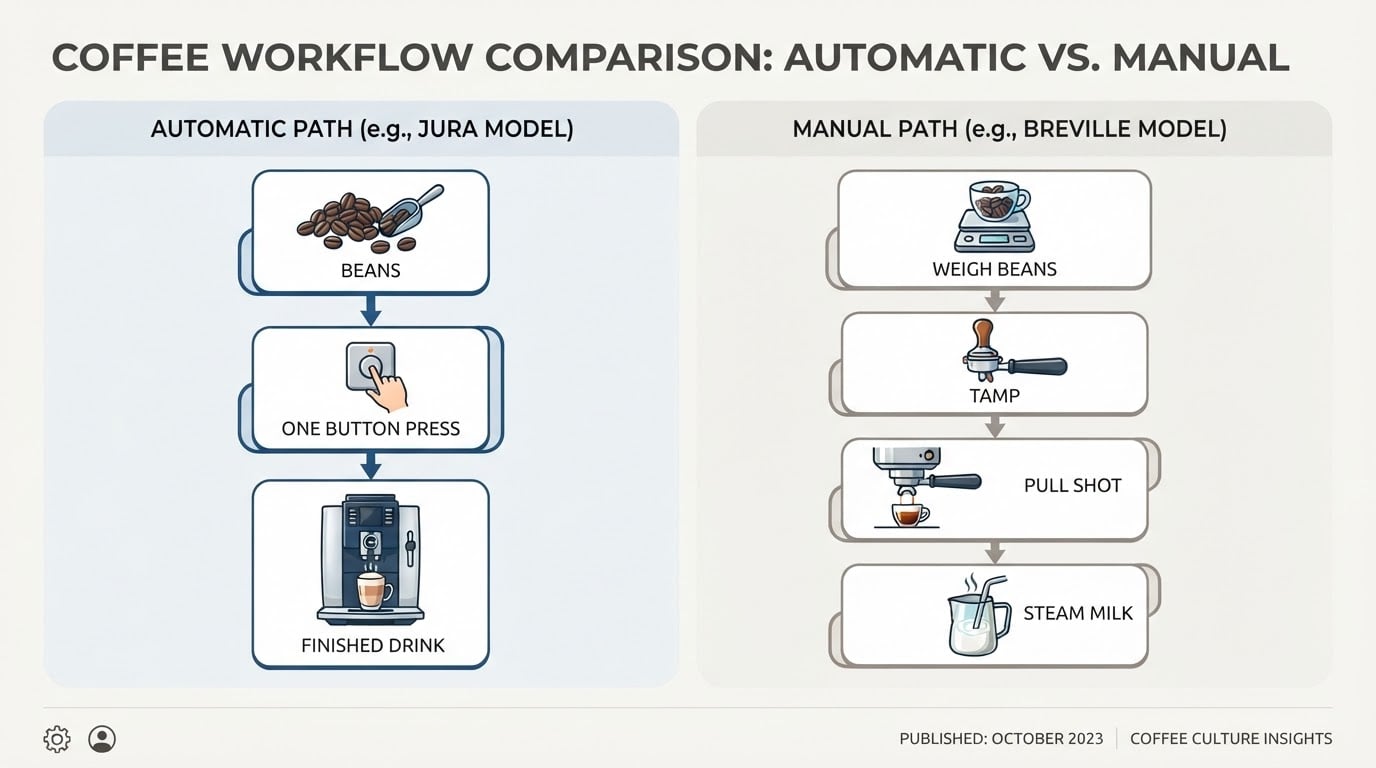
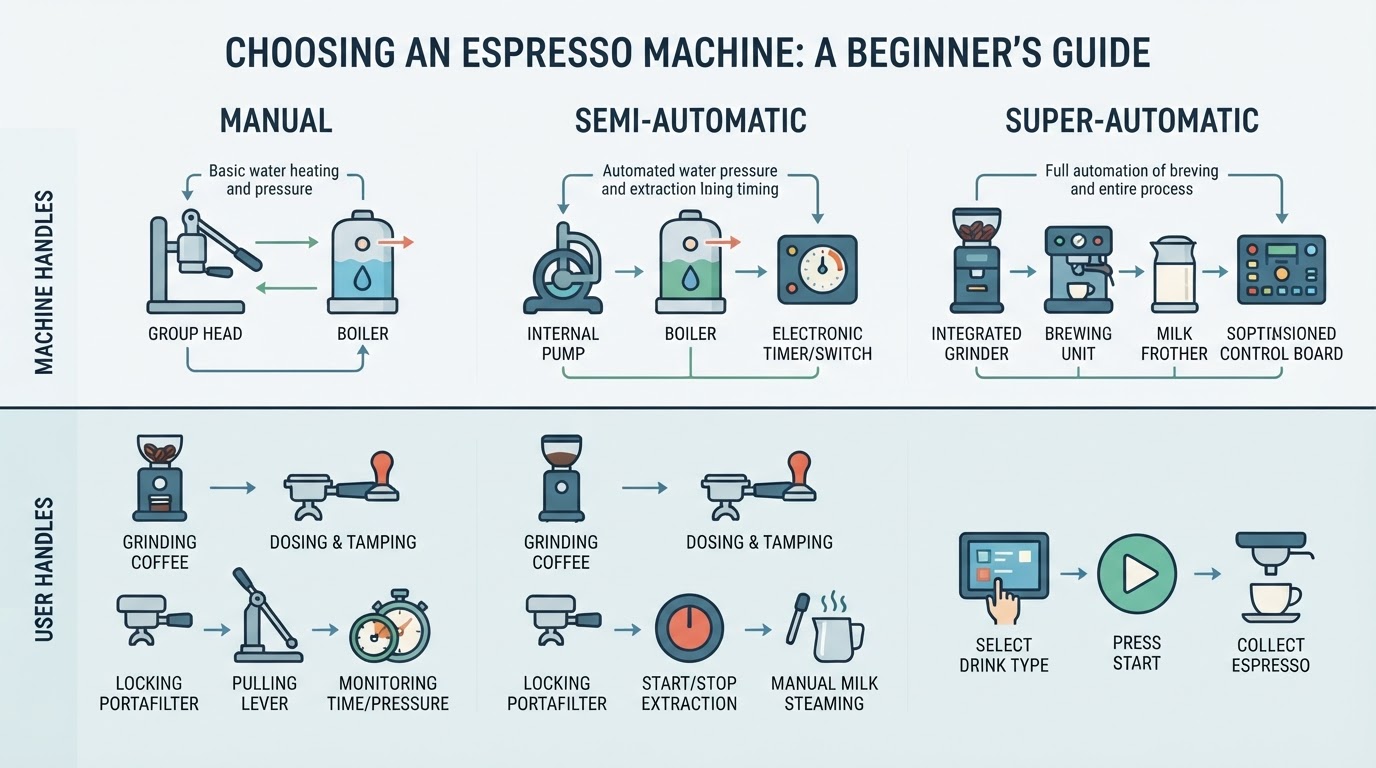
These three categories describe who controls the variables, and each one suits a different morning.
Type | What you control | When it makes sense | Main trade-off |
|---|---|---|---|
Manual | Pressure or leverage, dose, tamp, and timing | You want to learn, enjoy the ritual, and value cost per learning | Results vary until technique settles; less suited to back-to-back drinks |
Semi-automatic | Grind, dose, tamp, and when to stop the shot | You want real espresso, a moderate learning curve, and room to grow | Still depends on a decent grinder and a repeatable routine |
Super-automatic | Bean choice and drink selection; the machine handles the rest | Mornings are rushed, several people share the machine, or consistency beats control | More internal parts to maintain and less ability to fine-tune for a specific bean |
A useful way to read that table: you are choosing between your time, your control, and your money. Manual machines spend your time. Semi-automatics split the difference. Super-automatics spend your money to buy back your time.
What Changes as the Budget Rises
At the entry end of the market, you are buying a simple machine and supplying the attention yourself. As the budget rises, the extra money goes toward temperature stability, steam recovery, sturdier build materials, better baskets, finer control, and eventually automation. What you are buying is consistency, durability, and convenience, not an automatic upgrade in the cup.
That is why a beginner's spending order matters more than the machine's price:
- Fresh beans with a visible roast date.
- A grinder, separate or built in, that can handle espresso fine enough for your machine.
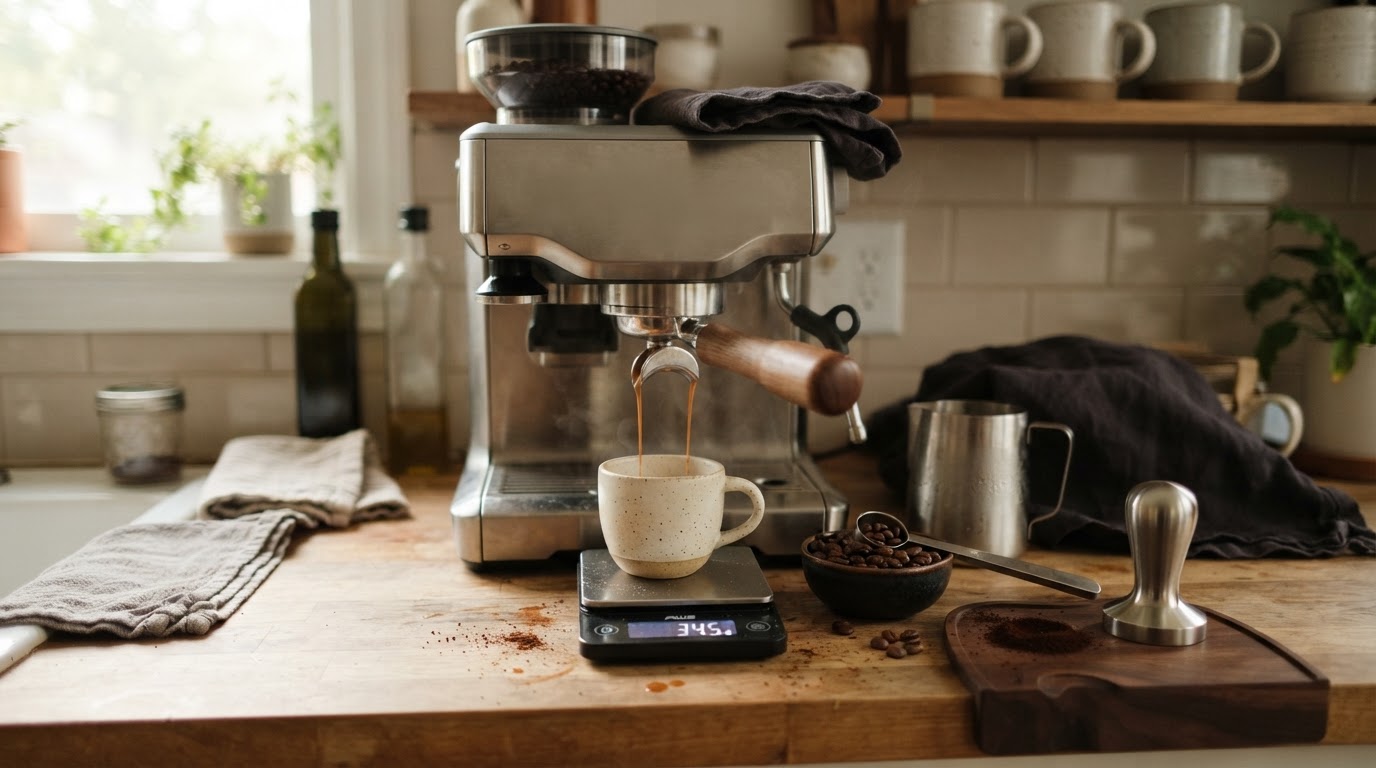
- A scale accurate enough to keep doses consistent.
- The machine itself, once you know how much automation you want.
- Accessories that solve a problem you have actually noticed.
Think in tiers rather than models. An entry tier gets you started and teaches you what you care about. A mid tier typically adds temperature control and steam performance that make daily use noticeably easier. A premium tier buys speed, recovery, and one-touch convenience, and it is worth paying for only if your routine genuinely demands it. Decide the total budget across machine, grinder, and accessories before you shop, and leave room for consumables and eventual repairs.
Match the Machine to Your Morning
Your situation | Prioritize | Deprioritize |
|---|---|---|
Two milk drinks a day, on a schedule | Fast start-up, strong steam, a routine you can repeat half-asleep | Large boilers, plumbed water, app features |
Espresso and americanos only | Temperature stability and a simple workflow | Automatic milk systems and extra presets |
Small kitchen counter | Compact footprint and a grinder that stores away | Built-in grinders and oversized hoppers |
Several people, different drinks | Easy controls and quick recovery between drinks | Fine manual adjustments nobody will use |
You want to learn the craft | A semi-automatic with feedback, a good grinder, and a scale | Automation that hides what the machine is doing |
You want zero-effort mornings | A super-automatic with a cleaning routine you will actually follow | Manual workflows and fine-grind tinkering |
Accessories Worth Buying First
The right accessories make a beginner's results more consistent. The wrong ones just occupy the drawer.
- A scale accurate to a tenth of a gram, for repeatable doses.
- A tamper that matches your basket, if your machine does not include one that fits.
- A milk pitcher sized to the drinks you make, not the largest one on the shelf.
- A knock box or a dedicated container for spent grounds.
- The cleaning supplies your manual names: backflush and descaling products, plus filters if your water is hard.
- A dosing funnel if you grind into the basket and want to keep the counter clean.
- Fresh beans, ideally with a roast date rather than a best-before date.
Skip, for now, the extras you cannot explain: spare baskets you will not use, decorative stations, and starter kits whose contents you would not have chosen yourself.
Signs It Is Time to Upgrade
Upgrading should solve a problem, not boredom. These are the signals worth acting on:
- The workflow, not your technique, is what caps the result.
- You cannot keep two drinks in a row at the quality you want.
- You have outgrown the grinder before the machine.
- Maintenance has become unpredictable enough that you avoid it.
- You want a drink, whether that is a specific milk texture, a larger volume, or a different style, that your machine cannot produce.
- Repairs are approaching the cost of replacement.
If none of those apply, the better investment is beans and practice. A more expensive machine will not fix a routine you do not enjoy.
Questions to Ask Before You Buy
Use this checklist to verify the details that listings tend to leave out:
- How long does it take to go from switching on to the first shot?
- How many drinks can it make back-to-back before it needs to recover?
- Is the steam wand manual or automatic, and how much practice does it need?
- Which basket comes with the machine, and is a more forgiving one available?
- What does the daily cleaning routine involve, and what does it require weekly?
- Does descaling need consumables, or a service visit?
- Can you refill the water tank and empty the drip tray where the machine will live?
- What is the total height with the hopper attached, and does it clear your cabinets?
- Are wear parts, gaskets, and filters likely to remain available?
- What happens if your routine and the machine do not get along in week two?
Write the answers down. Two machines that look identical online often separate quickly once you compare verified answers.
FAQ
Do I need a grinder from day one?
No, but it is the upgrade that changes the most. Pre-ground coffee can get you started, with the understanding that freshness fades quickly and you cannot adjust the grind to fix a pull. A separate grinder usually beats the weakest built-in grinders and stays useful when you eventually replace the machine.
How long does it take to learn?
Most beginners can produce acceptable espresso within a few days and consistent results within a few weeks. The variables are learnable; the question is how many of them you want to manage. A more forgiving machine shortens the timeline and makes mistakes less expensive.
Is a super-automatic wasted on a beginner?
Not at all. If your priority is a dependable drink with minimal effort, especially with several people using the machine, automation is the right call. You give up some control and the ability to tune for a particular bean in exchange for speed and consistency.
How should I split the budget?
Decide the total first, then protect a meaningful share for the grinder, the scale, consumables, and repairs. The most common beginner mistake is spending almost everything on the machine and leaving nothing for the parts that make consistent shots possible once you bring the machine home.
Where do pod machines fit?
They are fast, consistent, and low-effort, which is exactly what some households want. The trade-offs are control and per-cup cost, and the drink ceiling is set by the pods available. If you want to adjust shots and learn the craft, treat pods as a different category rather than a first espresso machine.
What should I do in the first week?
Pick one bean and keep the routine simple. Change one variable at a time, from grind to dose to timing, and note what improved. Wash what the manual says to wash, and do not chase perfection before your technique is repeatable. Keep the checklist above handy for the moment you decide to upgrade.
The Bottom Line
Buy for the morning you will actually have, not the machine you imagine becoming the person who uses it. The best espresso machine for beginners is the most forgiving setup that fits your counter, your budget, and the drinks you make most often, and it should leave you enough of all three to enjoy the learning.