The Short Answer
Both systems do the same basic job: a sealed portion of coffee goes in, one drink comes out, and you never grind or tamp anything. The difference is what each one was designed to brew.
If your default is a small, concentrated cup — espresso, lungo, or a milk drink built on a shot — Nespresso's capsule system is the closer match. If your default is a full mug you drink black, or with a splash of milk, Keurig's pod brewers are the closer match. Everything after this point is a check on whether that first impression survives your actual routine.
The Two Systems Side by Side
Decision factor | Nespresso capsule system | Keurig pod brewer |
|---|---|---|
What it brews | Espresso-style shots and small coffee servings | Mugs of brewed coffee |
Portion format | Sealed capsules accepted by the machine | Sealed pods accepted by the machine |
Milk drinks | Possible when the machine froths or steams milk | Possible on models with a milk or frothing function |
Daily effort | Insert capsule, brew; milk is a separate step | Insert pod, choose size, brew |
Cleaning load | Descaling plus milk-path care | Descaling plus used-pod handling |
Portion lock-in | Capsules | Pods |
Works best for | Espresso-first drinkers | Mug-coffee households |
Use the table as a filter, not a verdict: two machines in the same row can differ once you open the manual.
What "Capsule" and "Pod" Actually Mean
A capsule and a pod are both portion packs, but they encode different assumptions about the drink.
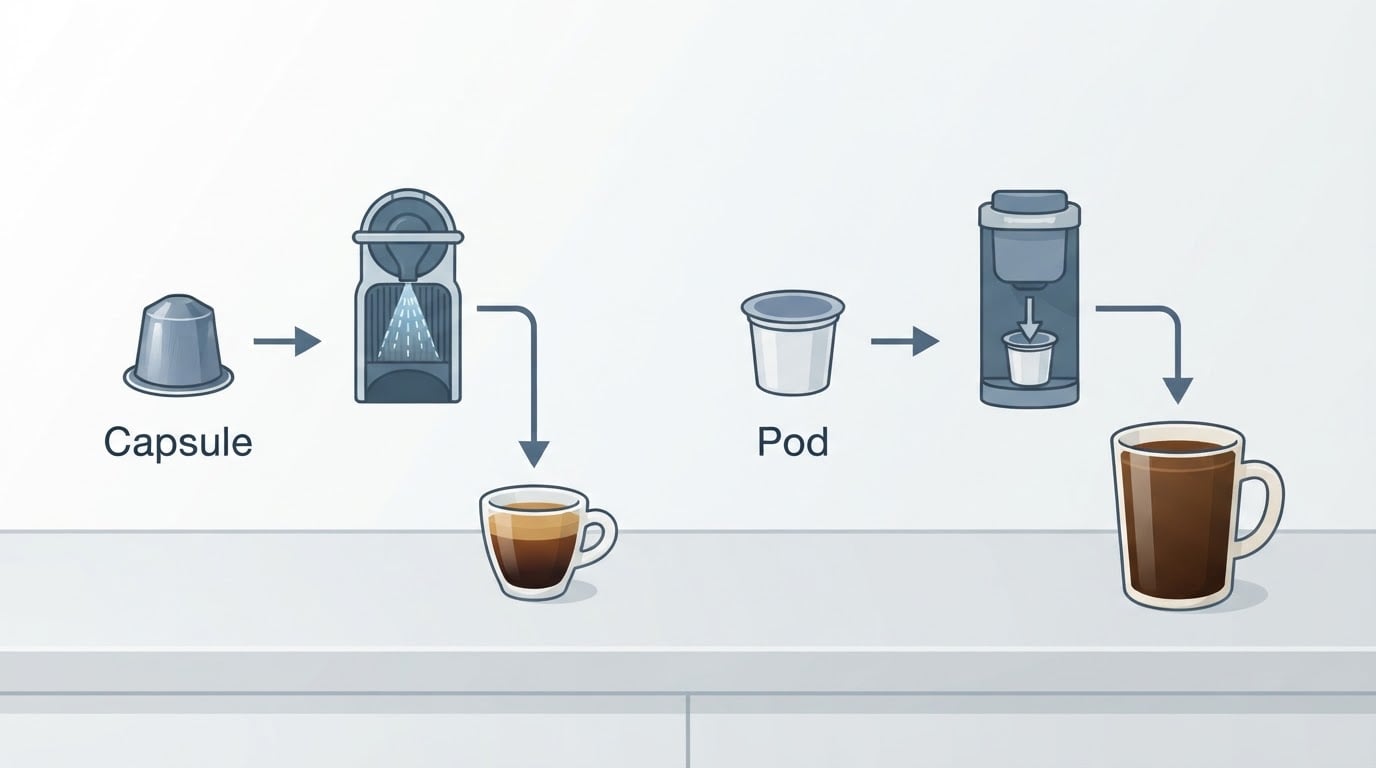
A Nespresso capsule is a sealed dose of coffee designed to be extracted under pressure as a short, concentrated drink. That is why the system's natural output is espresso-style: small volume, high flavor concentration, and a texture that carries milk well. The cup is the point, not the mug.
A Keurig pod is a sealed dose of coffee designed to be brewed like a filter cup: hot water passes through the grounds and fills a mug. That is why the natural output is a larger, gentler cup. It is brewed coffee, not espresso, and treating the two as interchangeable is the most common mistake in this comparison.
Both formats trade flexibility for convenience. You choose from the portion packs sold for the machine, and you give up the ability to dial in grind, dose, or brew time for a particular bean.
Coffee Style and Drink Range
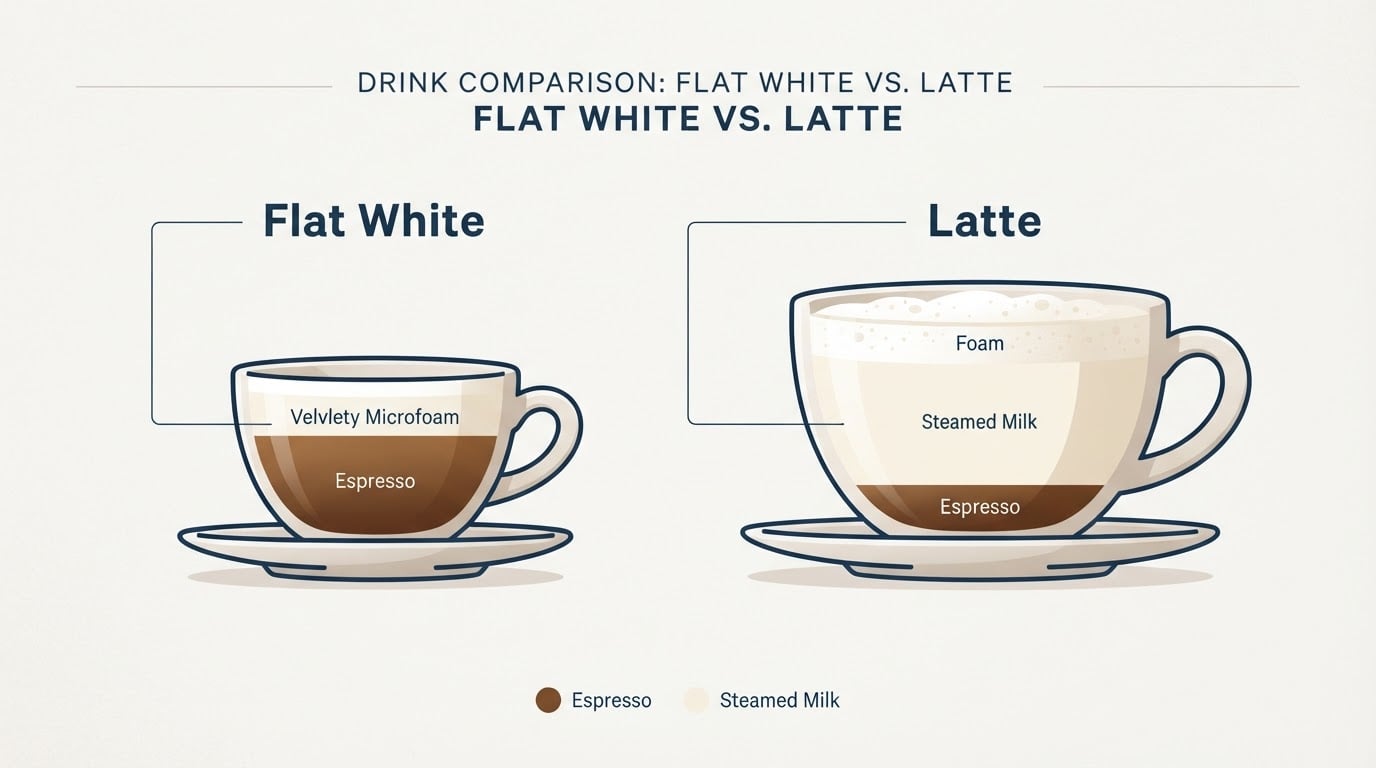
Nespresso's range covers the espresso end of the spectrum. Within the family, some machines are espresso-first and some are built for larger servings, so the format a machine accepts determines your drink range more than the brand name does. If milk drinks matter, the deciding feature is how the machine handles milk: a steam wand, an automatic frother, or nothing at all.
Keurig's range covers the mug end. Pods are sold beyond coffee, which is useful in a household where one person drinks coffee and another wants tea or cocoa, and many machines offer size and strength choices instead of a single brew setting. Some models lean toward concentrated or specialty drinks; whether that satisfies an espresso habit is a model-by-model question, not a brand-wide one.
The practical test: name the three drinks you make most often and check each one against a specific machine's manual before you buy. Marketing pages tend to show the widest possible drink list; the manual shows what the machine actually does.
Setup and the Daily Workflow
Setup for both systems is close to identical: unbox, rinse the removable parts, fill the reservoir, run the manufacturer's first-use cycle, and find space on the counter. The differences that matter appear in daily use.
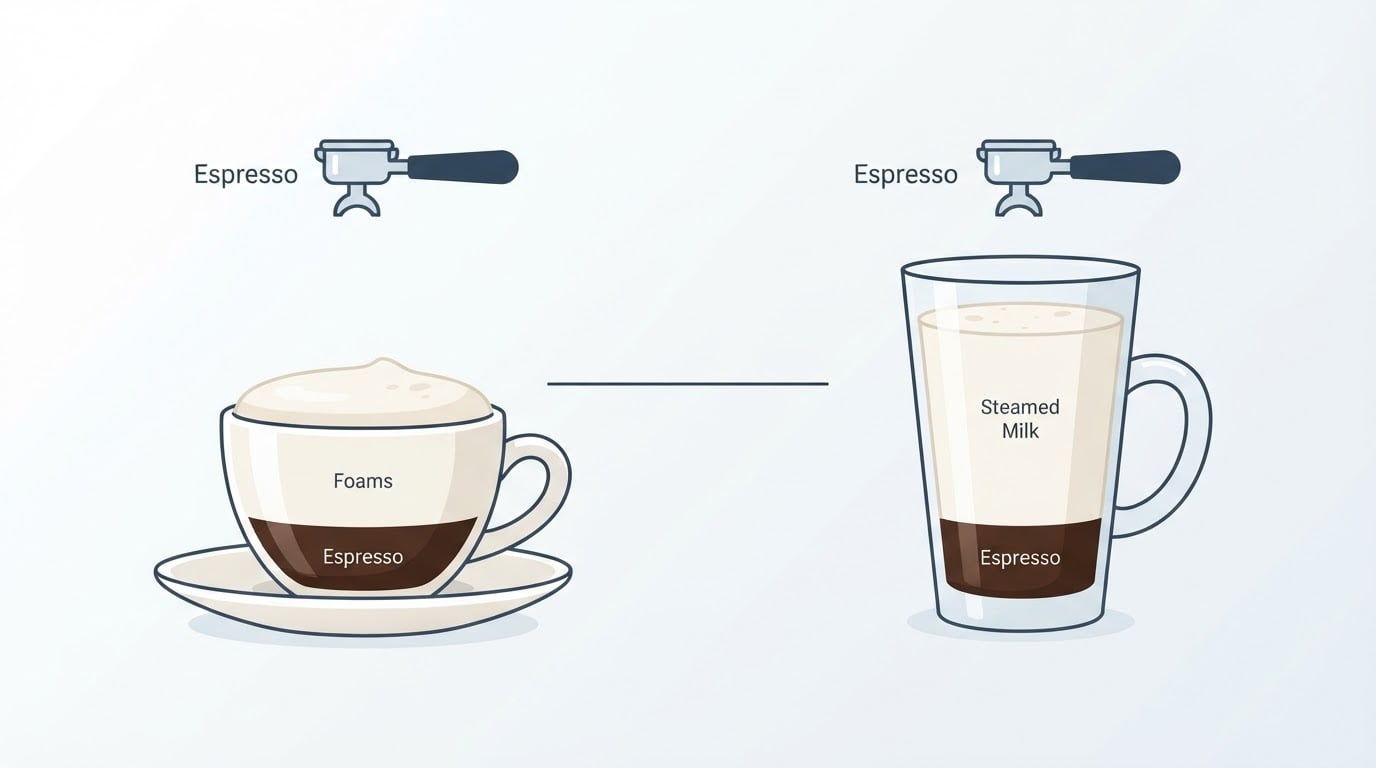
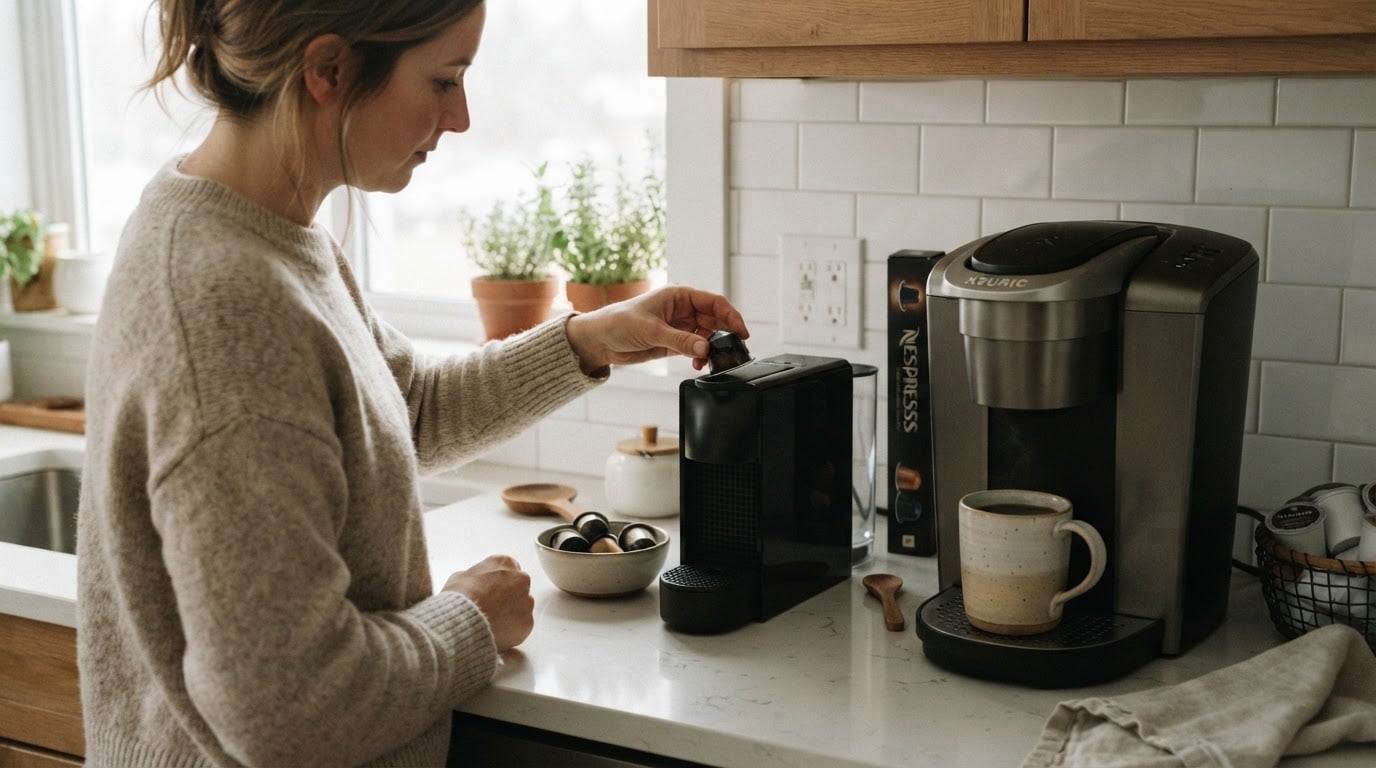
For a black coffee or a shot, both systems are two or three steps: load the portion, start the brew, discard the used portion. The gap opens when you add milk. A milk drink on a Nespresso machine usually means frothing or steaming separately, which adds a minute or two and a second item to wash. On Keurig, milk is normally an addition after the brew, unless you have a model with an integrated frothing function.
There is one more daily difference that rarely shows up in reviews: portion handling. A capsule or pod has to be removed, stored somewhere until it is cool, and then disposed of or recycled. That is a small task, but you do it every single drink, and it shapes how tidy the routine feels.
Cleaning and Descaling: The Real Ownership Work
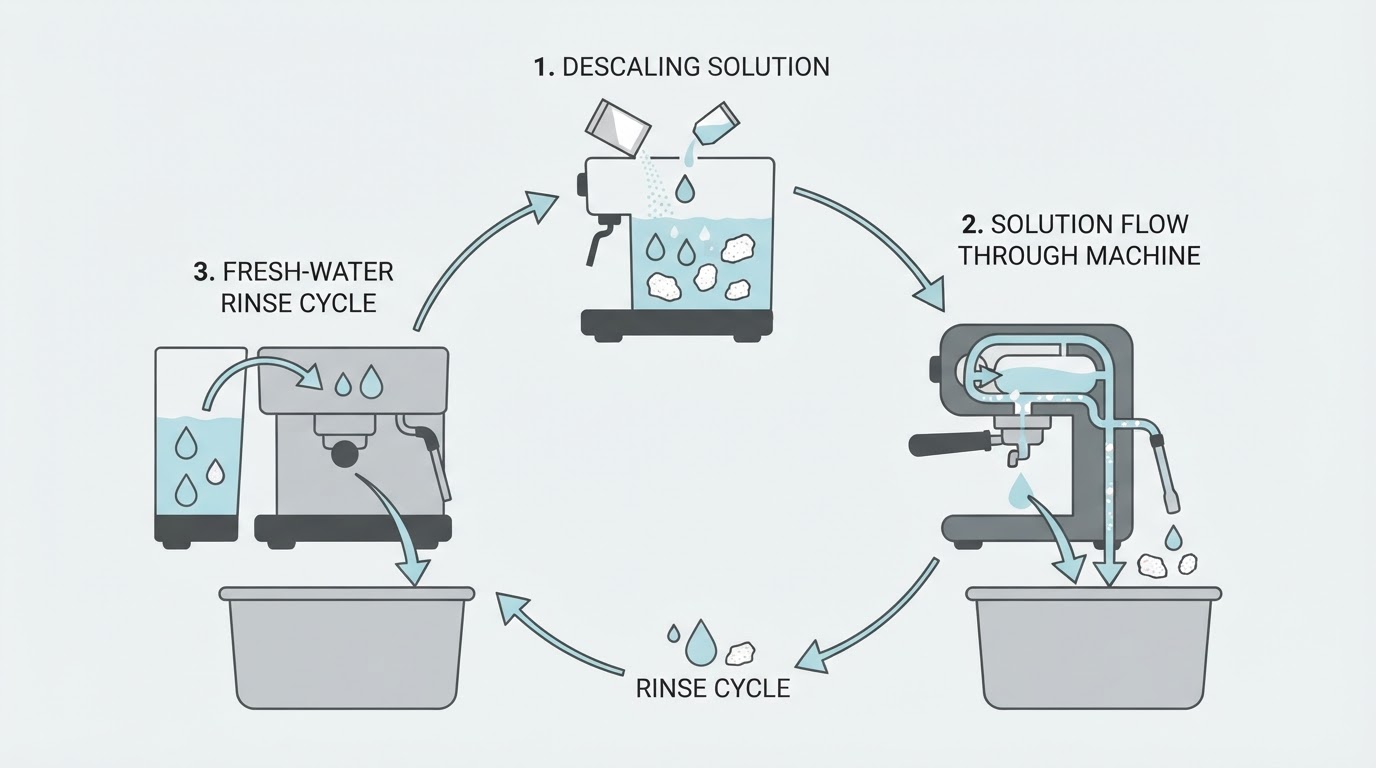
Both systems need descaling. Scale builds up wherever water is heated, and how fast it builds depends on your water hardness — which is why two owners with the same machine can report completely different maintenance experiences. If you want a realistic sense of the workload, check your water hardness and the descaling interval in the manual for the model you are considering.
Beyond descaling, each system has its own recurring chores. Espresso-style machines collect coffee oils in the brew path and, if you make milk drinks, need the milk system flushed and cleaned regularly. Pod brewers collect less coffee oil but still need the same descaling discipline, and some models need the pod-piercing assembly cleaned periodically.
Water filters are the other variable: some machines have them and some do not, and a filter changes how often descaling is needed. That is a question for the model's manual, not for the brand.
Day-to-Day Ownership: What Changes After Week One
The honeymoon period for both systems is short, because the workflow is nearly identical. What stays different is the economics and the lock-in.
With either system you stop buying beans by the bag and start buying portion packs by the box. That usually means a higher cost per drink than brewing from bulk coffee, in exchange for zero waste from a pot you did not finish and zero effort spent grinding or measuring. Whether the convenience is worth the premium is a personal calculation — and it is a calculation you should run with current local prices rather than with any figure quoted in an article, because portion prices move frequently.
Lock-in works the same way in both cases: you are buying into a portion format. Before committing, check which formats the model accepts, whether those packs are stocked where you normally shop, and whether the used portions are accepted by your local recycling or composting program. Those three checks matter more to long-term satisfaction than any single machine feature.
Reliability differences usually show up in what surrounds the machine: warranty length, service options, and how easy replacement parts and consumables are to find where you live.
Who Each System Suits
Nespresso fits you if you drink espresso, lungo, or milk drinks built on a shot; you want café-style drinks at home without learning to grind and tamp; you mostly drink one or two small cups a day; and you are comfortable buying capsules as your ongoing coffee supply.
Keurig fits you if you drink coffee by the mug; your household mixes coffee with tea or other pod drinks; you want the simplest possible black-coffee routine; and you value serving several people with different preferences from one machine.
Neither may fit you if you want control over beans, grind, and dose, or you drink enough coffee that the portion-pack premium dominates your budget. A grinder with a drip brewer, or a manual espresso setup, is the honest alternative in that case: more work, less lock-in.
One-Week Audit Before You Buy
Do this instead of re-reading comparison articles. For seven days, write down every coffee you drink, the format (espresso-style or brewed mug), the size, and whether you would want milk at home. At the end of the week, count the two formats.
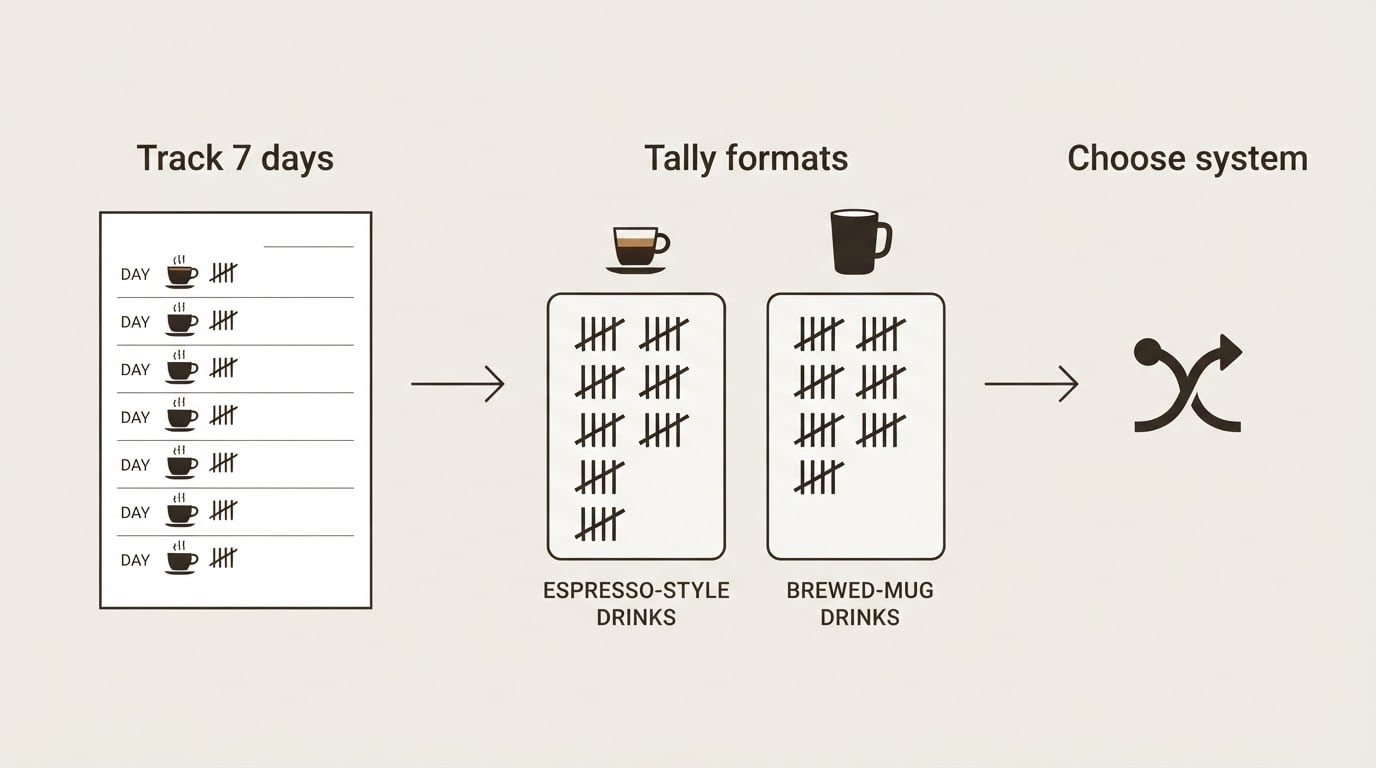
- If espresso-style drinks dominate, a capsule system matches your habit.
- If brewed mugs dominate, a pod brewer matches your habit.
- If the week is split, decide by your weekday default rather than your weekend ambitions: the machine that covers the drink you make on a normal Tuesday will earn its counter space.
Five Questions to Answer Before You Buy
- Which drink is actually your default? The one you make most mornings, not the one you order on holiday.
- Does the specific model accept the portions you want, and are they stocked where you shop? Format compatibility and local supply are model-level facts, not brand-level ones.
- What does milk add to the routine? A separate frothing step and an extra item to clean is the real cost of milk drinks, more than anything on the feature list.
- What does the manual say about descaling, and how hard is your water? This sets your long-term maintenance burden more than the brand does.
- What is your real per-drink cost at today's prices? Portion prices change; run the number yourself with the packs you would actually buy.
If a listing cannot answer questions 2 and 4, treat that as a gap to close before you order.
FAQ
Is Nespresso or Keurig better for espresso?
For espresso-style drinks, the capsule system is the one designed for that job; pod brewers are designed around brewed coffee, so the result is a different drink rather than a like-for-like shot. If an espresso habit is central to your day, compare capsule machines with each other on milk handling and capsule format instead of comparing them to pod brewers.
Which system costs less to run?
There is no stable answer, because both depend on portion prices where you live and how much you drink. What is stable is the structure: both replace bulk coffee with pre-portioned coffee, which usually raises cost per drink while removing waste and prep. Compare the packs you would actually buy, at current prices, before you compare machines.
Can I use my own coffee in either system?
Reusable portion options exist, but which machines accept them and how well they work varies, so treat this as a per-model question with a manual-level answer. If using your own beans matters to you, resolve it before buying rather than after.
How often do these machines need descaling?
It depends on water hardness and how much you brew, which is why the interval in the manual is the number to follow. Harder water means more frequent descaling for either system.
What if my household wants both espresso and large mugs?
Then compare the cost of one machine that covers your weekday default plus a separate milk frother against the cost of two machines. Many households end up with a pod brewer for volume and a capsule or manual setup for espresso, which is a legitimate answer to Nespresso vs Keurig rather than a failure to choose.