The Short Answer: One Espresso Base, Three Different Cups
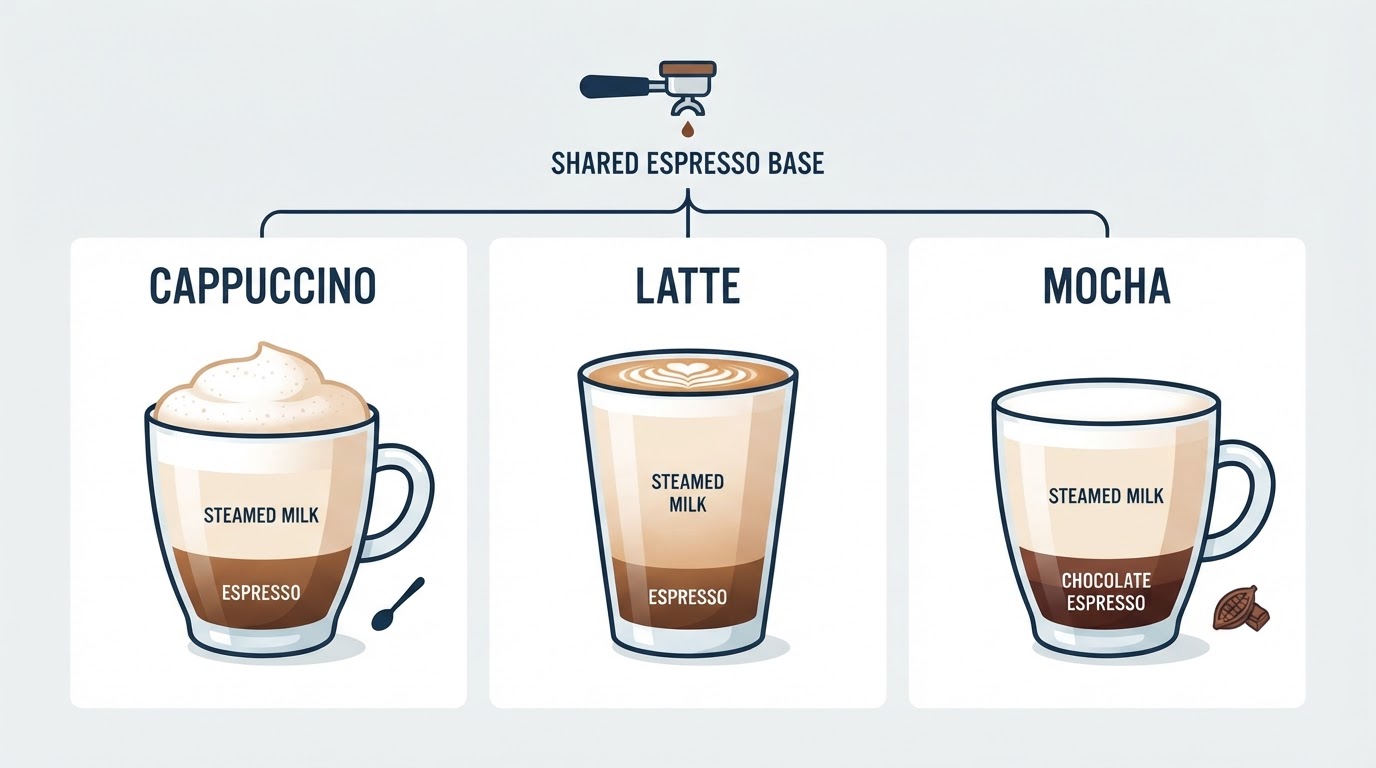
All three drinks start with a shot of espresso, so none of them is a different kind of coffee. The differences sit in the milk and, for a mocha, in the chocolate. A cappuccino uses a smaller amount of milk and a much thicker layer of foam, which keeps the espresso taste front and center. A latte uses more steamed milk with only a thin cap of foam, which makes the drink milder and smoother. A mocha starts from that same milky base and adds chocolate, which turns it into the sweetest of the three.
What changes | Cappuccino | Latte | Mocha |
|---|---|---|---|
Espresso base | One or two shots | One or two shots | One or two shots |
Milk | A moderate pour of steamed milk | The largest pour of steamed milk | Same as a latte |
Foam | Thick and spoonable, sits on top | Thin, glossy microfoam | Thin, sometimes a small foam cap |
Chocolate | None | None | Chocolate stirred into the base |
Typical cup | Small ceramic cup | Tall glass or mug | Tall glass or mug |
Overall impression | Bold and airy | Mild and milky | Sweet and dessert-like |
What Changes From One Drink to the Next
Milk quantity is the first variable. Traditional café guidance treats a cappuccino as roughly equal parts espresso, steamed milk, and foam. A latte shifts that balance toward milk: the steamed milk dominates the cup, and the foam layer is thin enough that you can see the surface of the drink. A mocha follows the latte's milk ratio, then adds chocolate, which changes both color and sweetness.
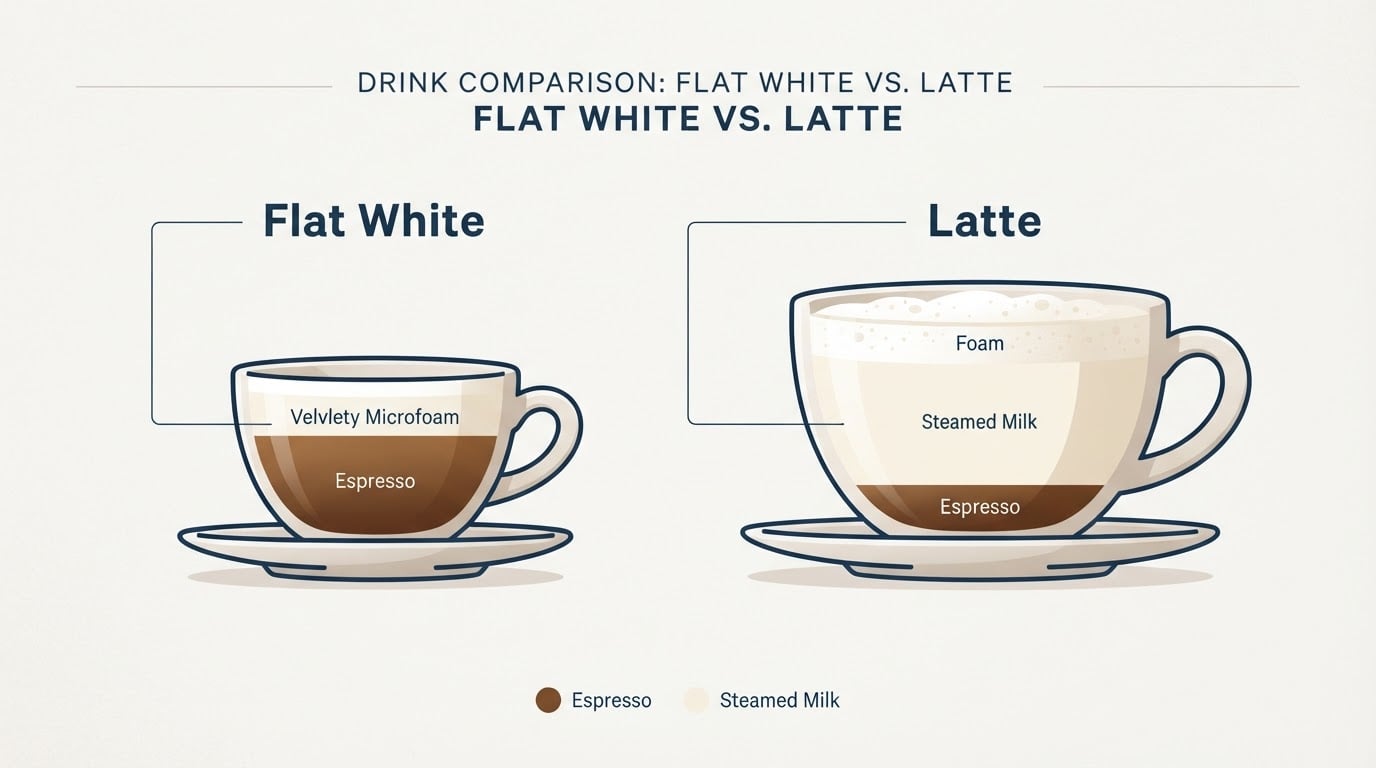
Steamed milk and foam are not the same thing. Microfoam is milk that has been aerated gently, so it keeps very fine bubbles and folds into the liquid; it is what gives a latte its glossy, velvety surface. Foam is airier, with larger bubbles, and it holds its shape on the spoon; it is what gives a cappuccino its domed top. When a barista talks about a "dry" cappuccino, they mean more foam and less milk. A "wet" cappuccino is closer to a latte in the cup.

Chocolate is the third variable, and it is the one that makes a mocha recognizable. The chocolate usually goes in as a syrup or as a powder mixed into the espresso before the milk is poured. That step matters: chocolate stirred into hot espresso melts evenly, while chocolate added after the milk tends to sit at the bottom of the cup. Many cafés finish a mocha with whipped cream, and a light dusting of cocoa powder is a common garnish.
Cup Size Shapes the Flavor More Than Most People Expect
A cappuccino is traditionally served in a small cup, close to the size of a teacup, while a latte and a mocha arrive in taller glasses or mugs. Cup size is not just presentation. A smaller cup concentrates the espresso flavor and keeps the foam layer close to the sip; a taller glass gives the milk more room to mix and lightens the espresso's edge.
This is also why ordering a "large cappuccino" often produces something that tastes like a latte. To fill a bigger cup, a café has to add more milk, and more milk means more dilution. If you want the classic cappuccino experience, the small cup is part of the recipe rather than an upsell you should skip.
How to Build Each Drink at Home
If you own an espresso machine or a pod brewer with a steam wand, you can make all three without changing your equipment. The espresso base stays the same; only the milk work and the chocolate change.
What you need before you start: a hot espresso base, cold milk in a pitcher, a clean steam wand or another way to texture milk, the cup you plan to serve in, and chocolate in syrup or powder form if you are making a mocha.
Cappuccino
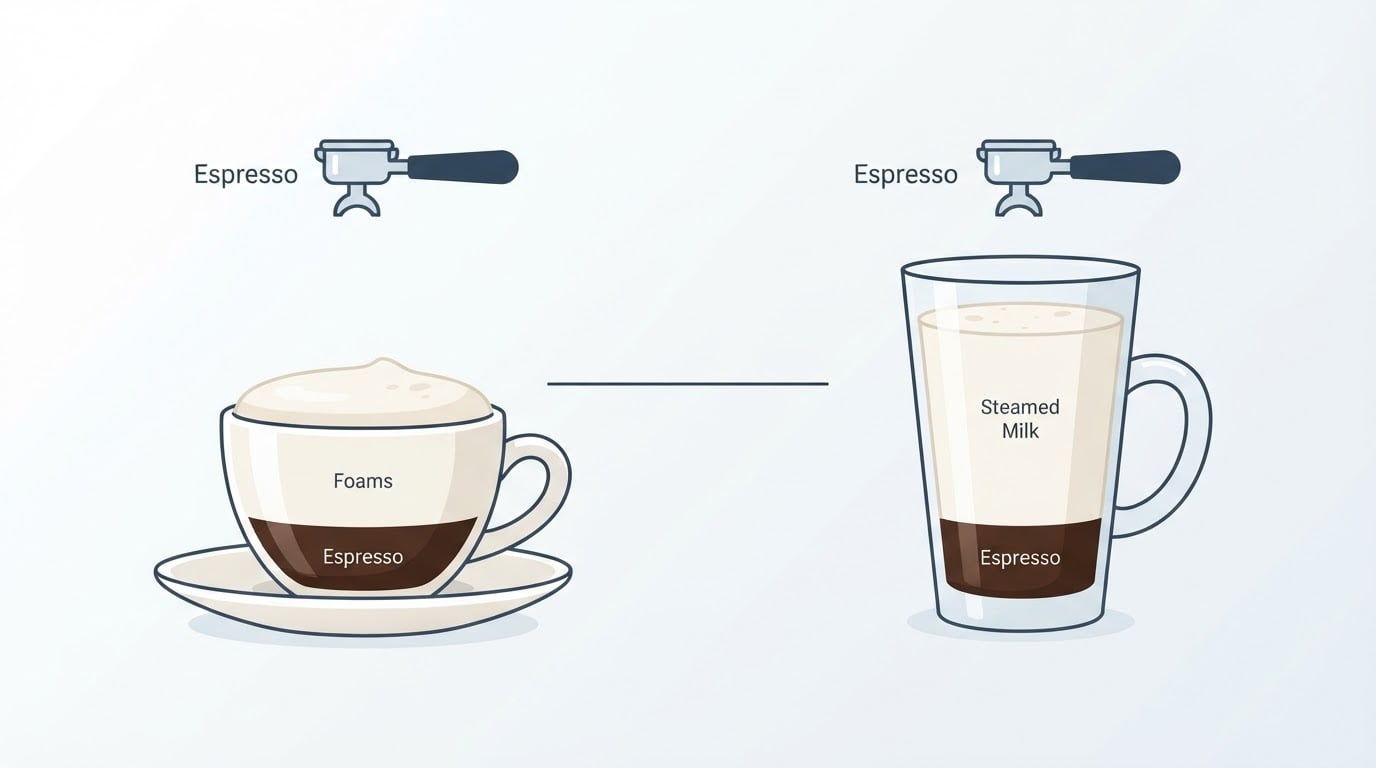
Pull the espresso into a small cup. Steam the milk until the pitcher feels warm and the foam has built into a thick layer, adding a little more air than you would for a latte. Pour the steamed milk into the cup, then use a spoon to place the foam on top so it sits in a soft dome. The drink is finished when the espresso flavor still comes through the foam and the surface holds its shape instead of collapsing.
Latte
Pull the espresso into a tall glass or mug. Steam the milk with only a brief stretch of air at the start, then keep the steam wand submerged to create a rolling whirlpool. The goal is glossy microfoam with almost no separate bubbles. Pour the milk slowly from a low height so it folds into the espresso, and finish with a thin layer of foam on top.
Mocha
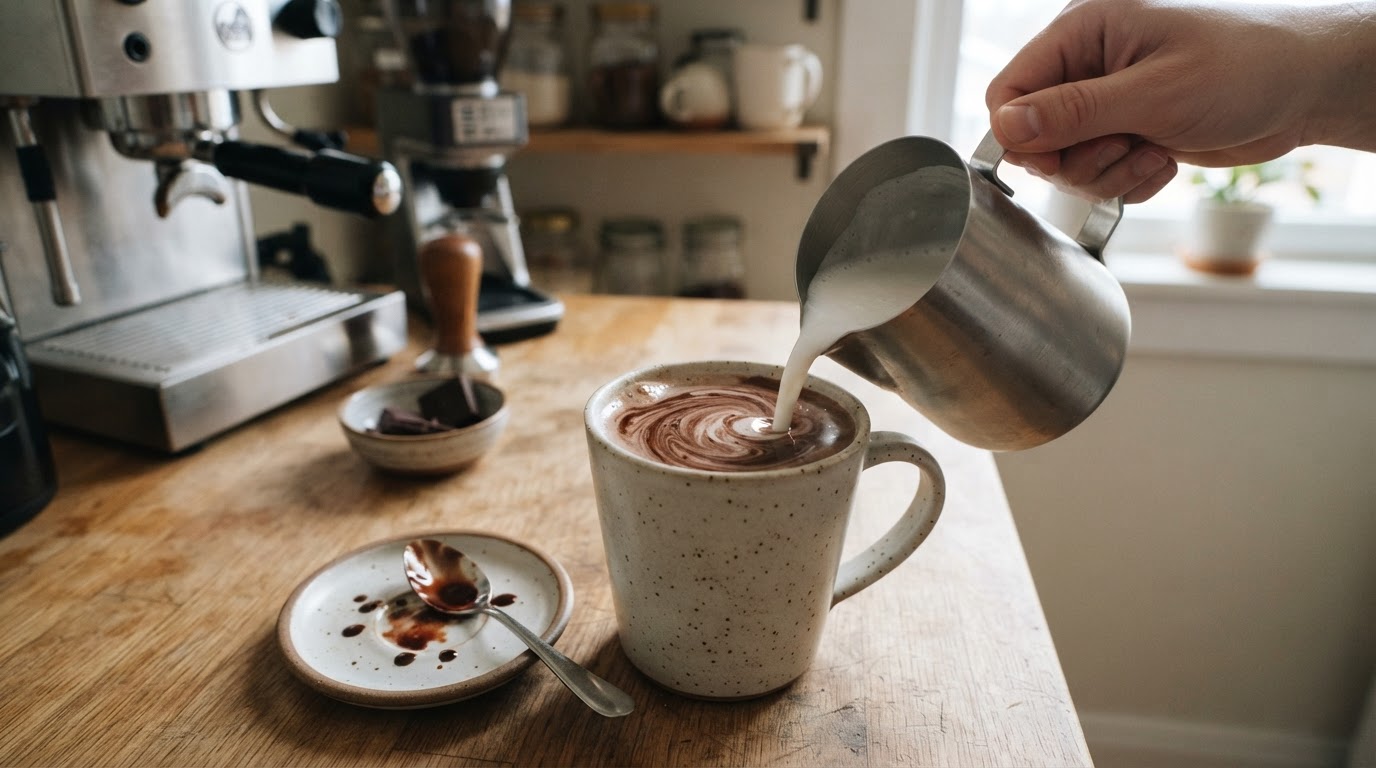
Put the chocolate in the cup first and pour the hot espresso over it, stirring until it forms a smooth, dark base with no dry pockets. Steam and pour the milk exactly as you would for a latte, then stir gently if you want an even color. If you like a thicker drink, spoon a small amount of foam on top or add a dusting of cocoa.
Common home limitations: a machine that textures milk automatically, a handheld frother, or a shaken lidded jar will all produce a drinkable latte, but they rarely create the stiff foam a cappuccino needs. Manual steaming also takes practice, and milk that is overheated will taste flat even when the texture looks right. If the foam will not hold, chill the milk and the pitcher before steaming.
Ordering Notes: How to Get the Drink You Actually Want
Coffee shop menus are not standardized, so a short, specific request works better than a drink name alone.
- Ask for a cappuccino when you want the strongest espresso flavor and a noticeable foam layer. Say "dry" for extra foam or "wet" for more milk.
- Ask for a latte when you want a mild, milky drink that is easy to sip slowly.
- Ask for a mocha when you want something sweet and dessert-like, and ask whether the chocolate is syrup or powder if the sweetness matters to you.
- Ask for an extra shot when flavor or caffeine matters more than milk, and ask how many shots the default drink includes before you order.
- Ask for less syrup in a mocha if you want the espresso to stay visible under the chocolate.
Which Is Stronger, and Which Is Sweeter?
Cappuccino vs latte vs mocha usually comes down to two questions, and the answers point in different directions.
For flavor intensity, the cappuccino is the strongest of the three. It has the least milk relative to espresso, so each sip carries more coffee flavor. A latte is milder because the milk is the dominant ingredient, and a mocha is milder still once the chocolate softens the espresso. For caffeine, the drink name matters much less than the number of shots. All three typically start with the same espresso base, so if your cappuccino and your friend's latte were pulled from the same machine with the same number of shots, they carry about the same amount of caffeine. Ask for a single or double shot if that distinction matters to you.
For sweetness, the mocha wins by a wide margin. Chocolate in either syrup or powder form brings sugar with it, and many cafés add whipped cream on top. A cappuccino or a latte is unsweetened by default, so you control the sugar you add. If you want a sweet drink but not a heavy one, a mocha with a single shot and no whipped cream is the middle ground.
Common Questions About Cappuccinos, Lattes, and Mochas
Is a mocha just a latte with chocolate?
In most cafés, yes. The drink is built on an espresso-and-milk base, and the chocolate is the only structural addition. Some shops make it with a thicker, cappuccino-style foam cap instead, which makes the drink slightly airier but does not change the core formula.
Is a cappuccino stronger than a latte?
It tastes stronger because it contains less milk, but it is not automatically higher in caffeine. Caffeine comes from the espresso, so a double-shot latte can easily carry more than a single-shot cappuccino. Check the shot count if caffeine is your concern rather than flavor.
Which drink has the least milk?
The cappuccino. That is also why it is the smallest drink of the three and why it is served in the smallest cup.
Can one machine make all three?
Yes. The espresso base is identical, so the only equipment difference is how you texture the milk. Machines with a steam wand give you the most control over foam, while automatic milk systems lean toward latte-style microfoam.
Choosing Between Them Tomorrow Morning
Treat cappuccino, latte, and mocha as one espresso base with three different milk strategies rather than three unrelated recipes. Choose a cappuccino when you want foam and a stronger coffee taste, a latte when you want a longer, gentler drink, and a mocha when chocolate is the point. If you make them at home, practice the milk texture first: once the foam behaves, the difference between the three drinks is mostly a matter of how much milk you pour.