The Short Answer
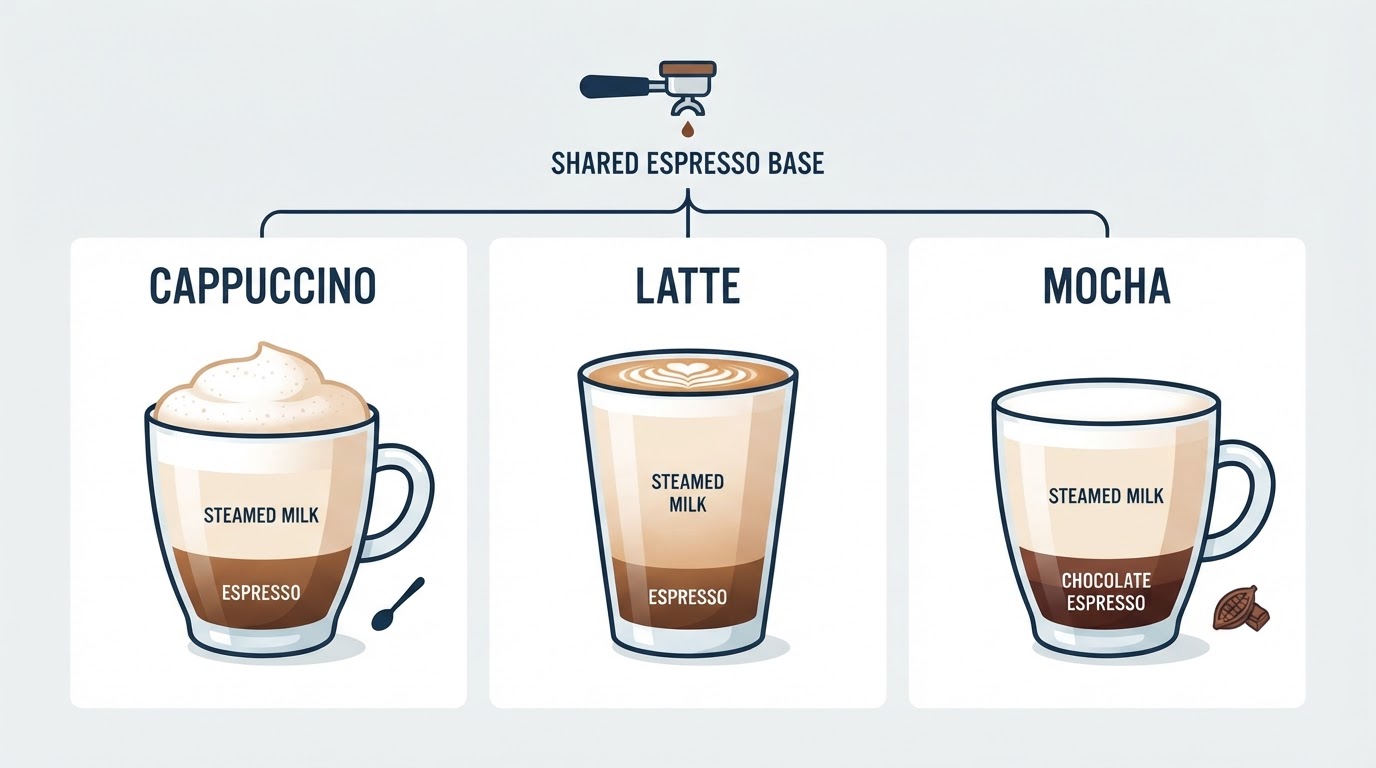
Both drinks start from the same espresso. What changes is how much milk you add, how much air you whip into it, and how large the finished cup is.
A cappuccino is a small drink, traditionally built from roughly equal parts espresso, steamed milk, and foam. It tastes coffee-forward, and it is usually served in a 5 to 6 ounce ceramic cup.
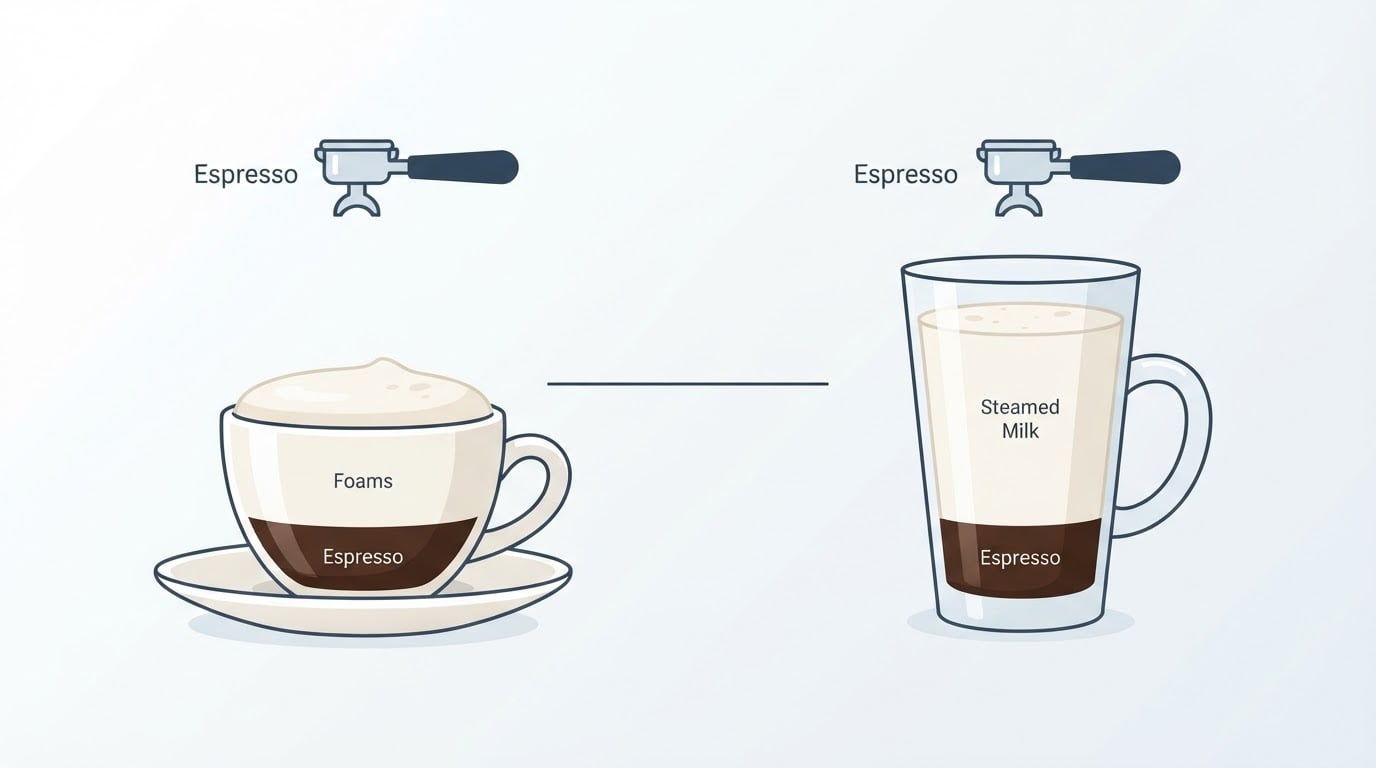
A latte stretches the same shot across several times as much milk, then finishes it with a thin layer of glossy microfoam. It tastes milkier and sweeter, and it usually arrives in a 10 to 12 ounce glass or mug.
| Cappuccino | Latte |
|---|---|---|
Classic build | About equal parts espresso, steamed milk, and foam | One or two shots with three to four times the milk |
Milk texture | Airy foam that forms a distinct cap | Fine microfoam folded through the milk |
Typical cup | 5 to 6 oz (150 to 180 ml) ceramic | 10 to 12 oz (300 to 350 ml) glass or mug |
Flavor | Coffee-forward with a drier finish | Milk-forward, rounder, and sweeter |
Best for | Espresso drinkers who want a small, hot cup | Milk drinkers and anyone sipping slowly |
Recipes vary by cafe and by machine, so treat these proportions as conventions rather than fixed rules. Once you understand the three variables below, you can read any menu.
The Three Variables That Separate Them
Almost every difference between a cappuccino and a latte follows from three choices: how much milk you pour, how much air you add, and how big the cup is.
The Espresso Base Is Usually the Same
Both drinks normally start with a single or double shot pulled the same way. That means the caffeine is usually identical when the shot count matches. Nothing in the coffee itself defines the drink. The milk does.
This matters while you are learning: you are not changing your grind, your dose, or your extraction to move from one drink to the other. You are only changing the milk, which is a far easier variable to practise.
Milk Volume Does Most of the Work
A latte uses much more milk than a cappuccino, often three to four times as much for the same coffee. That extra volume dilutes the shot, softening bitterness and letting the natural sweetness of the milk come forward.
A cappuccino keeps the milk volume low so the coffee stays in front. The result is a smaller drink with a sharper, more concentrated flavor in every sip.
Foam Is a Texture Decision, Not a Decoration
A cappuccino's foam is aerated more heavily and sits as a visible cap. A latte's milk is textured into microfoam: fine bubbles that stay fluid enough to pour, so the milk and coffee blend together instead of separating into layers.
One checkpoint works for both. Properly textured milk looks like wet paint: glossy, with no distinct bubbles on the surface. If you can see individual bubbles, the milk took on too much air or was not rolled long enough to break them down.
Cup Size Locks In the Ratio
Cup size is not just presentation. A small cup keeps a fixed amount of coffee concentrated; a large cup changes the balance unless you also add shots. That is why a latte ordered in a small glass tastes noticeably stronger than one served in a tall mug, and why a cappuccino poured into a large cup drifts toward latte territory.
Strength, Taste, and Heat: The Trade-Offs in the Cup
Strength. With the same number of shots, a cappuccino and a latte deliver the same caffeine. The cappuccino tastes stronger because less milk stands between you and the espresso.
Milkiness. The latte is the milkier drink by definition. If you want the coffee to stay dominant, the cappuccino wins. If you want the milk to be the main event, the latte does.
Heat. Both are built from steamed milk, so the starting temperature is set by how the milk is steamed rather than by the name of the drink. In practice, a cappuccino can feel hotter on the first sip because the foam insulates the liquid underneath, while a latte's larger volume cools over a longer drinking window.
If either drink arrives lukewarm, the likelier explanation is under-heated milk or foam that collapsed before it reached you, not the recipe itself.
How to Make Both at Home
The workflow is nearly identical. Only the aeration target changes.
- Pull the espresso first. Pour it into the cup or glass you plan to serve from, so you are not transferring the drink afterwards and knocking the foam down.
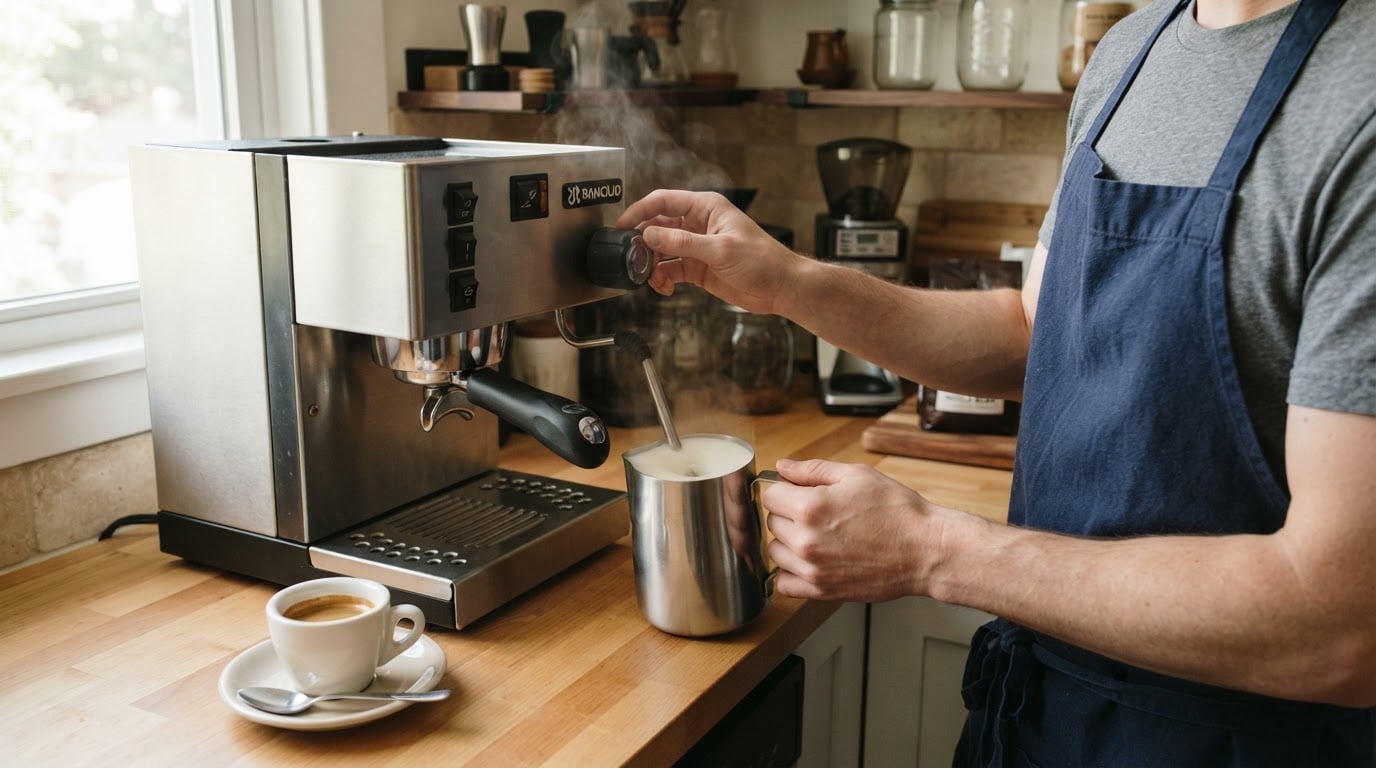
- Steam with the right amount of air. For a latte, keep the wand tip just below the surface for a brief hiss, then drop the pitcher slightly so the milk rolls in a smooth whirlpool. For a cappuccino, aerate for longer to build more volume, then let the roll break the larger bubbles down.
- Check the texture before you pour. Look for a glossy, paint-like surface with no visible bubbles, and stop when the pitcher feels too hot to hold comfortably for more than a second.
- Pour to the style. For a latte, pour the milk through the coffee and let the two combine. For a cappuccino, pour the milk first, then spoon the foam cap on top so it stays distinct.
- Change one variable at a time. If the drink tastes weak, adjust the shot or the milk volume rather than the grind, the dose, and the milk all at once.
Without a steam wand, a handheld frother or a French press can still build usable foam, but the texture comes out coarser. Automatic milk systems mostly target a latte texture, so a thick cappuccino cap usually takes one manual pass with a frother or a spoon.
How to Order Them Without Surprises
- Ask about size first. Menus vary, and a large cappuccino is often a latte under a different name.
- Know the wet and dry dial. A cappuccino can be ordered wet, with more milk and less foam, or dry, with more foam and less milk. This changes the texture, not the coffee.
- Adjust strength with shots, not style. A latte made with two shots can taste stronger than a cappuccino made with one.
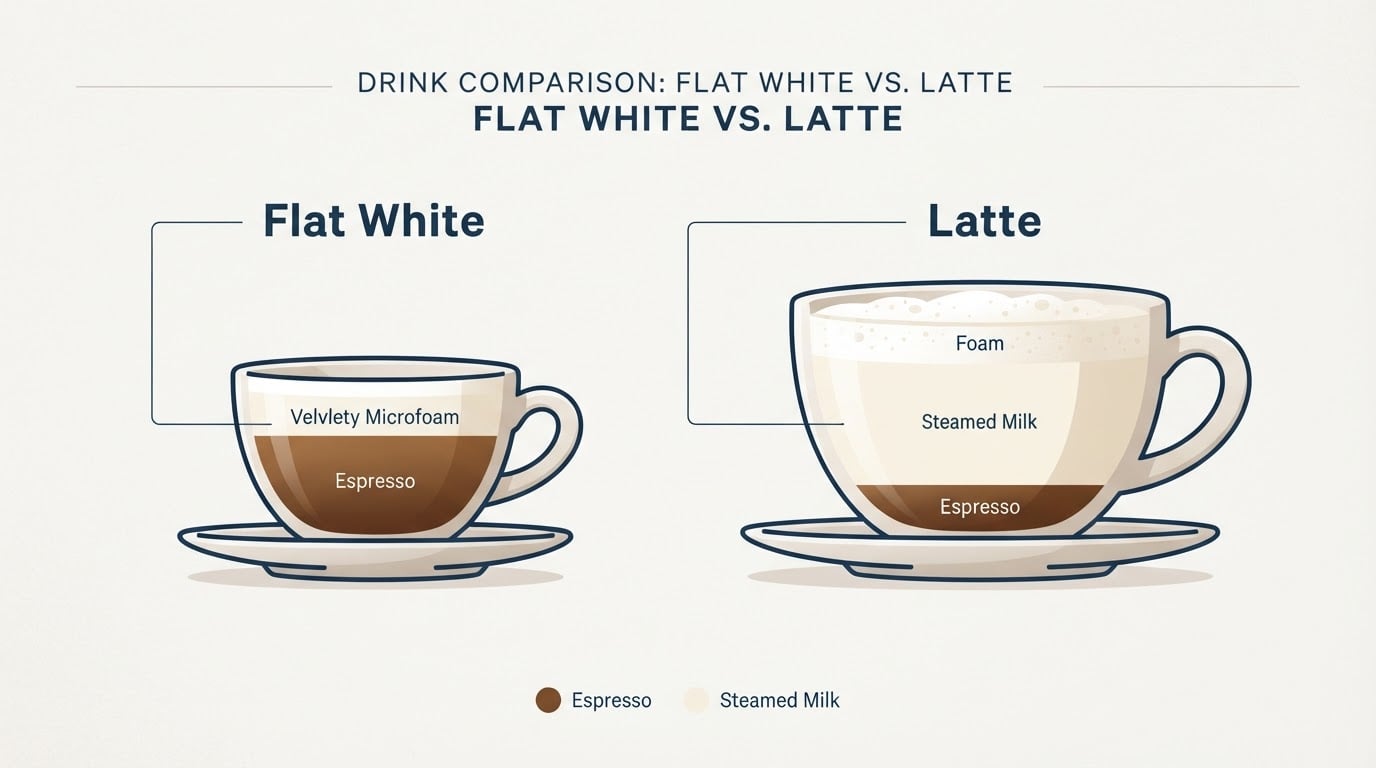
- Use the flat white as a reference point. It sits between the two: smaller than a latte, with thinner and silkier foam than a cappuccino.
Which Should You Pick? A Decision Checklist
Work through these criteria in order:
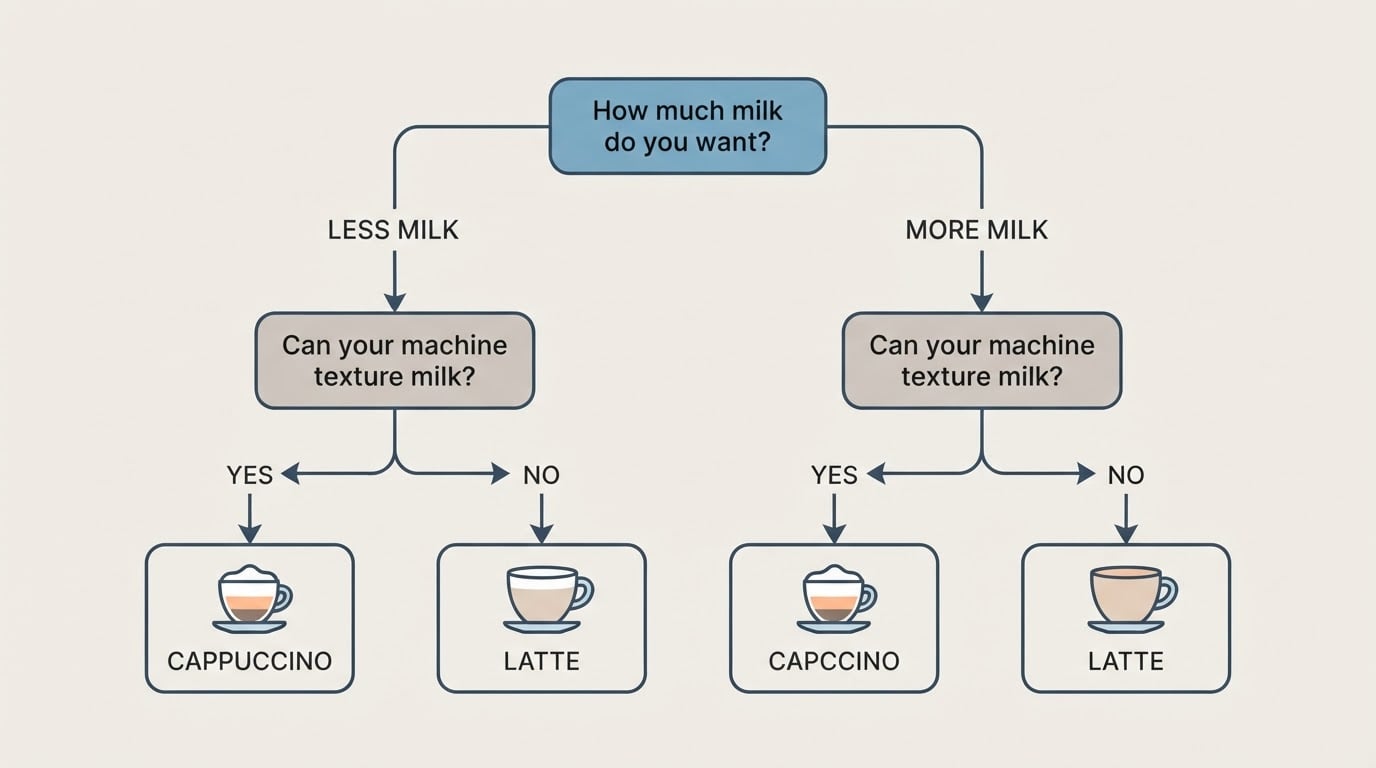
- Drink size. Want a small, hot drink you finish in a few minutes? Cappuccino. Want a longer drink to sip over half an hour? Latte.
- Flavor priority. Coffee first, milk second? Cappuccino. Milk first, coffee as support? Latte.
- Machine capability. A steam wand makes both straightforward. If you only have a frother or an automatic milk system, the latte's fine microfoam is easier to reach than a convincing cappuccino cap, so the latte is the more forgiving first target on that equipment.
- Drinking habit. If you regularly add syrups, the latte absorbs them better. If you drink your coffee black when you want real coffee flavor, the cappuccino is closer to that preference.
If you are still unsure, order both on consecutive days and compare at the first sip rather than the last. The drink that still tastes right once it has cooled slightly is the one you actually liked.
Cappuccino vs Latte: Common Questions
Which is stronger?
The cappuccino tastes stronger per sip because less milk dilutes the espresso. Caffeine is a separate question: when both drinks are made with the same number of shots, they contain the same amount.
Which is milkier?
The latte, clearly. It is built with several times the milk volume of a cappuccino, and the milk is textured to blend through the coffee rather than sit on top of it.
Which is hotter?
Neither is hotter by definition, since both are made with steamed milk. A cappuccino can feel hotter on the first sip because its foam layer insulates the drink, while a latte tends to cool over a longer drinking window. If temperature matters to you, ask for the milk extra hot and expect a slightly flatter, less sweet flavor as a result.
Which is better for a beginner?
It depends on what you are practising. As a drink to make, the cappuccino is the more forgiving target, because a thick foam cap hides uneven texturing while a latte's thin microfoam shows every stray bubble. As a drink to order, start with whichever one you already enjoy, since you will drink more of them and repetition is what builds the skill.
Do they have different amounts of caffeine?
Not inherently. The caffeine comes from the espresso, so a cappuccino and a latte made with the same number of shots are equivalent. A large latte often carries two shots simply because of its size, while a cappuccino is often made with one. That is a size decision, not a rule about the drink.