What a Cortado Is, and Where the Name Comes From
The name comes from the Spanish verb cortar, to cut. In Spain a cortado is espresso cut with a small pour of milk, ordered as a short stop at the bar. Cafés in Portugal and across Latin America serve the same idea under local names, and in parts of Spain you can find a cortado condensada, built with sweetened condensed milk.
The working definition most baristas would accept: a drink of roughly four to five ounces, around 120 to 150 milliliters, made from a shot of espresso and an approximately equal volume of steamed milk, finished with a thin layer of glossy microfoam.
Two things follow from that build. The drink stays small on purpose, so the espresso leads and the milk softens the edges without erasing them. And texture matters as much as ratio: milk stretched into wet, shiny foam coats the tongue and carries aroma, while stiff foam sits on top and blocks it.
Exact numbers shift by café and by region, with some shops serving a cortado closer to three ounces and others pushing toward six. The reliable constant is the relationship between coffee and milk.
Cortado vs Macchiato, Flat White, Cappuccino and Latte
Milk drinks are easiest to compare on two axes: total volume and how much air the milk holds. The table below uses typical ranges from US specialty cafés, so treat it as orientation.
Drink | Typical total size | Espresso to milk | Milk texture | What you taste first |
|---|---|---|---|---|
Cortado | 4–5 oz | roughly 1:1 | thin, glossy microfoam, almost no foam cap | espresso, softened |
Macchiato | 2–3 oz | espresso plus a spoonful of milk | a small dollop of foam | nearly straight espresso |
Flat white | 6–8 oz | roughly 1:2 to 1:3 | velvety microfoam, thin layer | a balance of coffee and milk |
Cappuccino | 6–8 oz | roughly equal parts coffee, milk, foam | thick, airy foam cap | foam and milk before coffee |
Latte | 10–16 oz | roughly 1:4 and up | thin microfoam over a lot of milk | milk, with coffee behind it |
The espresso-to-milk column carries most of the story. A macchiato barely counts as a milk drink. A cortado doubles the milk yet keeps the proportions close enough that the shot still dominates. A flat white stretches that idea into a larger cup with finer, wetter foam, a cappuccino spends the same volume on air, and a latte adds milk until the espresso becomes a flavor note.
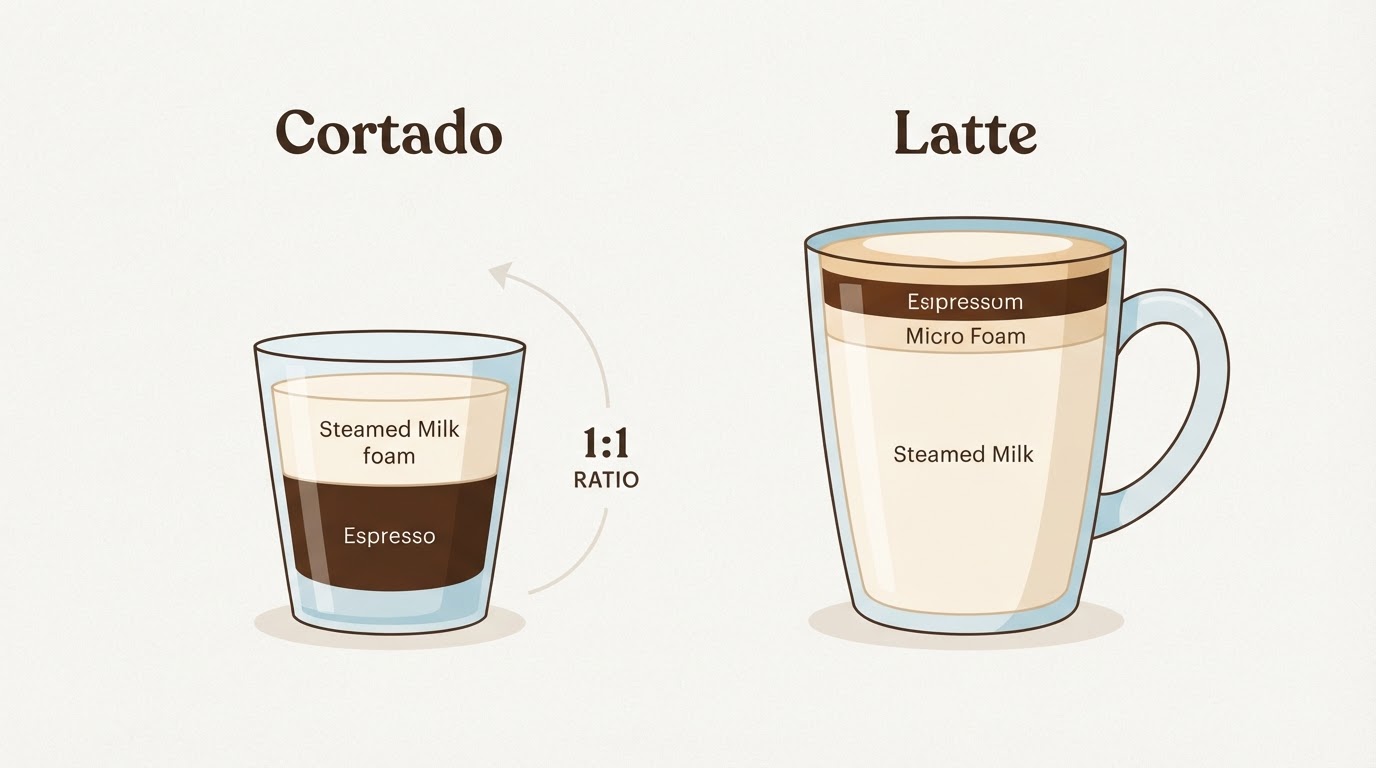
That is why ordering a cortado and receiving a twelve-ounce cup feels wrong even when the coffee is good. The ratio changed, so the drink is no longer the one you asked for.
How to Make a Cortado at Home
The completion standard is simple: the finished drink fits a four- to five-ounce glass, coffee and milk sit at roughly equal depth, and the surface is a thin sheen. Hit that and the exact equipment matters less than the order of operations.
1. Decide the size before you grind
Pick your total volume first. Four to five ounces means about two ounces of espresso and about two ounces of milk, and every later decision follows from it, including how much milk goes into the pitcher and how long you steam it. If you normally pull a double for a latte, keep the double and use less milk.
2. Pull a short, sweet shot
For most home machines, a useful starting frame is a dose around 16 to 18 grams, a yield around 30 to 40 grams, and a shot time near 25 to 35 seconds. A cortado benefits from the shorter end of your usual yield, because two ounces of milk arrives fast and a thin, watery espresso disappears underneath it. Taste the shot on its own first. A sharp, thin espresso stays sharp under milk.
Pod machines and manual brewers work too, with one adjustment: use the smallest espresso-style setting you have and stop the shot early where the machine allows it, so the concentrate stays strong enough for a small drink.
3. Steam only what you need
Pour two to three ounces of cold milk into a small pitcher, ideally whole milk for the easiest texture, and aim to finish around 130 to 150°F. Past that point the milk loses the sweetness that balances the shot.
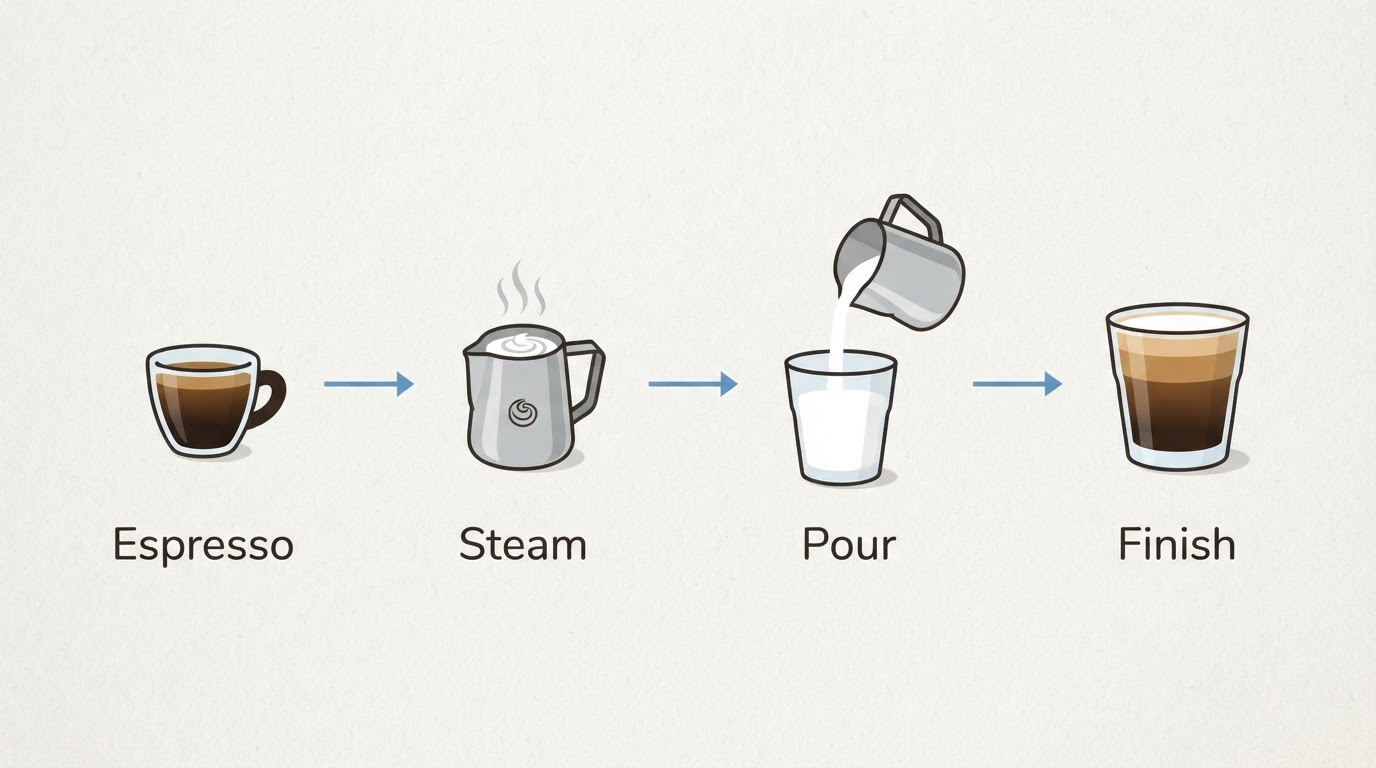
Introduce air for a second or two at the start, with the tip just below the surface, then sink the tip and let the milk spin until the surface looks like wet paint with no visible bubbles. Tap the pitcher once, swirl it, and pour. Foam that looks like meringue is too dry for this drink.
4. Pour, then check the layers
Swirl the espresso in the glass so the crema is even. Pour the milk from a few inches up to combine the two, then bring the pitcher close to the surface for the last ounce so a thin band of foam settles on top. A four- to five-ounce rocks glass or a small tulip cup shows the layers, and a wide mug hides them while cooling the drink faster.

Adapting the Method to Your Equipment
A steam wand is the easiest path, and the ratio still governs the result on every other setup.
Handheld frother or French press. Warm the milk first, then froth it for roughly 15 to 20 seconds with a handheld whisk, or give it 15 to 20 plunges in a French press. Let it rest for half a minute so the stiffest foam rises, then pour from the lower half of the pitcher to get liquid milk and the finest foam.
No milk equipment. Warm the milk gently in a saucepan or microwave, whisk it hard in a lidded jar for about 20 seconds, and let it settle before pouring. The texture will be looser than a café version, so pour slightly less milk and accept a thinner surface.
Pod machine or small-capacity brewer. Keep the milk close to the coffee volume and pour into the smallest vessel you own. The common failure here is volume creep, where a long pod setting plus a normal splash of milk produces something closer to a small latte.
Common Mistakes and How to Adjust the Taste
Most disappointing cortados fail in one of five ways, and each has a direct correction.
- Too much milk. The drink starts tasting like a latte in a small cup. Keep milk at or below the espresso volume.
- Over-aerated milk. A stiff cap turns it into a cappuccino. Aerate briefly and spin the milk longer.
- Milk far past 150°F. Sweetness flattens and the texture turns grainy. Stop earlier than feels necessary, since the pitcher keeps heating off the steam.
- Espresso left standing. A shot that waits a minute or more tastes muddy. Pour while the crema is still intact.
- The wrong vessel. A wide mug spreads the drink thin, cools it quickly, and hides the layers.
Taste adjustments follow the same logic. A sour, thin shot usually wants a finer grind or a slightly longer yield. A bitter, drying shot usually wants a coarser grind or a shorter yield. If the finished drink is too intense, add half an ounce of milk. If the milk has taken over, cut it back or pull a slightly longer shot so the coffee can keep up.
When to Order a Cortado Instead of a Latte
Order a cortado when the espresso is the reason you are there. It suits a short pause, a seat at the bar, a pastry, or the end of a meal, and it is the fastest way to judge whether a shop's espresso is well extracted, because there is nowhere for a mediocre shot to hide. The smaller volume also keeps the drink at a good temperature while you drink it.
Order a latte when you want something to hold for twenty minutes, when you are eating something that would overwhelm a two-ounce pour, or when the espresso on offer is harsh and you would rather have milk in front. The two drinks answer different questions about how much coffee flavor you want in the cup.
If You Like This, Try That
- Macchiato → a cortado gives you the same espresso-first experience with enough milk to round off the edges.
- Flat white → a cortado is the shorter, more concentrated version of the same milk-forward technique.
- Cappuccino, but the foam is too much → a cortado keeps the balance and drops the airy cap.
- Latte, but you want more coffee → ask for a cortado, or for a Gibraltar, which many US cafés use as the name for the same build.
- Sweet coffee drinks → a cortado condensada, in cafés that serve it, adds sweetness without turning the drink into dessert.
- Straight espresso → a cortado with sparkling water on the side is a gentle step down in intensity.
FAQ
Is a cortado the same as a Gibraltar?
In many US cafés, yes. Gibraltar refers to the small glass the drink is served in, and the build is espresso with an equal pour of steamed milk. Naming varies, so ask what a shop means by each term.
How do you pronounce cortado?
kor-TAH-doh, with the stress on the middle syllable and a soft Spanish d. English-speaking baristas usually keep that stress pattern.
What is a cortado at Starbucks?
Large chains use their own size names and drink builds, so ask which listed size combines espresso with a comparable pour of steamed milk, then order that. Check the listed ingredients if you are avoiding a specific milk or syrup.
Is "cortado coffee" a different drink?
No. Cortado describes the drink rather than a bean, roast, or brewing method, so "cortado coffee" means a cortado. Any well-extracted espresso works, since the milk is what defines the format.
Cortado vs flat white: which has more milk?
The flat white, in almost every case. It typically lands around six to eight ounces with a higher proportion of milk, while a cortado stays near four to five ounces with roughly equal parts.
Cortado vs cappuccino: what actually changes?
The milk texture. Both can land in a similar size range, yet a cappuccino is built with a thick, airy foam cap and a cortado with thin, wet microfoam, so the cappuccino tastes lighter and the cortado tastes more like coffee.
Cortado vs macchiato: how big is the difference?
A macchiato is espresso marked with a small amount of milk, usually an ounce or two in total. A cortado roughly doubles the milk, which softens the shot without burying it.
Cortado vs latte: which should I order?
Take the cortado when you want coffee flavor in a short drink, and the latte when you want a larger, milkier cup to sip slowly. The milk volume is what separates them.
Can you make a cortado with a pod machine?
Yes, with a caveat about volume. Use an espresso-style pod on its shortest setting, pour it into a small glass, and add an equal amount of warm, lightly textured milk. The result runs thinner than a café cortado, and the ratio still reads correctly.