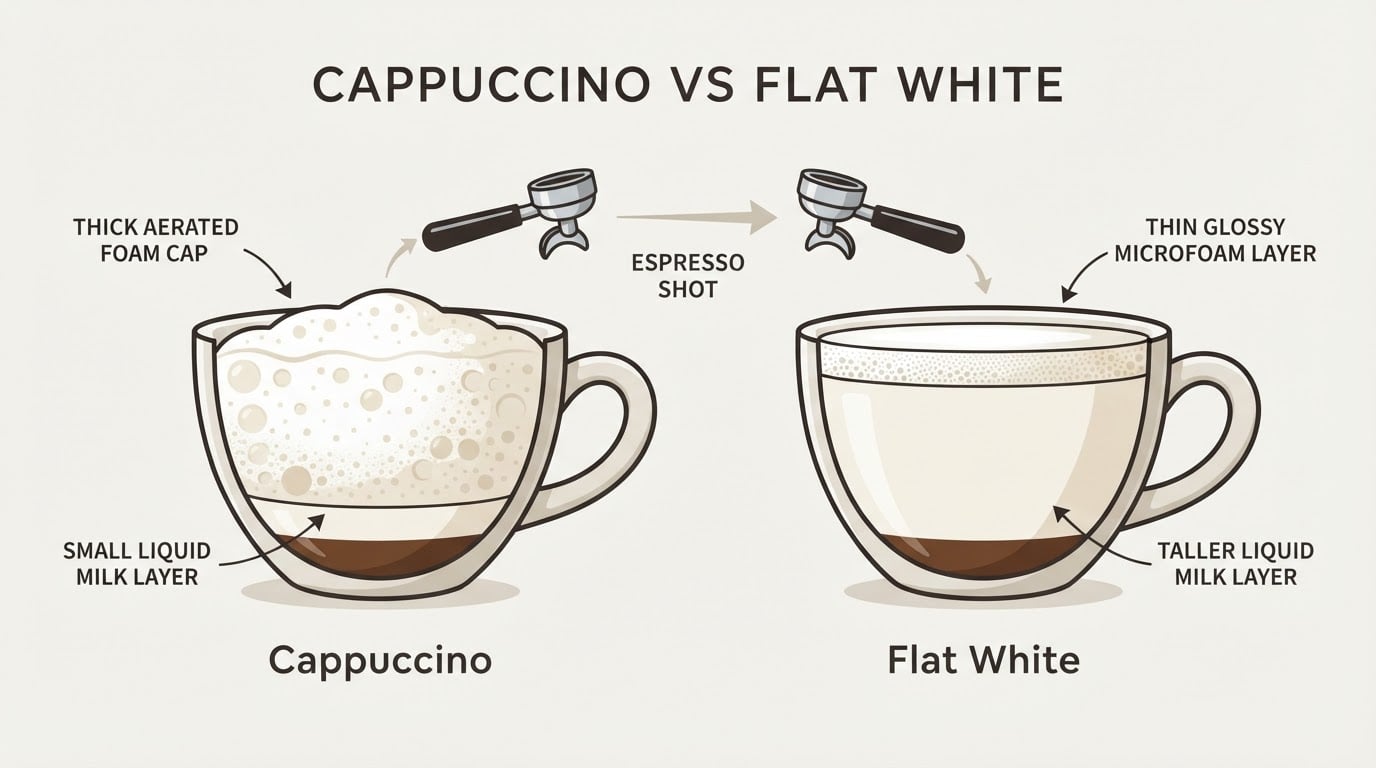
What each drink actually is
A cappuccino is built from the espresso outward. The traditional recipe is roughly equal parts espresso, steamed milk, and milk foam, served in a 5–6 oz cup — small enough that the milk stretches a shot or two without drowning them. It is the classic Italian breakfast drink, and the name is usually traced to the drink's brown-and-white surface, which was said to resemble the habits of Capuchin friars.
A macchiato starts from the opposite direction. Macchiato means "marked" or "stained," and that is the whole recipe: a shot of espresso with a small spoonful of milk or milk foam on top. It is served in a small cup, roughly 1.5–2 oz, and the milk is a garnish rather than something you taste as milk. In Italian cafés you may see it ordered as macchiato caldo, marked with warm milk, or macchiato freddo, marked with cold milk.
One naming trap is worth knowing before you order. A latte macchiato — the tall, layered drink that many chains sell — is a different animal: steamed milk stained with espresso, milk-heavy and mild. If the traditional drink is what you want, ask for an espresso macchiato, or at least make sure the macchiato you are ordering comes in a small cup.
How much milk and foam each one takes
This is where the two drinks separate most clearly.
What changes | Cappuccino | Macchiato |
|---|---|---|
Espresso | 1–2 shots, about 1–2 oz | 1 shot, about 1 oz |
Milk | 2–3 oz, steamed | About 1–2 teaspoons |
Foam | A thick cap, roughly a third of the drink | A small dollop on the crema |
Cup | 5–6 oz ceramic cup | 1.5–2 oz demitasse |
Feel | Airy, creamy, sippable | Dense and concentrated |
The cappuccino's milk is steamed and poured, then a spoonful of foam sits on top; the proportions give the espresso room to spread out. The macchiato's milk never becomes a layer you drink through — it marks the crema and rides the first sip. That difference in volume is why two drinks built on the same espresso shot taste so different.

Café versions drift from the classic numbers. Many modern coffee bars pull the foam back for a wetter 4–5 oz cappuccino, and some serve it with a double shot. A macchiato can arrive with a splash of steamed milk instead of a spoonful of foam. None of that is wrong: the drink is defined by its balance, not by a single measurement.
Size, strength and taste: what actually changes
The espresso is not the variable here; the milk is. Running both drinks through the same criteria makes the trade-offs easy to see.
- Size. A cappuccino lands around 5–6 oz and a macchiato around 1.5–2 oz. The macchiato is often gone in three or four sips, while the cappuccino is a drink you sit with.
- Strength. The macchiato concentrates the shot. A cappuccino dilutes it with roughly twice its volume in milk and air, so the same espresso reads as milder.
- Taste. Without much milk to soften it, the macchiato keeps the espresso's acidity and bitterness forward. A cappuccino is rounder and sweeter, and the foam adds a dry, airy finish; the milk's own sweetness does the rest.
- Texture. The cappuccino's foam gives it body and a soft top. The macchiato is dense — all liquid and crema until the little foam mark reaches your lips.
- Caffeine. Both drinks usually start with one shot, so the difference is volume and milk rather than a big jolt. A cappuccino made with a double shot will naturally carry more.
If you are deciding at a counter, think about what you want from the next ten minutes. The cappuccino suits a slow breakfast or a morning when you want something soft and warming. The macchiato fits an afternoon reset or the end of a meal, when you want the coffee itself and nothing else.
How to make a cappuccino at home
You do not need a café setup for either drink. What matters is a strong shot of coffee, hot milk, and enough air worked into part of that milk to make foam.
Pull the strongest shot you can
An espresso machine is the direct route, and a moka pot on the stove gets you close with ordinary kitchen tools. If you have neither, brew a small, concentrated batch in an AeroPress, a French press, or a drip brewer loaded with more coffee than usual, and accept that it will not have true crema. Pull it into the cup you plan to serve.
Make foam without a steam wand
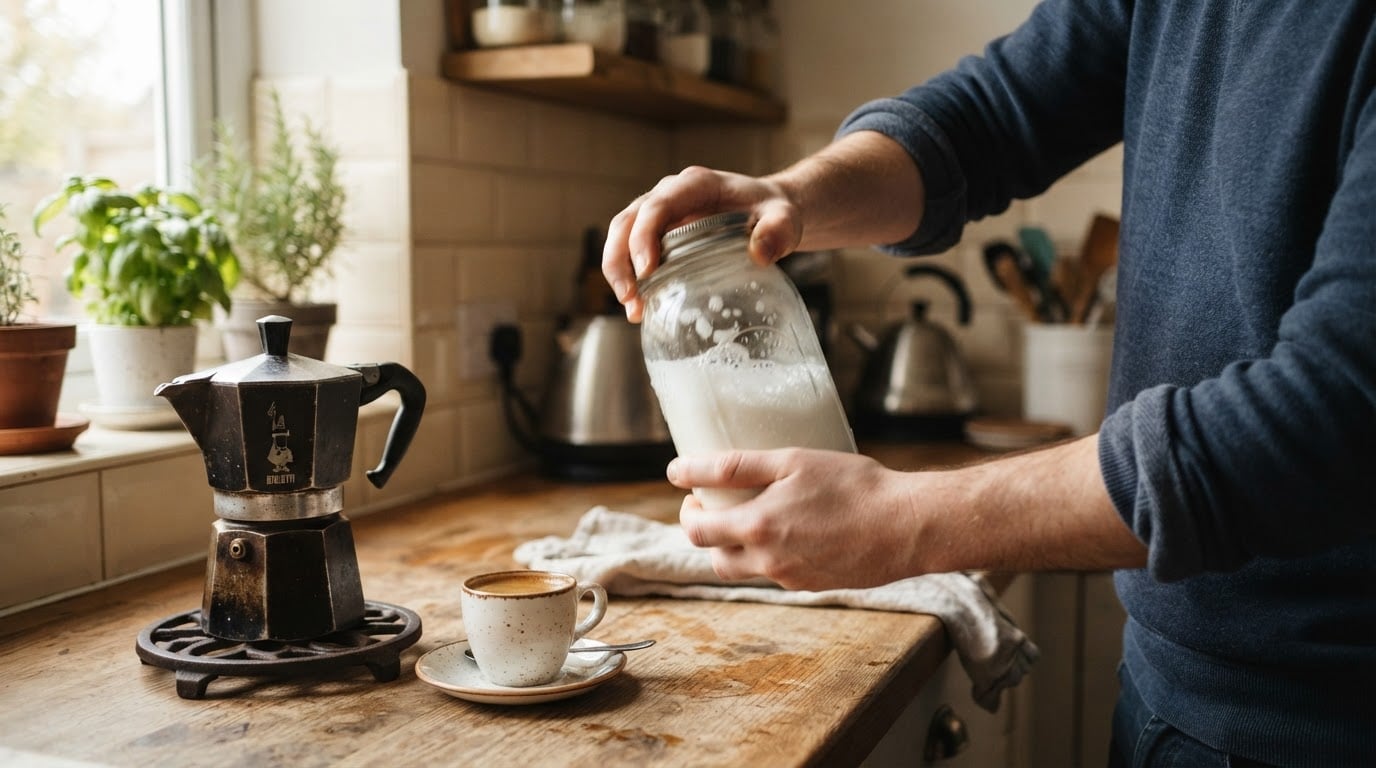
Heat the milk in a saucepan or a microwave-safe jug until it is hot but not boiling — milk that scalds tastes flat and loses its sweetness. Shake hot milk in a lidded jar for about thirty seconds, pump it in a French press, or whisk hard until the volume grows and the bubbles turn fine. Let the jug sit for about half a minute so the foam firms up and the biggest bubbles pop.
Milk that foams well
Whole milk is the easiest place to start, because its fat and protein hold air in small, stable bubbles. Lower-fat milk will foam too, but the structure is thinner and collapses sooner. Plant milks vary a lot: those labeled "barista" are blended to foam more like dairy, while some plain almond and oat milks stay flat no matter how hard you shake. Keep the milk cold until you heat it, and heat only as much as you need for one or two drinks.
Build the cup
- Pour the espresso into a 5–6 oz cup.
- Pour the steamed milk in a slow, steady stream, holding the foam back with a spoon.
- Spoon the foam on top until it fills roughly the top third of the cup.
- Check the result: a cap of about a centimeter, a creamy texture, and a drink that is hot rather than scalded. Too much foam and you have built a dry cappuccino; pour less air into the milk next time.
How to make a macchiato at home
The macchiato is simpler because the milk stays out of the way.
- Pull one shot of espresso into a small cup, about 1.5–2 oz.
- Spoon a teaspoon or two of foam onto the center of the crema, or add a splash of warm milk if you prefer the caldo style.
- Serve it immediately and do not stir. The mark should sit on top and blend in as you drink.
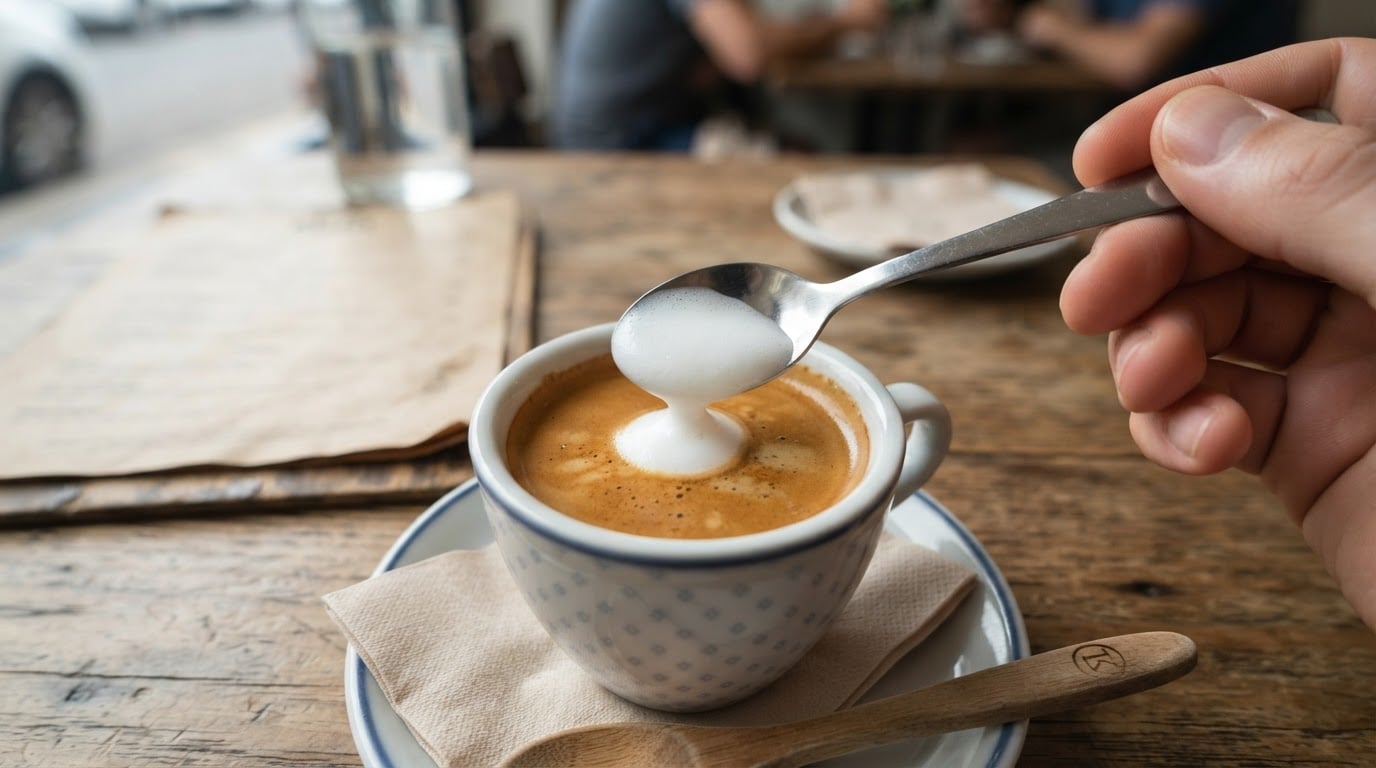
Check the result against the idea rather than a number: the espresso should stay the body of the drink, and the foam should be a spot, not a layer. A second spoonful makes it milder, but once milk fills the cup you have made something closer to a cappuccino than a macchiato.
A faster route if you would rather not guess
This article is published by the CoffeeBrewsHub editorial team, which also produces the drink and technique guides named below.
If you would rather not dial in the ratios by trial and error, CoffeeBrewsHub publishes short drink explainers that define each café drink by its actual milk-to-espresso ratio and cup size, plus milk-frothing and espresso technique guides for the practical next step.
Which one should you order or make
Match the drink to the moment rather than to a winner.
Choose a cappuccino when you want a longer, milder cup you can hold through breakfast, when the texture of foam is part of the appeal, or when you are pouring for someone who finds espresso sharp. Choose a macchiato when you want the espresso to lead: a quick reset in the afternoon, a finish after a meal, or the smallest possible amount of milk in your coffee. If you are making both at home, the same shot and the same jug of milk will get you either one — only the proportion you pour changes.
At a café, be specific. If the menu lists a latte macchiato, or the barista reaches for a tall glass, you are ordering the milk-heavy version. Ask for an espresso macchiato if you want the small, intense original.