What the FAQ offers instead
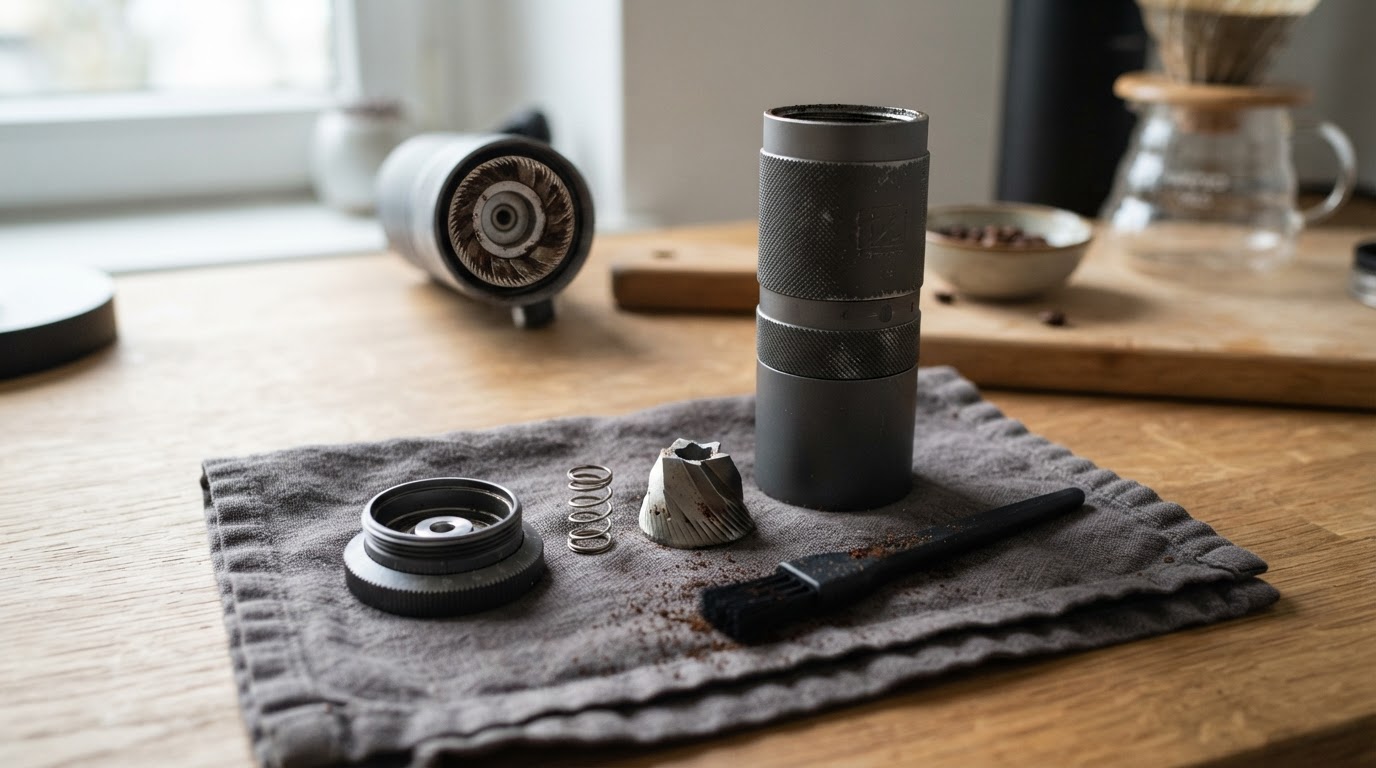
The maker’s cleaning FAQ gives two tools for a dry clean: a brush and an air blower. Nothing in it describes a rinse, a soak or a soapy wash, and it does not suggest pouring water through the burr chamber and drying afterwards.
The FAQ also notes that a new grinder is ready to use right out of the box, so the first clean is maintenance rather than part of setting the grinder up.
Oats and a damp towel for odor
A grinder that smells or feels oily gets a separate answer, and it is the only place the FAQ brings moisture into the routine. It suggests grinding rolled oats or instant oats through the grinder, wiping with a towel that is damp rather than wet, and drying the grinder immediately, because excessive moisture damages it.
The wording matters. It describes a wipe with a cloth, not running water over the burrs, the adjustment mechanism or the bearings, and "dry immediately" is part of the instruction rather than a finishing touch.
Disassembly follows your adjustment design
The FAQ does not publish one universal cleaning sequence. It links separate cleaning guides for the three adjustment designs it sells: internal adjustment (Q2, JE, JX), top adjustment (JX-Pro, JE-Plus) and external adjustment (K-Pro, K-Plus, J-Max, K-Max, ZP6 Special, X-Pro S, K-Ultra).
Use the guide for the grinder you own. It names the parts you will actually see, the order they come apart in and how they go back together; a sequence written for another design will not match what is in your hands.
One warning in the FAQ applies once the grinder is back together: it points owners to the grind-setting charts and says not to turn the handle within the first few clicks from the zero point, to avoid damaging the burrs.
How often the maker suggests cleaning
The FAQ suggests disassembling the grinder and cleaning it thoroughly once a month, on the reasoning that this maintains both the grinding results and the grinder's working life. That is 1Zpresso's general maintenance suggestion for its own grinders rather than a judgement about whether a particular grinder is dirty or faulty, and it is not an interval to carry over to hand grinders generally, since other makers publish their own schedules.
If you are also weighing how much coffee stays inside the grinder between doses, coffee grinder retention explains what input and output weights can tell you; it leaves cleaning to the maker's instructions.
If the grinder already got wet
Stop adding water, and do not keep wiping in the hope that the moisture spreads thin enough to disappear.
- Set the grinder down and stop any further rinsing, soaking or wet wiping.
- Take it apart only as far as the cleaning guide for your model describes.
- Wipe each part with a dry cloth, then leave the parts apart somewhere dry.
- Reassemble following that same model guide.
- If moisture is still trapped, the crank binds, the adjustment sticks or you can see corrosion on the steel, contact 1Zpresso support before grinding again.
The FAQ does not describe oven or hair-dryer drying, oiling the burrs, or a guaranteed fix for corrosion. What it does say is that excessive moisture damages the grinder, which is why drying immediately belongs in the routine rather than at the end of it.