The short answer: three builds, one espresso base
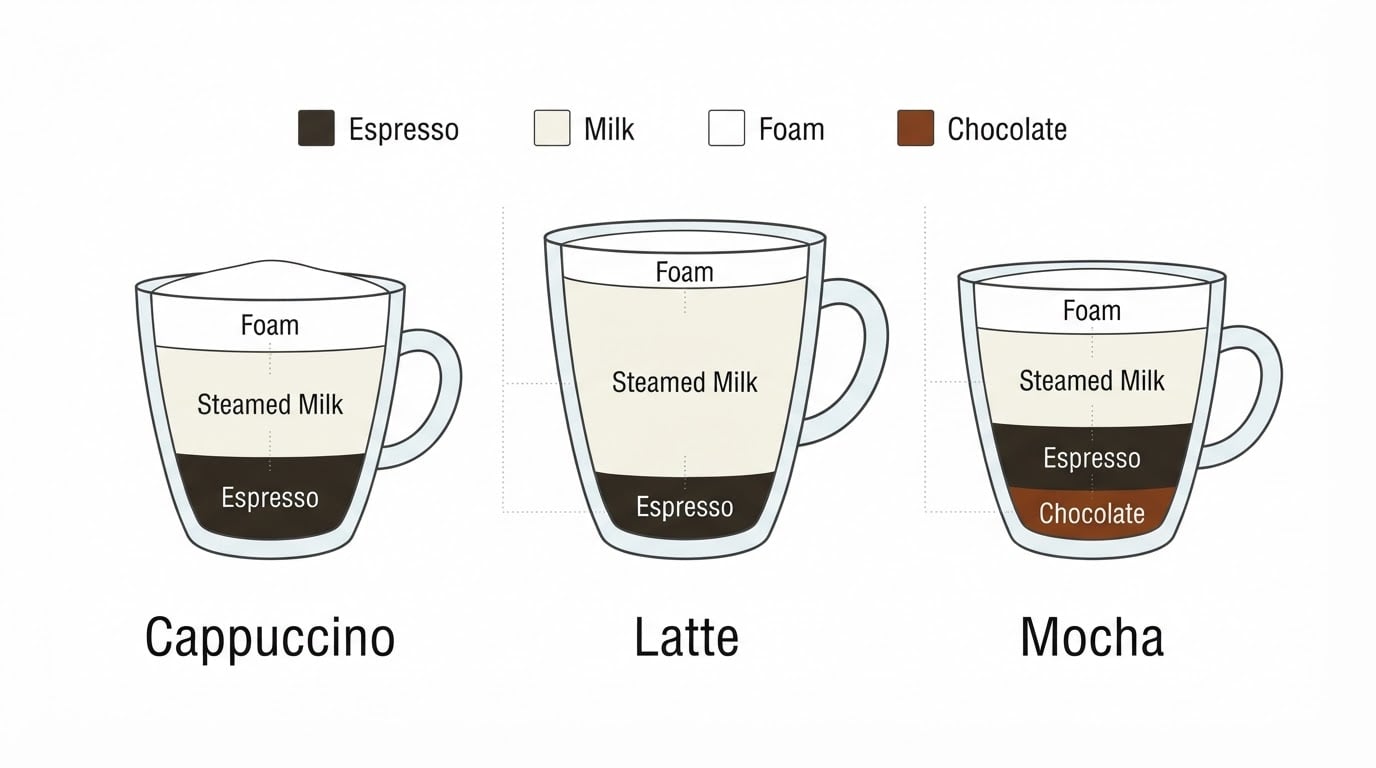
All three drinks begin with espresso. What changes is how much milk follows it, how that milk is textured, and whether chocolate joins the cup. The volumes below are typical café ranges, and they are the ones used throughout this article; recipes shift by shop, region, and machine, so treat them as starting points rather than fixed standards.
| Espresso | Milk and texture | Chocolate | Typical cup | Sweetness |
|---|---|---|---|---|---|
Cappuccino | 25–30 ml (one shot) | 60 ml steamed milk plus 60 ml thick microfoam | None | 150–180 ml | Low |
Latte | 25–60 ml (one or two shots) | 180–240 ml steamed milk, thin microfoam layer | None | 240–350 ml | Mild |
Mocha | 25–60 ml (one or two shots) | 180–240 ml steamed milk, thin microfoam layer | 15–30 ml chocolate syrup or 1–2 tbsp cocoa-based sauce | 240–350 ml | High |
Cappuccino: a small cup built on foam
A traditional cappuccino runs close to equal parts by volume: roughly 30 ml of espresso, 60 ml of steamed milk, and 60 ml of milk foam in a 150–180 ml cup. The foam is thick enough to hold a spoon and sits as a defined cap instead of melting into the milk below. Because so little milk is used per shot, the coffee flavor stays forward even though nothing is added. It arrives in a small ceramic cup, sometimes dusted with cocoa, and it is meant to be drunk within a few minutes of being poured.
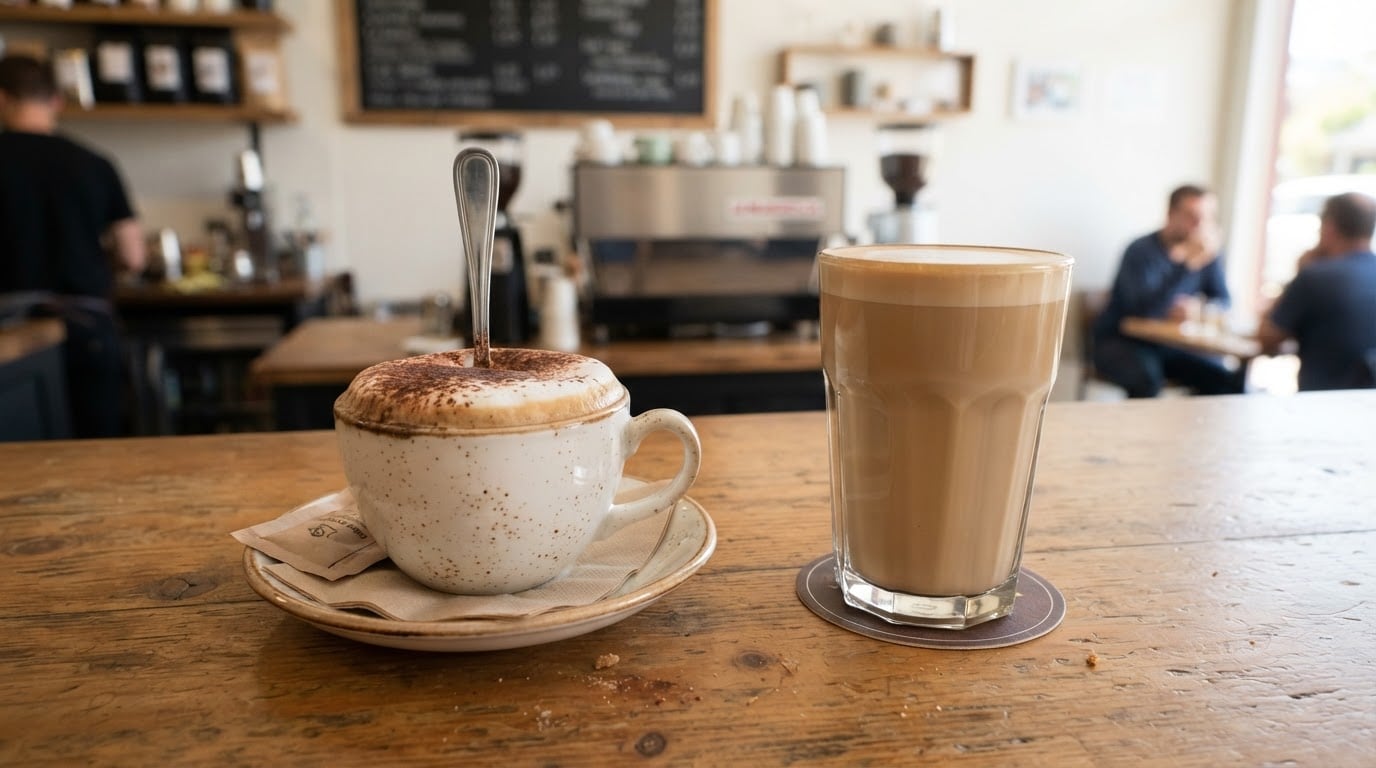
Perceived strength is high for its size. With the same single shot, a cappuccino tastes stronger than a latte because the milk-to-coffee ratio is lower. Sweetness comes almost entirely from the milk itself, so the drink reads as balanced rather than sweet, and the foam gives it a lighter, airier texture than the volume suggests.
Latte: more milk, thinner foam
A latte is built on volume. A typical 240–350 ml latte starts with one or two shots, about 25–60 ml of espresso, then adds 180–240 ml of steamed milk and finishes with a thin layer of glossy microfoam, usually under a centimeter deep. That fluid, paint-like texture is what lets latte art sit on the surface and what makes the first sip soft rather than airy.
Served in a tall glass or a wide mug, a latte drinks like a mild, milky coffee: smooth, faintly sweet from the lactose in the milk, and noticeably gentler in coffee flavor than a cappuccino made with the same dose. Its caffeine does not rise automatically with the cup size. It depends on how many shots the barista pulls, which is why a single-shot latte and a single-shot cappuccino contain the same caffeine while tasting very different.
Mocha: a latte with chocolate
A mocha is a latte with a chocolate element worked into it. The usual build is 15–30 ml of chocolate syrup or one to two tablespoons of cocoa-based sauce stirred into the espresso until dissolved, followed by the same 180–240 ml of steamed milk and thin foam as a latte, in the same 240–350 ml mug. Cafés often add whipped cream, which pushes it further toward dessert.
Espresso and milk volumes stay the same as a latte, so a mocha is not stronger; it is sweeter. Chocolate contributes sugar and body, not more coffee, and that sweetness rounds off sharp or bitter notes. The result is the most forgiving drink of the three and the one most likely to hide a mediocre shot, which is worth knowing when you are ordering somewhere unfamiliar.
Strength and sweetness without the guesswork
Two different questions get mixed together in most comparisons: how much caffeine a drink contains, and how strong it tastes. Caffeine follows the number of espresso shots, not the cup size, so the milk volume in a latte does not dilute the caffeine, only the flavor. Perceived strength follows the ratio of milk to coffee, which is why the same shot reads as bold in a 150 ml cappuccino and mellow in a 350 ml latte.
Sweetness is a third variable. A cappuccino carries no added sugar, a latte carries only the mild lactose note of milk, and a mocha carries chocolate. Ranked by sweetness, the order is mocha, then latte, then cappuccino. Ranked by coffee flavor per sip, it reverses.
Why milk texture matters more than the recipe
Two cappuccinos poured from identical volumes can taste like different drinks, because foam quality controls texture, temperature, and how quickly the drink falls apart in the cup. Microfoam, made by folding a small amount of air into cold milk and then spinning it into tiny glossy bubbles, blends with the espresso and keeps the drink integrated to the last sip. Stiff, dry foam sits on top as a separate layer, so the first mouthful is airy and the milk underneath tastes thin.
Heat matters as much as air. Milk is typically textured between about 130°F and 150°F (55°C to 65°C). Below that range it stays watery and collapses quickly; above it, proteins and sugars change and the milk takes on a cooked, scalded edge that flattens the sweetness and makes the coffee taste bitter by contrast. A thermometer removes most of the guesswork, and a pitcher that is only half full leaves room for the milk to spin.
For a latte the target is wetter and thinner than most people expect on their first attempt. For a cappuccino the target is thicker and more structured. Same milk, same wand, different stopping point. A mocha mostly inherits whichever texture you produce, though a slightly wetter foam helps because the chocolate already adds body.
Making each drink at home
The sequence is the same for all three; only the milk stop and the chocolate step change.
- Pull the espresso first. One shot of about 25–30 ml for a cappuccino, one or two shots for a latte or mocha, into a cup you have warmed.
- Handle chocolate before milk. For a mocha, stir the syrup or sauce into the hot espresso until no streaks remain. Chocolate added on top of finished milk tends to sink and leave a sweet last sip.
- Texture the milk. Fill a pitcher to roughly half, aerate at the surface for two or three seconds, then lower the tip and let the milk spin until the pitcher feels warm and the surface looks like wet paint rather than soap suds.
- Pour and finish. Pour steadily from a low height so the foam folds into the coffee. For a cappuccino, hold back the last of the foam and spoon it on as a cap. For a latte, pour through the foam to leave a thin even layer. For a mocha, stir once at the end to lift the chocolate through the milk.
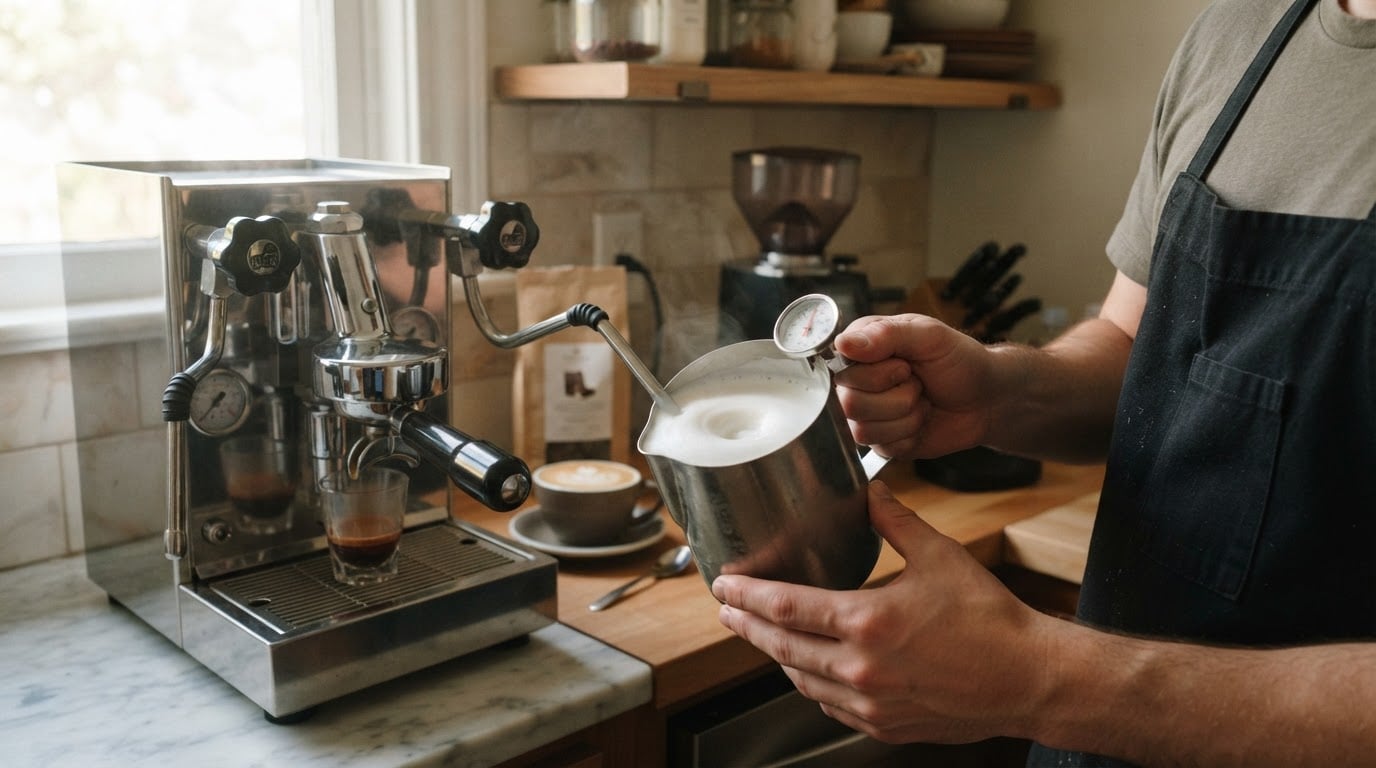
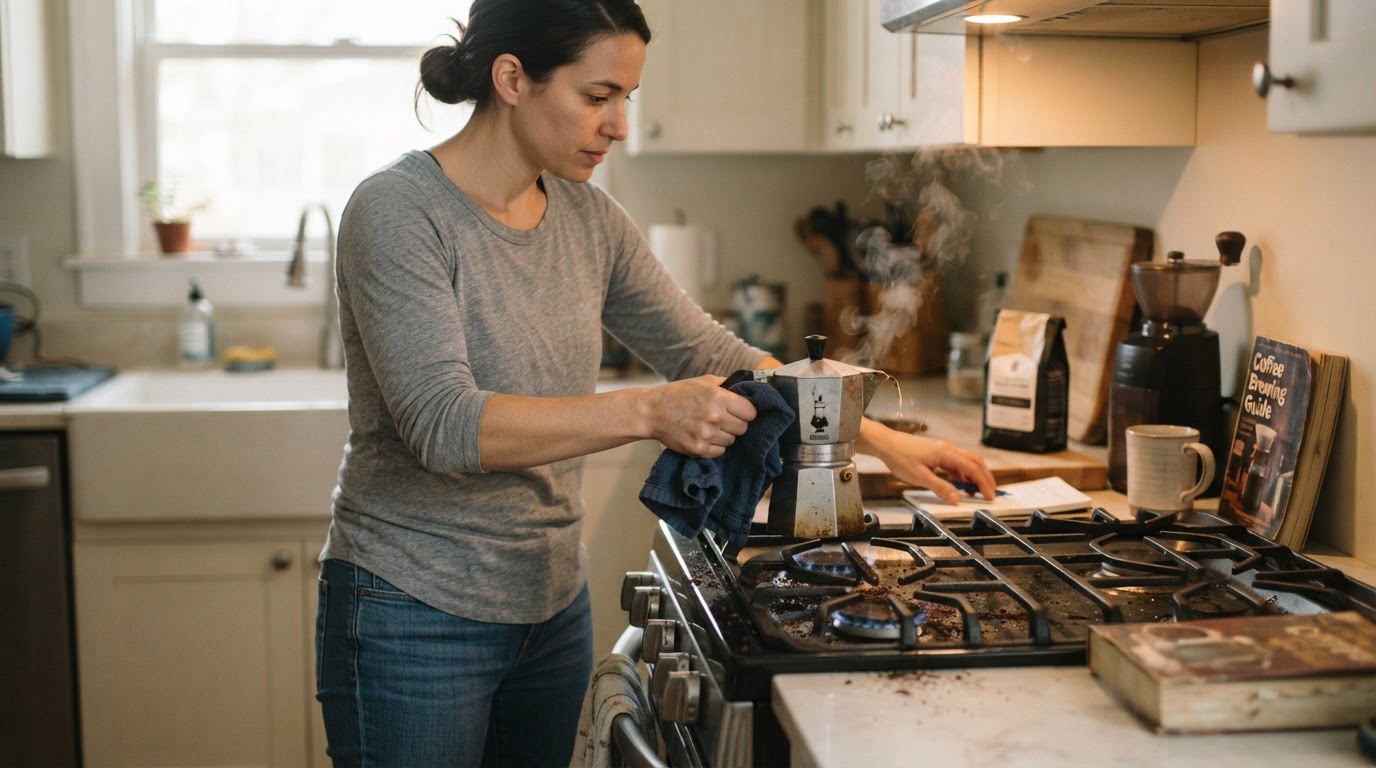
A steam wand gives the finest control. A handheld or pump frother gives a coarser, stiffer foam that suits a cappuccino better than a latte, because a latte's appeal depends on that thin liquid texture. A French press works as a manual alternative: warm the milk gently, pour it into the press, and pump the plunger a few times. Without an espresso machine, a moka pot, an AeroPress, or a strong concentrated brew can stand in, though the cup will read differently and the foam has to carry more of the drink's structure.
Define done by the cup, not the clock. A cappuccino is ready when the foam holds a spoon and the cup feels light for its size. A latte is ready when the surface is glossy and there is no dry cap in the middle. A mocha is ready when the chocolate is fully dissolved and there is no grit at the bottom.
What each drink asks of your machine
- Cappuccino: the most milk-skill dependent of the three. It needs a wand or frother that can produce dense microfoam, and it punishes over-aeration more than the other two.
- Latte: needs capacity more than finesse. A larger pitcher, a larger cup, and enough steam power to heat 180–240 ml of milk without scorching it.
- Mocha: needs nothing extra from the machine. The chocolate is manual, so the machine requirement is the same as a latte's, with a little more tolerance for imperfect foam.
Automatic milk systems and panarello wands tend to produce stiffer, drier foam. That is an advantage for cappuccino and a limitation for latte, where the drink depends on a thin, pourable texture. Pod and capsule machines usually cannot texture milk at all, so a separate frother becomes the deciding tool: a cappuccino is realistic, a latte is smaller and thinner than a café version, and a mocha is the easiest to reproduce because the chocolate covers the gaps. In every case the espresso dose stays the same; the drink changes at the milk stage.
Common ordering and recipe mistakes
- Ordering a large cappuccino and expecting cappuccino proportions. Scaling the cup without scaling the shots turns it into a latte with a foam cap.
- Asking for a dry cappuccino without meaning it. Dry means less steamed milk and more stiff foam, which produces a lighter but harsher drink.
- Assuming a mocha is the strong option. It has the same espresso as the latte it is built on, plus sugar.
- Treating a dusting of cocoa as chocolate. Cocoa on top is a garnish; a mocha needs enough chocolate stirred in to sweeten the whole cup.
- Pouring milk that is too hot. Above roughly 150°F the sweetness drops out and the coffee turns harsh.
- Layering chocolate at the bottom or the top. Unstirred sauce leaves one bland section and one syrupy one.
- Overfilling the pitcher or the cup. Foam needs room to form, and a full cup cannot take a proper pour.
- Texturing cold milk straight from the refrigerator into a cold pitcher. It works, but it collapses faster; chilling the pitcher and starting with very cold milk gives more working time, not less.
Simple variations worth asking for
A wet cappuccino swaps some foam for steamed milk and lands close to a small latte. A dry cappuccino goes the other way, with a bigger, stiffer cap. A flat white sits between the two, smaller than a latte with a thin layer of microfoam and a higher coffee-to-milk ratio than a latte of the same size.
Iced versions follow the same logic: an iced latte is espresso plus cold milk over ice with no texturing, and an iced mocha works best when the chocolate is dissolved in the hot shot first so it does not clump. A dark mocha uses less syrup or a higher-cocoa sauce and stays closer to a latte. Swapping in oat, soy, or almond milk changes foam behavior more than flavor; barista-style versions are formulated to texture, and a cappuccino is the drink where a poor alternative milk shows up first.
Choose this if...
- Choose a cappuccino if you want the coffee to lead, you like a textured, airy sip, you are drinking it within a few minutes, and a small cup is enough.
- Choose a latte if you want volume and a long sipping drink, you prefer a soft milky flavor, you want latte art, or you plan to order it iced.
- Choose a mocha if you want sweetness and chocolate, you are ordering somewhere you do not trust the espresso, or you want a drink that doubles as dessert.
Milk texture troubleshooting
Symptom | Likely cause | Fix |
|---|---|---|
Large visible bubbles, soapy surface | Air was added too long or too aggressively | Aerate for two or three seconds only, then submerge the tip and spin |
Almost no foam | Tip too deep, milk too little, or pitcher overfilled | Start with the tip at the surface and fill the pitcher halfway |
Foam collapses before serving | Over-aerated milk or a long wait | Texture just before pouring, then swirl and tap the pitcher |
Scorched, cooked flavor | Milk heated past about 150°F | Stop earlier and use a thermometer until the sound and feel are familiar |
Stiff cap sitting on watery milk | Foam too dry for the drink | Use a wetter texture, or reserve the stiff foam for a cappuccino instead |
Thin, watery cappuccino | Too little air, or skim milk | Add a little more air, and try whole milk for a denser foam |
Chocolate grit at the bottom of a mocha | Sauce added cold or not stirred | Dissolve it in the hot espresso before the milk goes in |
Bitter finish despite good milk | Over-extracted shot, or too-hot milk | Adjust the grind and keep the milk inside the 130–150°F range |
FAQ
Does a cappuccino have chocolate? Traditionally no. A light dusting of cocoa is a common garnish, but the drink itself is espresso, milk, and foam. Once enough chocolate is stirred in to sweeten the cup, you are drinking a mocha.
Is a mocha stronger than a latte? No. Both are built on the same 25–60 ml of espresso with 180–240 ml of milk. The mocha adds chocolate, so it tastes sweeter and heavier, not stronger. Caffeine tracks the number of shots.
Which has more caffeine, a cappuccino or a latte? Whichever has more espresso shots. Milk volume changes flavor and texture, not caffeine, so a single-shot cappuccino and a single-shot latte match. A large latte often gets two shots and therefore more.
Which of the three is sweetest? Mocha, by a wide margin, followed by latte and then cappuccino. A cappuccino has no added sugar at all.
Can I make a cappuccino without a steam wand? Yes, with a handheld frother, a French press, or a lidded jar and gentle heat. The foam will be coarser, and a cappuccino tolerates that better than a latte does, since a latte depends on thin, liquid microfoam.
Which milk works best? Whole milk textures most easily because its fat and protein hold a stable foam. Two percent works with a little more care, skim produces a drier, stiffer foam, and barista-style plant milks are formulated for steaming. None of them changes the espresso ratio.
How big should each drink be? A cappuccino is typically 150–180 ml, while a latte and a mocha are typically 240–350 ml. Those ranges are conventions, not rules, and a café that serves a 300 ml cappuccino is really serving a small latte with a foam cap.
Is a mocha just a latte with chocolate syrup? In practice, yes, provided the chocolate is enough to taste through the milk. A drizzle or a dusting is a garnish; 15–30 ml of syrup or one to two tablespoons of sauce is what turns a latte into a mocha.