The direct answer
Choose paper if you want the coffee's fine particles and oils held back. Choose metal if you want fuller texture and accept more sediment and oil in the cup. Neither is better in every case; the difference depends on the coffee, the grind and how you press.
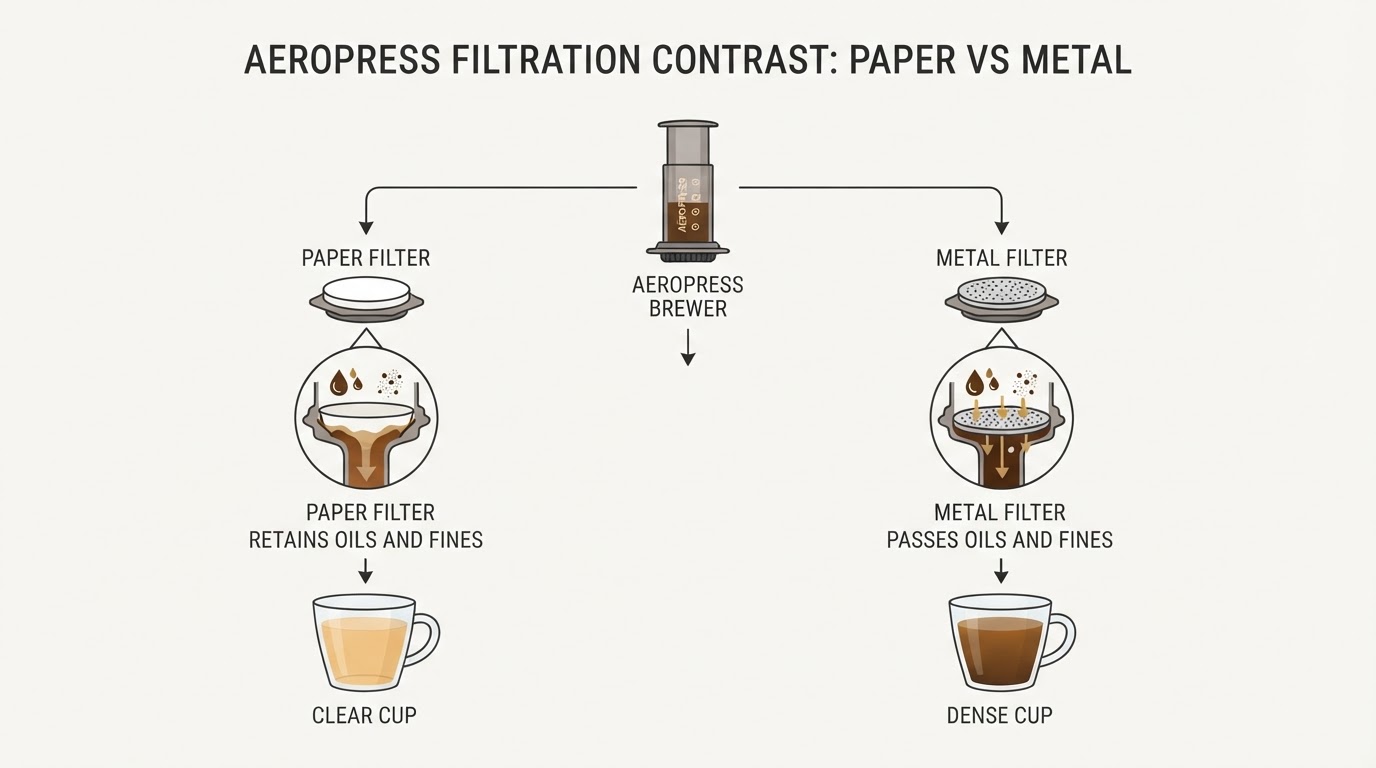
AeroPress's own comparison is the reference point here: paper absorbs oils and catches fine particles, while metal lets more of both into the cup (AeroPress manufacturer filter comparison). The manufacturer also points out that grind and steep time change the result, which is why the comparison below holds those steady.
What each filter changes in the cup
Paper: more fines and oils held back
Paper is the subtraction tool. AeroPress paper filters retain more of the fine particles that a metal disc lets through, and the paper takes up some of the coffee's oils before they reach the cup. The result is usually a cleaner, lighter-bodied brew in which acidity and origin character can be easier to notice. AeroPress describes the result as a very clean cup; the trade is less texture and one consumable per brew.
The effect is a matter of degree. Very fine grinds can still put sediment in a paper-filtered cup, and a dark roast can still taste heavy. Paper will not fix a recipe that is already extracting badly.
Metal: more oil and fines in the cup
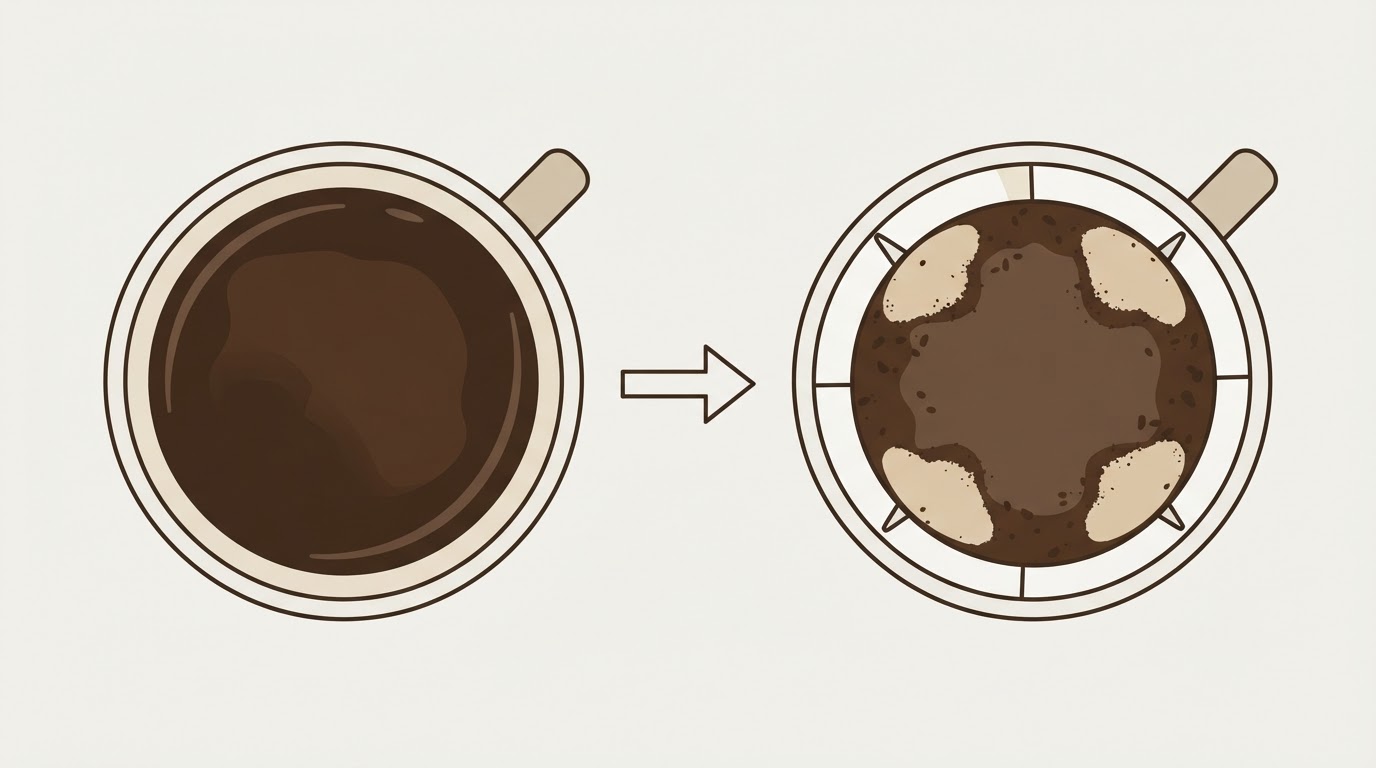
AeroPress states that a metal filter does not absorb oils or hold back fine particles, so the drink keeps more of both and generally has a fuller texture. The disc is reusable: rinse it after each brew and it is ready for the next one. The same openness means metal can leave visible sediment in the cup, especially with a fine grind or a hard press. It does not filter less correctly than paper; it simply removes less.
Grind and steep time move the same levers
Filter material is only one variable, and grind can easily take credit for a filter change. AeroPress notes that every grinder produces boulders and fines, and that a coarser grind leaves fewer fine particles for either filter to manage. A finer grind can make paper deliver more body and metal deliver more sediment; a coarser one can make metal taste cleaner than you expect. Steep time works the same way: longer extracts more, so hold it steady when you compare filters.
If you change grind at the same time, our guide to coffee grinder retention explains why the coffee that leaves the grinder is not the same as the coffee that went in.
Check the size and cap label for your brewer
Filter size and cap compatibility have to come from the current product label for the exact brewer and filter you own, not from a general rule. AeroPress's comparison discusses Original, Go and Clear, and that does not make every cap or brewer automatically compatible. Read the size name on the pack, match it to the brewer on your counter, and check that the filter is listed for the cap in use. If the label does not name your combination, treat it as unknown until the manufacturer confirms it.
Cleaning is separate. Our AeroPress dishwasher guide sets out which brewers and parts can go in the machine and which should be washed by hand; follow the instruction for your exact model rather than assuming all parts behave the same way.
Compare with one recipe held steady
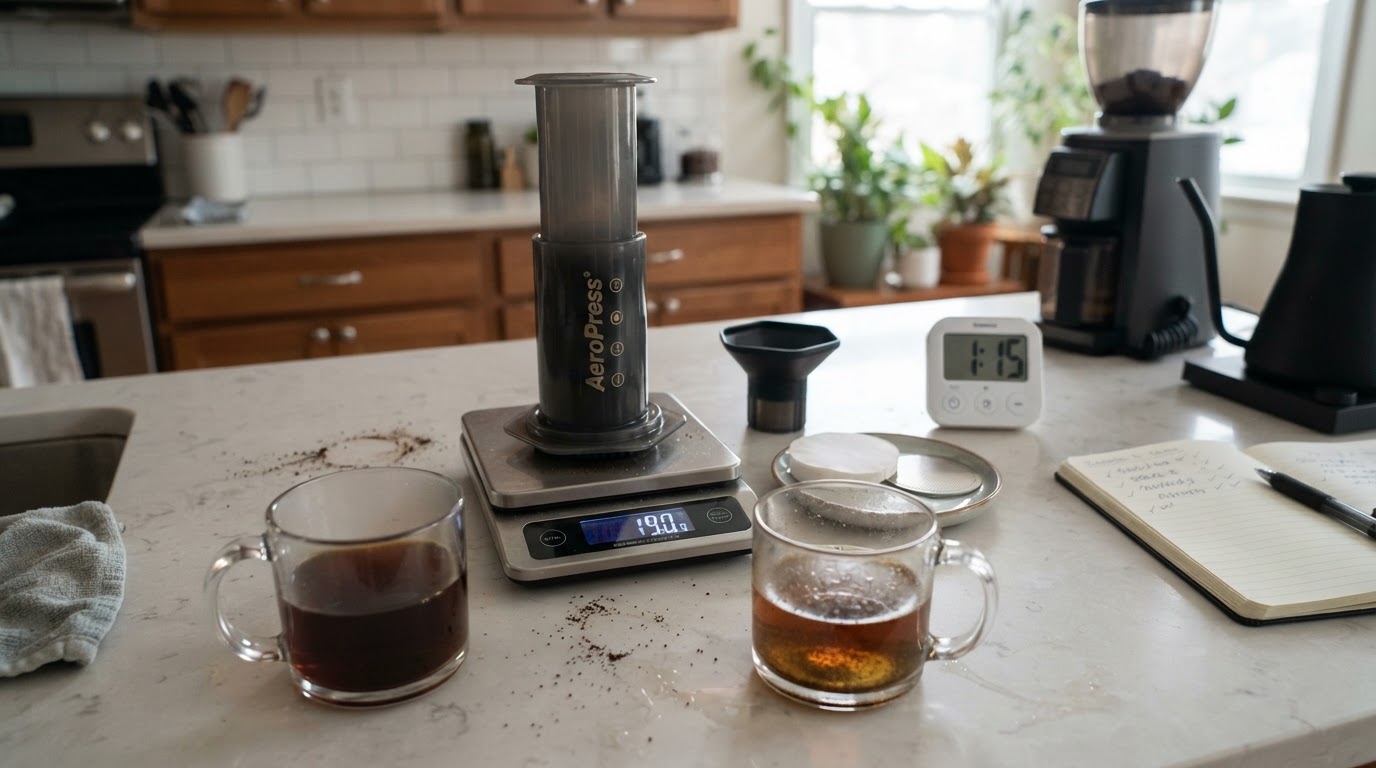
Use the recipe you already brew and trust, and change only the filter. Keep the dose, grind, water temperature, steep time and press identical between the two cups. Brew each version at least twice and note what you observe about body, sediment, acidity and sweetness. Treat those notes as kitchen observations, not proof that one filter causes a particular flavor; a single switched brew mostly tells you that something changed.
Press the same way each time, too. Paper and metal offer different resistance at the plunge, so a harder press on one changes the brew as much as the filter does. For a repeatable comparison, keep the plunge slow and even for both.
A short decision table
If you want | Choose | Why |
|---|---|---|
A cleaner, lighter-bodied cup | Paper micro-filter | Retains more fine particles and oils |
Fuller texture and more body | Metal filter | Lets more oil and fines reach the cup |
Fewer consumables | Metal filter | Rinse and reuse each brew |
A filter for your exact brewer and cap | The size named on the current product label | Compatibility is model- and cap-specific |
What to decide before you buy
Read the filter size name, confirm the brewer and cap you actually use, and check the current label for that combination. Then choose by the cup you want: paper when you want the fines and oils held back, metal when you want the texture and body they add. Keep your existing recipe steady, and let repeated brews rather than one switched cup settle the question.